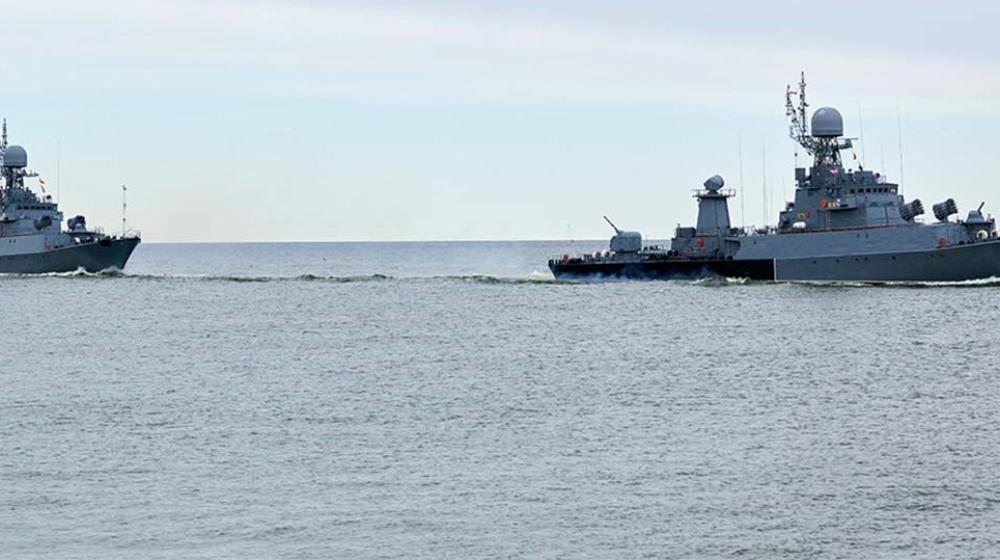
Over the last decade, the global economic and strategic balance has been shifting eastwards. Asia is the largest and the most populous continent, with China and India alone already accounting for one-third of the global population. Asia is home to some of the world’s most dynamic and fastest growing economies, but also to some most complex security hotspots. From tensions on the Korean Peninsula to maritime territorial disputes in the East and South China Seas, there are a number of issues which have the potential to spark more serious conflict. The rise of China is affecting the balance of power in the region, and has resulted in increased competition with the US for influence. This is also increasingly visible in the Indian Ocean, which has become a new theatre of strategic competition between China and India. While there are various multilateral cooperative mechanisms in the region, such as the ASEAN Regional Forum (ARF) or the East Asia Summit, their capacity to address such security issues remains limited.
As a key trading partner of many Asian economies, the EU has a major stake in regional stability, as well as in the security of its Sea Lanes of Communication. Since announcing its ‘pivot to Asia’ in 2012, Brussels has been trying to step up its security role in Asia by boosting cooperation with its various Strategic Partners, as well as through existing multilateral fora. The EUISS has been working to support these efforts by providing relevant expertise and analysis and conducting research in domains that have the potential to enhance regional stability and raise the EU’s security profile. Key areas of focus are maritime security and governance, preventive diplomacy, confidence and capacity building, crisis prevention, multilateralism, regional integration and institution building.
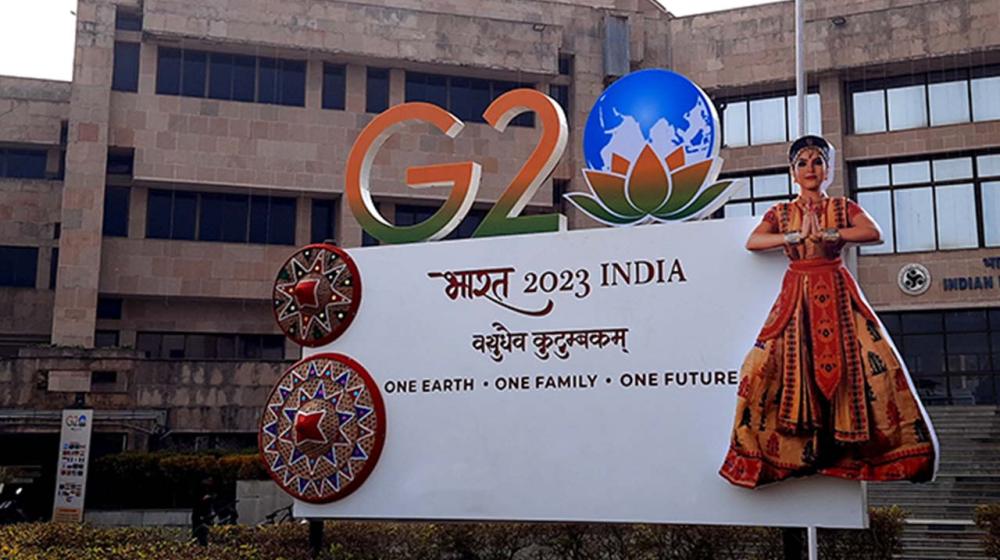
As India prepares to host the G20 Leaders' Summit in New Delhi on 9-10 September, this Brief analyses the Indian government’s motivations in seeking to pursue such an active and high-profile presidency, focusing in particular on its various minilateral diplomacy initiatives.
Pakistan currently faces a perfect storm of economic, political and security crises. This Brief explores the key drivers of instability that plague Pakistan and their potential repercussions beyond the country’s borders.
This Brief explores security risks for the EU emanating from Afghanistan by assessing the evolving Islamist terrorism threat since the Taliban regained control of the country in August 2021.
This Brief examines China’s newly-unveiled Global Security Initiative (GSI) and its significance as part of a larger diplomatic offensive to advance Beijing’s strategic agenda and promote an alternative security governance architecture.
In recent years both China and India have expanded their presence in the Middle East. This Brief shows however that their footprint in the Maghreb is primarily economic and remains light in comparison to that of the long-standing partner of the countries in the region: the EU.
Lying at the crossroads of Central and South Asia, Afghanistan constitutes a key transit hub. This Brief explores how tapping into regional trade, energy and transport connectivity around the country can yield significant benefits for the broader region.
This Brief examines how the rise to power of Narendra Modi as the head of the nationalist BJP has changed India’s politics and diplomacy, and analyses the implications for the EU’s efforts to pursue closer engagement with the country.
Over the past two decades, China has emerged as a key trading partner for Latin America. This Brief shows how the asymmetric nature of the economic relationship between China and a large number of LAC countries enables Beijing to exert leverage over its partners, as it...
Almost a year on from the chaotic international military withdrawal from Kabul, this Brief draws on a series of roundtable consultations with senior Afghan and EU policymakers to analyse the EU’s role and engagement in Afghanistan over the past two decades.
This Chaillot Paper identifies the tactics and strategy used by China to expand its circle of friends.