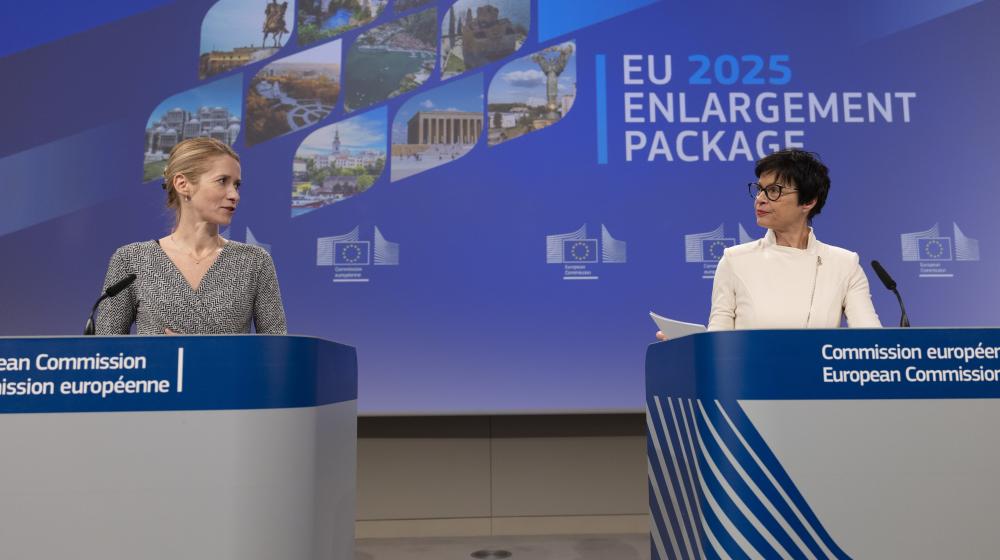
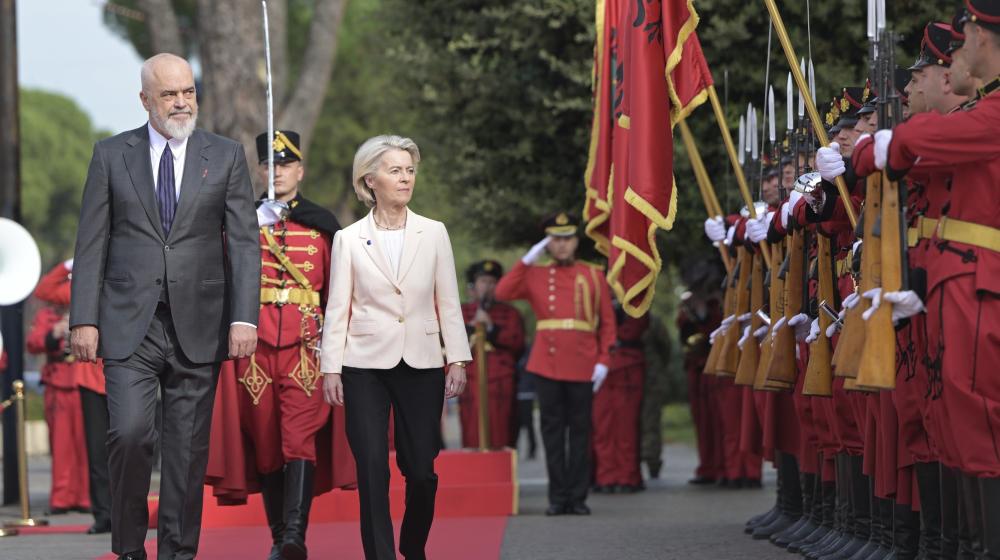
The Western Balkans partners are geographically surrounded by EU member states, and the EU’s general approach towards the region is characterised by stabilisation through integration.

The conflicts which blighted the region in the 1990s posed an existential challenge to the Common Foreign and Security Policy (CFSP). In 2003, the EU went beyond its declaratory statements and launched the first-ever European Security and Defence Policy (ESDP, now CSDP) mission, EUPM, in Bosnia and Herzegovina and subsequently, the first military operation, Concordia, in the former Yugoslav Republic of Macedonia. Currently, the military operation EUFOR Althea in Bosnia and Herzegovina and the Union’s largest civilian mission to date, EULEX, in Kosovo*, provide tangible illustrations of the EU’s continued commitment to ensuring peace and stability in the region. Furthermore, the objectives of the Union and the work of the High Representative are also supported by the European Union Special Representatives (EUSRs) in Bosnia and Herzegovina and Kosovo.

The EU continues to be the biggest donor, investor and trading partner in the Western Balkans. Through the Economic and Investment Plan and the Growth Plan for the Western Balkans, the EU supports the region’s socio-economic convergence and gradual integration into the Single Market, while promoting regional economic cooperation and good neighbourly relations.

On 1 July 2013, Croatia became the 28th member state of the European Union. In 2012, Montenegro opened the accession negotiations, followed by Serbia in 2013. In July 2022, the accession talks with Albania and North Macedonia were launched. Furthermore, Bosnia and Herzegovina was granted EU candidate status in December 2022, and in 2024 the European Council decided to open accession negotiations. Kosovo submitted its application for EU membership in December 2022.

*This designation is without prejudice to positions on status, and is in line with UNSCR 1244 (1999) and the ICJ Opinion on the Kosovo declaration of independence.