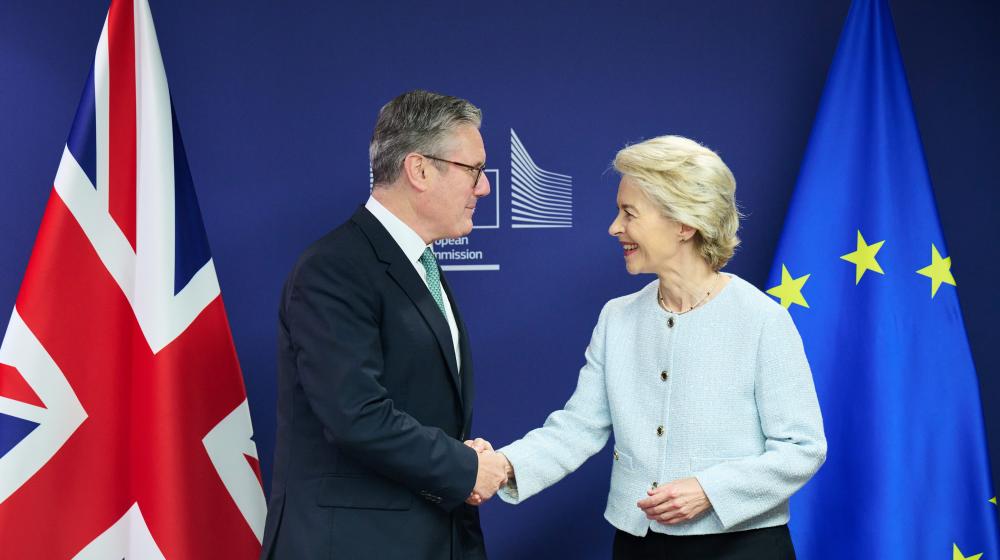
The EU-UK summit in London on 19 May marks the start of a new phase in the relationship: the focus is no longer on implementation but rather on deepening cooperation, both in security and defence and in the economic realm.
The EU's notable absence from key Indo-Pacific trade frameworks risks undercutting its long-term ambitions in the region. Deepening ties with one of the region's leading trade pacts offers a low-friction way to signal intent, relevance, and credibility.
Ukraine should be able to say no to a bad deal between Trump and Putin. This is achievable, provided we focus on what truly matters and realise that Ukraine holds more cards than Trump may think.
Diverging US and European approaches to ending the war in Ukraine are increasingly apparent. Europe must rise to the challenge and exert pressure on Russia to accept ceasefire terms that will lay the groundwork for a sustainable peace – a real peace grounded in geopolitical...
In the face of shifting US politics and fossil fuel pressures, the EU must hold steady on its energy transition. It's methodical, rules-based approach to climate and energy policy is not just an asset—it’s a geopolitical strength.
Europe must beware of the trap of the 'China option' as an automatic response to Trump's hostilities. What Europe has to do is play a smart game and seize Chinese attempts at a rapprochement to obtain real concessions.
With the advent of Trump’s tariffs, the EU has once again found itself caught in the crossfire of great power geo-economic ambitions. It must respond by prioritising EU and partner industries, cutting red tape, and boosting energy production.
The best way for NATO to survive might be to make its structure less reliant on the US. European countries and Canada can do so by increasing their share of the defence burden and by developing European capabilities.
A commentary series exploring how the EU can navigate an increasingly volatile strategic landscape, and chart its course through the tornado unleashed by Trump 2.0.