The Munich Security Conference kicks off today, bringing world leaders together to address pressing global threats. While the Western Balkans, overshadowed by larger geopolitical crises, may not feature prominently on the agenda, it remains a vital region for European security. Tensions in the region are often dismissed as business as usual – but this time, the stakes are different.
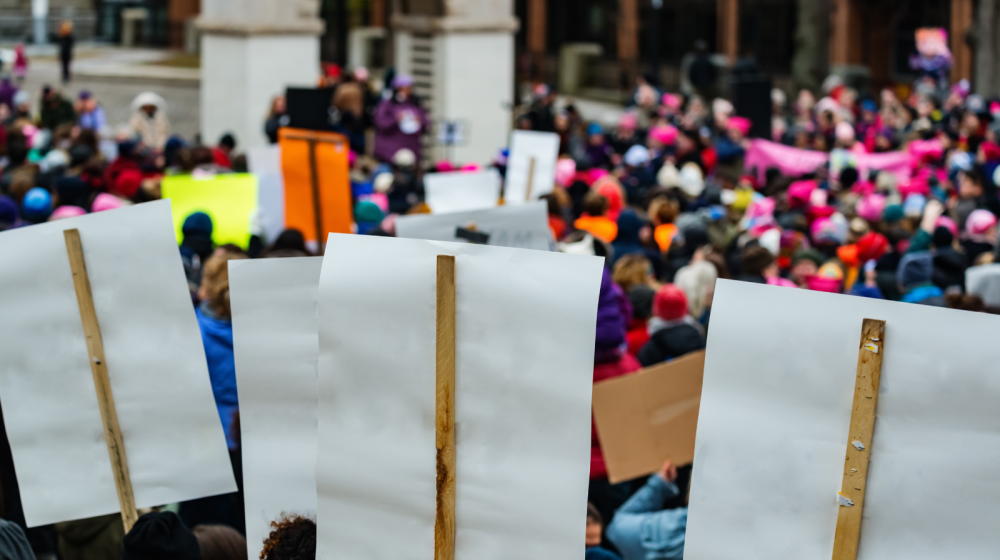
Serbia has been gripped by mass protests since 1 November, triggered by the tragic collapse of the railway station canopy in Novi Sad that claimed the lives of 15 people. The prime minister has resigned, yet demonstrators remain defiant. Meanwhile, Kosovo* has just emerged from parliamentary elections in which Albin Kurti’s ruling Vetëvendosje party fell short of securing a majority – winning just 40.8% of the vote.
For the first time since coming to power, President Vučić’s political future is uncertain, while an ascendant opposition could turn the tide against Albin Kurti in Kosovo. Amid such critical uncertainties, one thing is clear: the status quo is no longer an option. This leaves the Belgrade-Pristina dialogue in limbo, with little prospect of progress in the near future and meaningful negotiations unlikely to advance.
Two steps forward, one step back
The security of the Western Balkans is inseparable from that of Europe, and continued cooperation is crucial for the future of both, the EU High Representative for Foreign Affairs and Security Policy, Kaja Kallas, declared at the ministerial meeting of the 'Friends of the Western Balkans' on 10 February in Rome. Her words underscore the critical need for stability in the region.
The recent nomination of Peter Sørensen as the new Special Representative for the Belgrade-Pristina dialogue brings a fresh perspective to the unresolved conflict. Mr Sørensen, a seasoned diplomat with three decades of experience in the Western Balkans, has inherited a challenging portfolio, defined by stalled progress. The Belgrade-Pristina dialogue is a delicate balancing act, requiring both sides to make difficult compromises. But beyond the political intricacies, the personalities of the leaders play a key role in shaping negotiations and translating high-level messages back home. As it stands, the EU now faces a scenario where both key leaders are politically vulnerable. This complicates the prospects for meaningful progress anytime soon.
The Belgrade-Pristina dialogue is a delicate balancing act, requiring both sides to make difficult compromises.
This dynamic – or lack thereof – could be further challenged by the new US administration. The US envoy for special missions, Richard Grenell, known for his pro-Serbia stance, has criticised Albin Kurti's government for worsening relations with Washington. He also blames Kurti for Kosovo's weakened international standing, citing the restrictive measures imposed by both the EU and the US in response to the escalating security situation in the north. As Washington focuses on cutting government spending, the US may seek to scale back its KFOR troop presence on the ground while ramping up political pressure on Kosovo.
The cycle of uncertainty
With no government in sight yet, upcoming local elections in October and presidential elections in early 2026, Kosovo faces a turbulent period. No prime minister will engage in the Belgrade-Pristina dialogue, including the establishment of the Association of Serb-Majority Municipalities (ASM) without incurring significant political costs. The issue remains deeply divisive within Kosovo, with 51% of citizens opposed to making concessions to Serbia. However, the opposition has campaigned on improving relations with the West, advocating for a more cooperative approach. In the event that the 'anti-Kurti' coalition takes power, there could be greater willingness to advance the Dialogue.
Serbia’s political future is at stake too. It is only a matter of days before the resignation of Prime Minister Vučević, submitted on 28 January, is brought to the National Assembly’s agenda. According to Article 132 of the Serbian Constitution, once the resignation is confirmed, the government’s mandate officially ends, triggering a 30-day period to form a new government. If no government is elected within this timeframe, the President must dissolve the Assembly and call new elections. The opposition firmly rejects the prospect of new elections, instead demanding a transitional government to ensure free and fair voting. Despite the government's claim to have met all four student demands, protests and blockades continue to gain momentum. Support is steadily growing, with backing from pensioner associations, farmers, lawyers, the Serbian Medical Society, theatre troupes, and the Serbian diaspora. Without a functioning government, any progress on advancing the Dialogue remains impossible.
No prime minister will engage in the Belgrade-Pristina dialogue without incurring significant political costs.
Political gridlock will likely dominate in both Belgrade and Pristina in the coming weeks, if not months, complicating efforts to achieve real progress and prolonging the status quo. Regardless of who leads on both sides, the EU should remain actively engaged, balancing patience with pressure until the political situation stabilises. This means tightening conditionality on adherence to the Brussels/Ohrid agreements, including requirements for Kosovo to grant the Serb community a degree of self-management through the establishment of the ASM, while Serbia refrains from obstructing Kosovo’s membership in international organisations, among other provisions. In other words, the new Special Representative, in close collaboration with the EU leadership, should ensure that both Belgrade and Pristina recognise that progress in the Dialogue is essential for their EU integration prospects. Overcoming these foundational barriers is not optional – it is a critical step toward their future in the Union.
*This designation is without prejudice to positions on status, and is in line with UNSCR 1244/1999 and the ICJ Opinion on the Kosovo declaration of independence.