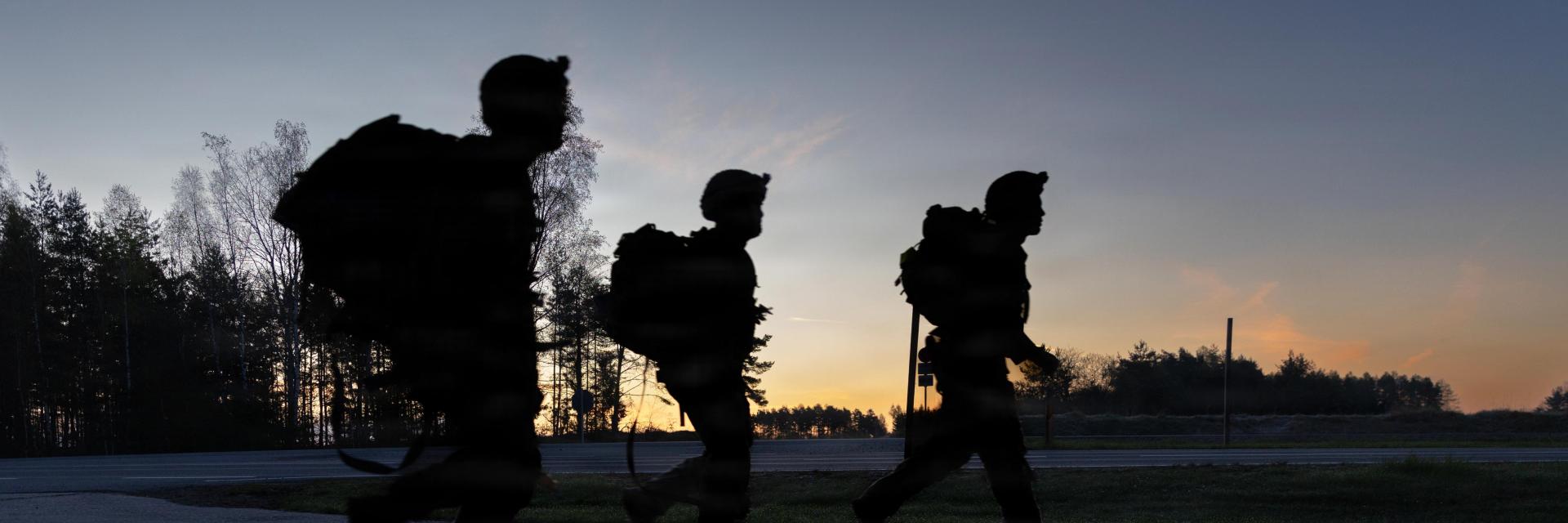
On Friday 1 May, the Pentagon’s spokesperson confirmed that the US had ordered the withdrawal of approximately 5,000 troops from Germany (roughly the size of a brigade). That marks President Trump’s latest blow to transatlantic security (1). The Pentagon also announced that the deployment of a long-range fires battalion equipped with Tomahawk and hypersonic missiles, set for 2026, will no longer go ahead.
This decision widens Europe’s deterrence gap vis-à-vis Russia in a key area: deep-precision strikes. It also indicates how the Trump administration is slowly implementing a force posture review without formally publishing one, and how it may also seek to appease the Kremlin in the process. Europeans need to quickly fill the gap – by increasing their own long-range strike capabilities, preparing for further reductions in US assets in Europe, and developing the right narrative vis-à-vis domestic and foreign audiences.
A force posture review in practice?
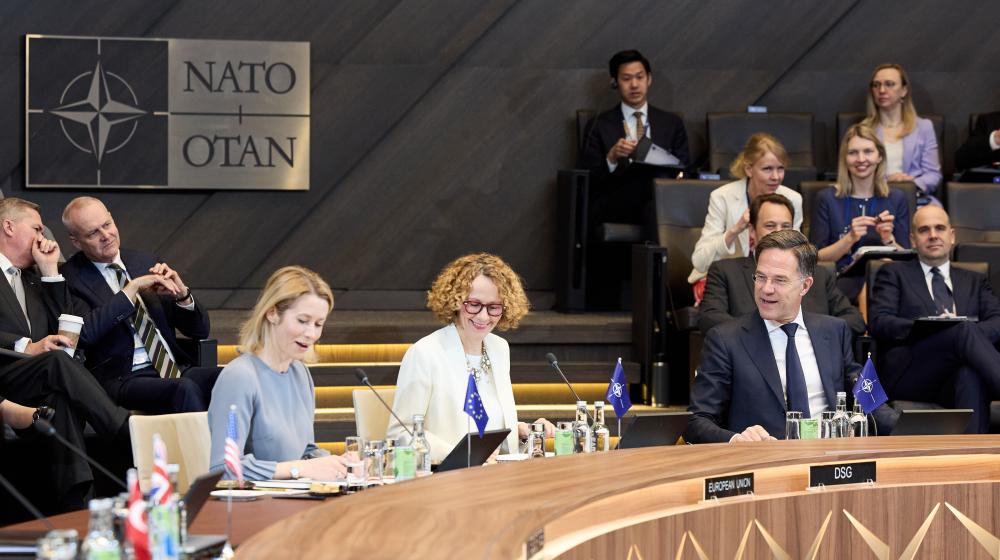
The US decision came as a surprise to key interlocutors. The Chairs of the US Senate and House Armed Services Committee expressed concern over the decision in a joint statement. NATO announced that it is asking the US to clarify ‘the details of their decision’ – suggesting that it was not discussed in advance with allied counterparts.
Certainly, the decision was triggered by recent events, connected to the fallout of the war in Iran. Trump’s spat with German Chancellor Merz is just the latest in a series of tense exchanges between leaders across the Atlantic. Material constraints also played a role: the US burned through 850 Tomahawks during the four weeks of the Iran war, and it will take years to replenish inventories. The missiles originally earmarked for Europe could be redirected to reinforce deterrence in the Middle East or in the Indo-Pacific. This comes on top of delays to other weapons systems that Europeans were already experiencing.
But this should also be seen as part of a longer-term trend. Arguments against deploying long-range fires and their operating personnel to Europe – and in favour of reducing the number of deployed brigades across the continent – have been circulating in Washington for at least a year. US policymakers likely shelved these plans after the Hague Summit, but they never fully scrapped them. Instead of spelling out their plans in a full force posture review, they seem to be opting for a gradual implementation.
The scale of the troop withdrawal is not problematic per se. The total number of US forces in Europe remains above 76,000, the floor that Congress set in the 2026 National Defense Authorization Act. And the key infrastructure for the US defence of Europe – and power projection elsewhere – remains largely in place.
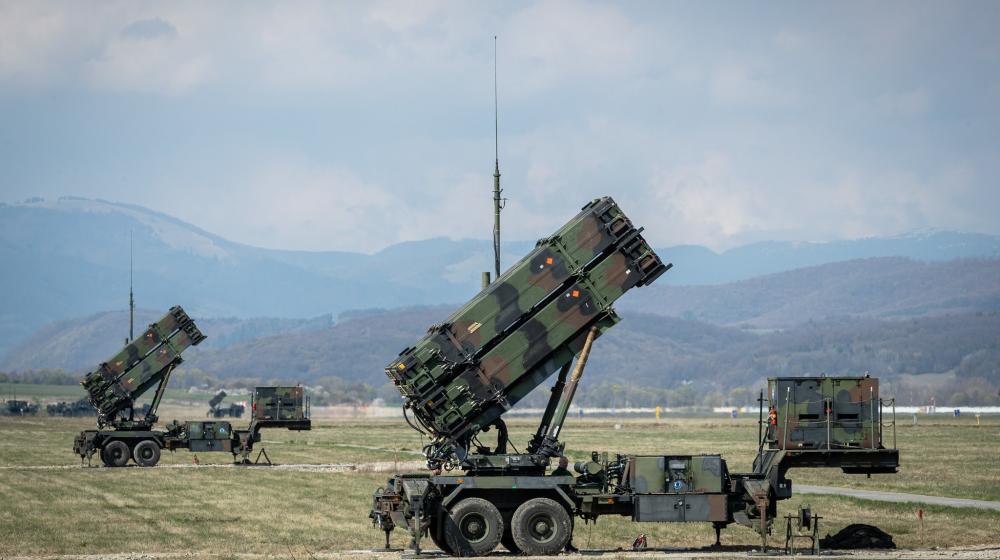
The non-deployment of Tomahawk and hypersonic missiles represents the bigger problem. The US has not stationed missiles with ranges between 500 and 5000 km in Europe since the Intermediate-Range Nuclear Forces (INF) arms control treaty entered into force in 1987. The INF treaty expired in 2021. But in response to Russia’s positioning of nuclear-capable Iskander missiles and Khinzal-carrying fighter jets in the exclave of Kaliningrad, the US announced plans to station these missiles in Europe as part of the Army’s second Multi-Domain Task Force (MDTF). With long-range missiles, the MDTF would have been able to strike high-value targets deep inside Russian territory, such as airfields used by fighter jets or missile launch sites. By deciding not to deploy the missiles to Germany, the US may remove this key element of deterrence by punishment against Russia.
Some experts express hope that the US will simply move the long-range battalion around the continent, perhaps towards countries on the Eastern flank who are seen as ‘friendlier’ to the US. That would offset the lower number of forces and assets through forward deployment, increasing their deterrent value.
However, it is unlikely that Trump would take such a step, as it would be seen as highly provocative by Russia. The decision came just days after the latest Trump-Putin phone call. While there is no evidence that the two leaders discussed the MDTF deployment, a decision on the issue was widely expected. The Russian president may have used the call as an opportunity to persuade his counterpart not to proceed with the deployment. If that was indeed the case, Europeans’ fears that Trump is willing to reduce US security commitments to curry favour with the Kremlin would seem increasingly justified.
Adjusting course
Trump’s latest decision weakens the US posture and credibility in Europe, undermines Europe’s deterrence-by-punishment capabilities, and leaves Russia’s deployment of nuclear-capable delivery systems in Europe without a clear response. These changes could have significant implications, especially in the transition period before Europeans assume full responsibility for the continent’s defence. Europeans therefore need to take urgent steps to limit the impact of these developments.
First, Europe’s need to strengthen its own long-range strike capabilities assumes even greater urgency. Europeans possess systems such as Scalp/Storm Shadow and Taurus, but their ranges (300-500 km) are not comparable to that of Tomahawks (1600 km or more). The European Long-Range Strike Approach (ELSA), a project to develop European deep-precision strike capabilities, may need until 2030 to produce a new generation of missiles. In the meantime, additional stop-gap measures are needed. For instance, existing systems could be re-engineered. Europe should also support Ukraine’s capabilities in this domain. Kyiv has demonstrated significant ability to strike Russia’s oil production infrastructure, using indigenous (the Flamingo) and European missiles, but especially drones. Supporting Ukraine’s ability to hit targets deep inside Russian territory – including through the recently approved €90 billion loan – can serve as a useful deterrent, partially compensating for the non-deployment of US assets.
Second, Europeans should seriously plan for the possibility that US assets – even those that were promised to Europe – will not be available. Every new crisis presents an opportunity for the White House to remove some components of their European deterrent. Other assets or troops withdrawals could follow. European leaders have so far been unwilling to question key US contributions, fearing that they might set in motion a ‘self-fulfilling prophecy’ and push the US out of Europe. But the latest events in the Middle East underscore how quickly the strategic landscape can change. To avoid future surprises, European must have a plan B ready.
Third, the Europeans will need to justify their decisions with careful messaging about strategic stability. As Europeans take steps to fill their deterrence gap in long-range fires, they could be accused of upsetting the strategic balance – surely by Russia, potentially by other countries, and even by the US itself. As mentioned in the National Security Strategy, some members of the Trump administration believe that Europeans are exacerbating tensions with Russia. Washington could therefore seek to punish allies for allegedly ‘reckless’ behaviour. Similarly, European leaders will need to discuss the issue of deterrence by punishment with their own publics, who may be less amenable to offensive missiles than to air defence systems. Leaders need to be ready to defend their choices, tying their decisions to Russia’s violation of the INF, its deployments in Kaliningrad, and its behaviour since 2022. Effective deterrence will come with effective communication.
(1) Additionally, the US president threatened a new 25% tariff on EU cars and auto parts.