Raising awareness of both existing and emerging foreign and security policy challenges facing the European Union, EUISS Briefs provide key information in a concise, focused format.
This Brief shows that, in the case of the Western Balkans, improving resilience requires a careful analysis of how the enlargement process can be adapted and improved in order to maintain its transformative power, as well as ensure that reforms are both sustainable and...
This Brief looks at the new ‘military planning and conduct capability’ (MPCC) structure. How did this come into existence? And what does it mean for the EU in terms of command structure?
Latin America and the Caribbean (LAC) can be considered to be the most violent region in the world, particularly when measured by homicide levels. Given the high costs of violence in LAC, how can systematic assessments of the economic cost of violence enhance the scope for EU...
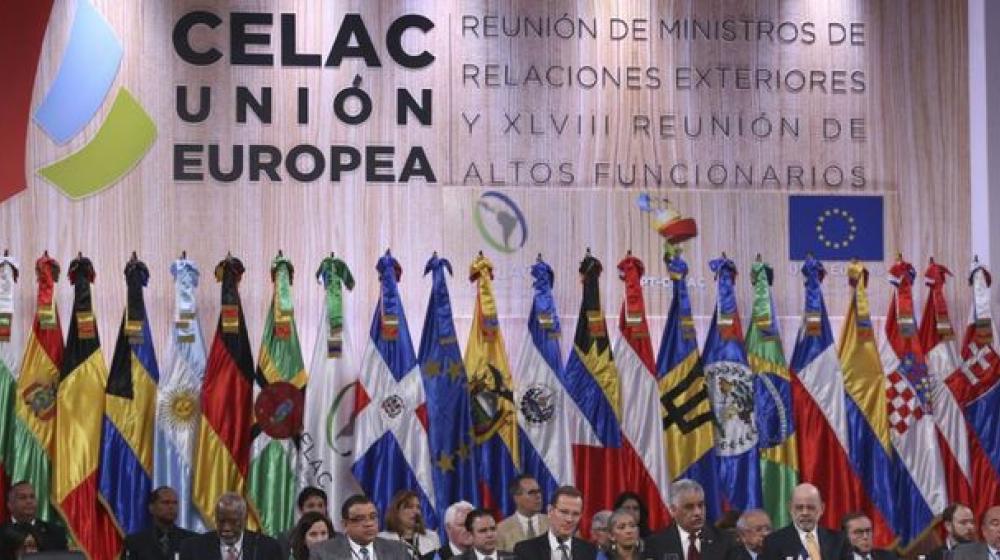
This Brief takes a look at the state of play in Latin America and the Caribbean (LAC) in the run-up to the bi-regional EU-CELAC summit in El Salvador in October. What can the Union expect to achieve at the summit? And what kind of partner can CELAC be for the EU.
Over the past decades, defence cooperation has helped European countries preserve their security. Defence cooperation in the second machine age may, however, need to evolve and move beyond traditional joint procurement programmes to pertain also to new domains.
What impact have migration routes out of and within Africa had on EU migration policy? This Brief examines some of the Union’s efforts (and challenges) regarding the continent.
What generalisations can be made about African growth episodes between 1950 and today? This Brief seeks to dispel some of the negative narratives about Africa’s economic record, as well as discern factors which could lead to future growth on the continent.
A criminal past is a common, yet often overlooked, characteristic of many European jihadists. This Brief examines the link between petty crime and terrorism, as well as the ways in which criminal experiences shape terrorist actions.
In 2016, 42% of asylum-seekers who received an instruction to leave stayed in Europe, amounting to at least 130,000 people. What could the EU do to improve its returns bargains with third states?
The 2015 migration crisis revealed gaps in the EU’s migration-related statistics. This Brief looks at how unreliable migration data can be manipulated, and seeks to reverse the narratives which are put forward by certain actors in order to pursue their own agendas.