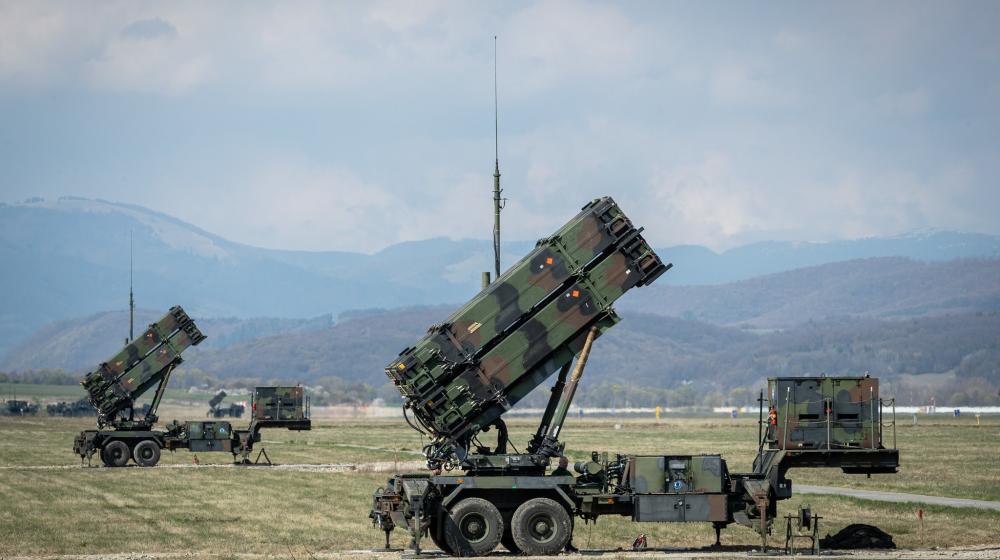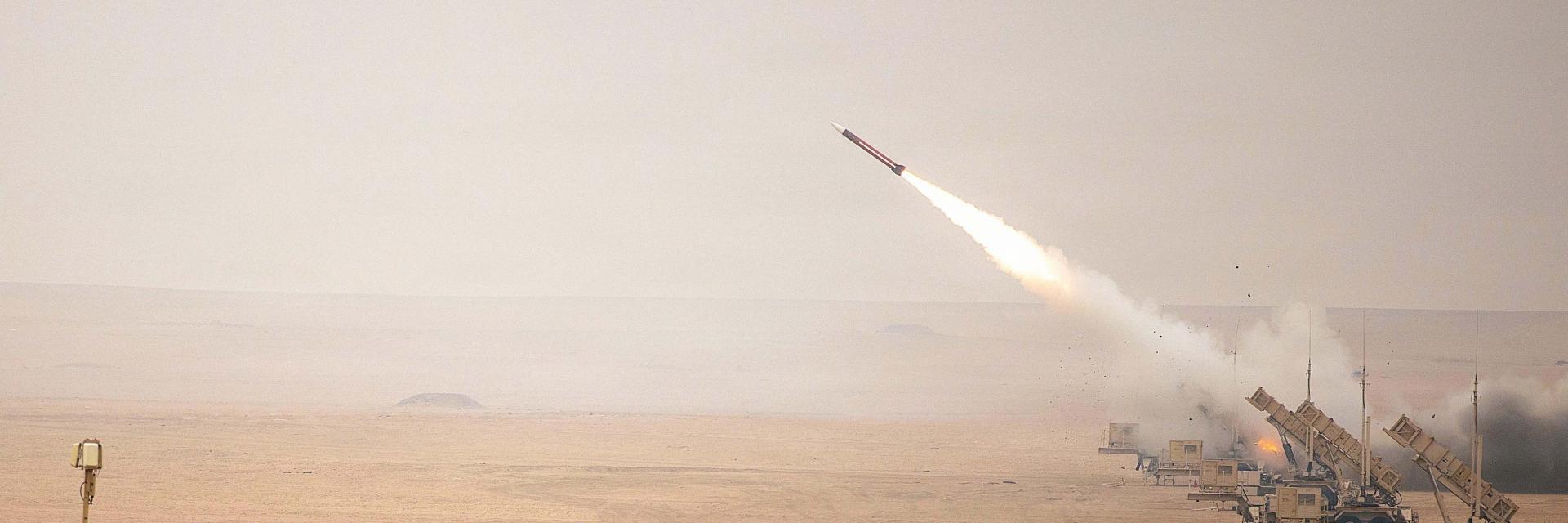
The Trump administration has recently announced a series of measures to reduce America’s military posture in Europe. One of the less visible but potentially more consequential decisions was the cancellation of the planned deployment of a US long-range fires battalion to Germany in 2026. The battalion was supposed to bring long-range missiles to Europe, strengthening NATO’s ability to hold Russian military targets at risk far beyond the front line. It was also meant to buy time for Europeans to acquire their own long-range strike capabilities. The decision may yet be reversed, as has just happened with President Trump’s apparent U-turn on US troops in Poland. But Europe should act on the assumption that it will not be, and step up efforts to close the gap by acquiring long-range strike capabilities.
The challenge
These capabilities are essential to European deterrence. They allow defenders to hold targets deep inside Russia, such as depots and bases, at risk, no matter how quickly Russian forces might gain ground on the frontlines in the opening days of a possible conflict. Yet Europeans possess only limited deep-strike capabilities of their own. The planned US deployment mattered because it would have stationed Tomahawk and Dark Eagle missiles in Europe, systems with a range of between 1 600 and 2 800 km. Europeans have no comparable systems. They have capable indigenous systems with a range of up to 500 km (Storm Shadow/Scalp, the Joint Strike Missile and Taurus), but they lack equivalent longer-range options, apart from limited stocks of American systems and France’s sea-launched Missile de Croisière Navale. Moreover, nearly all these weapons are air-launched and therefore depend on the availability of aircraft and pilots, proximity to bases, and access to contested airspace.
Over the past few years, European countries have sought to address their well-known gap in long-range strike capabilities. Some have made substantial purchases of US equipment, including Poland and Finland, which acquired JASSM-ER missiles, and the Netherlands, which purchased Tomahawks. Others are also attempting to develop homegrown solutions. France, for example, is developing a land-based version of its Missile de Croisière Navale. Meanwhile, a group of countries is working on a range of systems under the umbrella of the European Long-Range Strike Approach (ELSA). This was launched by France, Germany, Italy and Poland in 2024 and later expanded to include Sweden and the United Kingdom. It is not a single project but comprises a range of work streams such as early warning systems and low-cost capabilities.
All this shows that Europeans understand the challenge. However, progress has been slow. The ground-based version of France’s Missile de Croisière Navale is not yet in production, and is not expected to be available before 2029. No publicly announced procurement orders have yet emerged from ELSA. Meanwhile Storm Shadow/SCALP production was only relaunched in July 2025, while Germany awarded the contract for serial production of the Taurus NEO in December 2025. Missiles are expensive and highly complex systems and officials are understandably reluctant to buy systems that may not work well or may not meet future requirements. But European countries are moving too slowly.
What Europe can do
The first instinct of many Europeans has been to seek clarity about US intentions and scheduled deliveries. However, the use of US high-end systems in the conflict with Iran is likely to lead to lengthy delays in deliveries. Europeans need options other than US equipment. South Korea and Turkey have established production lines for 500-km-plus range missile systems like the Hyunmoo and Tayfun. They could therefore become useful partners for European countries seeking to ramp up their capabilities. However, the main thrust of Europe’s efforts needs to be on accelerating the development of indigenous solutions.
One line of effort should focus on increasing the range, survivability and production of existing European air-launched systems. Storm Shadow, SCALP and Taurus should be upgraded and produced in larger numbers. While this will not address the issue of deterrence over longer ranges, it is an essential component of the puzzle. Developing ground-launched versions of such missiles should be technically possible and would further strengthen European capabilities.
Second, Europeans should push ahead with the development of new long-range systems. Adapting France’s naval cruise missile appears to be the most promising option, short of rapidly developing an entirely new system. Third, Europeans need to take risks and procure cheaper systems. Ukraine has shown that it is possible to develop such systems quickly. These are not direct substitutes for high-end European missiles as they often lack speed or survivability. However they can be produced in larger numbers, which can saturate air defences. Several European firms, such as the Dutch company Destinus, have developed such capabilities, and these should form part of the answer. Much will depend on whether Europeans can work more closely and efficiently with Ukraine, through co-development and rapid testing.
Fourth, Europeans should continue to develop their intelligence, surveillance and reconnaissance capabilities. The value of the planned American deployment was not just in the missiles but also in the targeting and command system supporting them. Even if Europe develops its long-range strike capabilities, these will not be effective unless they are backed by an effective targeting architecture. Ukraine’s experience shows that this does not require a very large number of platforms if they are effectively integrated and complemented by commercial data.
Finally, Europeans need to change their approach to procurement by accepting more risk and greater tolerance for imperfection. An ideal system arriving in a decade will not help close Europe’s current window of vulnerability. Europeans need to adopt iterative procurement, embracing ‘good enough’ solutions that can be upgraded over time.