Following Russian attacks in Leipzig, the fight against Russia’s shadow fleet has entered a new and more urgent phase. The EU must maintain pressure on this core weak spot in Russia’s war economy, even as a maritime services ban and coordinated sanctions remain important but politically difficult. To gain the upper hand, the EU must broaden the fight, develop new ways to counter evolving sanctions-evasion techniques and brace for more direct confrontation.
Grasping the hem of the cloak
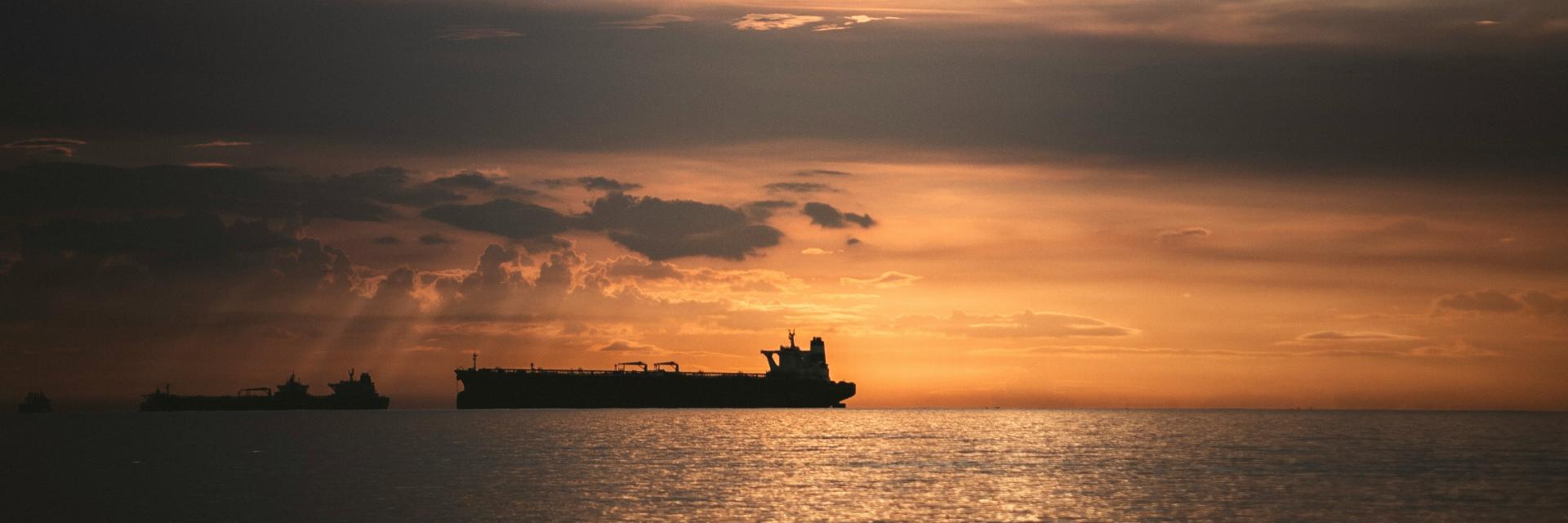
Active confrontation of the shadow fleet by European and, more recently, EU navies, combined with sanctions and intelligence sharing, has succeeded in drawing the fleet at least partially out of the shadows. European pressure to delist fraudulent vessels through cooperation with flag states has also opened cracks in an elaborate façade of shell companies, dubious insurance and opaque ownership. European navies, including those operating under the EU’s IRINI and Atalanta naval missions, have successfully invoked UNCLOS (especially Article 110), to board and investigate vessels sailing without a valid flag.
Russia’s approach has shifted in two clear ways in 2026. The first is its decision to list shadow fleet vessels under its own registry. While in the past, Moscow preferred a form of deniability, actions against the shadow fleet have forced it to take a more active role in securing this economic lifeline. This was vividly demonstrated in January 2026 when the Bella 1/Marinera was relisted mid-voyage as a Russian-flagged ship while being pursued across the Atlantic by US naval vessels. Russia even sent a submarine and naval vessels to protect the Bella 1, but they arrived too late. Nevertheless, the move signalled Russia’s willingness to deploy military assets against the US navy in defence of its flagged ships. A similar pattern has subsequently played out in various European waterways, notably in the Gulf of Finland and the English Channel, where Russian warships now routinely accompany shadow fleet vessels to deter potential boarding.
The second shift is the growing militarisation of the shadow fleet. In June 2026, Estonian authorities reported seeing machine guns mounted on the deck of a shadow fleet vessel as it sailed through Estonian waters. The militarisation of Russian-linked tankers is not new, but the clear visibility of the weaponry was likely designed as a deterrent. This signals a longer-term shift towards using shadow fleet vessels not simply to transport oil but also as military assets.
The fleet has long served a dual purpose in Russia’s hybrid war against Europe. It has been closely linked to a series of cable-cutting incidents in 2024 and 2025. Shadow fleet vessels have also been closely linked to a wave of drone sightings in 2025-26, providing platforms from which drones could be launched. These drone sightings caused significant disruption at military and civilian facilities alike and likely served to test EU and NATO responses to such attacks.
The explicit militarisation of shadow fleet vessels in response to seizures confirms what has long been clear: the shadow fleet was never simply an economic lifeline for the Kremlin, but also a key tool in its war against Europe.
Adding a trident to the toolbox
The aim in combating the shadow fleet must remain to remove ageing and dangerous vessels from European waters and prevent them from transporting their cargo to fund the Russian war machine. Europeans should bear in mind that Russia’s shadow fleet continues to stretch the limits of international law, especially in terms of militarisation and dual use of civilian assets. Efforts to curb the trade in oil and petroleum products should therefore also extend to include the fight against Russian weapons smuggling and future LNG trading.
The EU and its Member States could explore three additional tools, although an ‘all of the above’ toolbox will likely yield the best results.
Firstly, most boarding efforts currently hinge on proving a violation of international law, through the use of a false flag. However, this legal basis for action is already becoming less effective as Russia reflags vessels under its own registry. Yet UNCLOS provides other possible grounds for action, including provisions on compensation for damage to coastal states or in the case of the military use of civilian vessels. Although these tend to be restricted to territorial waters and exclusive economic zones, there is still scope to deploy them within EU waters. This is especially relevant as Russia re-routes its oil exports through the Baltic to avoid Ukrainian strikes in the Black Sea. Additionally, the EU could propose low-emission zones which would not only protect the marine environment but also provide new legal grounds for restricting access by older, more polluting vessels.
Second, an area that remains underutilised, out of concern for innocent seafarers, is the questioning or even arrest of captains and suspicious crew members on ships suspected of violating international law. While certainly not all captains and crew are active participants in hybrid warfare, some are more willing participants than others. Captains in particular can be a valuable source of intelligence on shadow fleet operations, creating a potential vulnerability for Russia. Equally by increasing the risks for captains working on Russian shadow fleet vessels, the EU could deter recruitment and raise the cost of operating the fleet.
Third, the EU should support not only the boarding of shadow fleet vessels but also their seizure and the confiscation of their cargo. Most vessels are currently detained for just a few days or weeks before continuing on their journey, often due to legal constraints and the costs of holding vessels. Disruption is important, but raising the costs and imposing them on the Kremlin at a time of domestic fuel shortages would be even more effective. Legal support and coordinating arrangements for holding seized vessels would be tangible contributions to these efforts. The EU is particularly well placed to explore partnerships with third countries on the holding of seized vessels.