*Ummu Salma Bava is Chairperson and Jean Monnet Chair Professor, Centre for European Studies, School of International Studies, Jawaharlal Nehru University, New Delhi, India
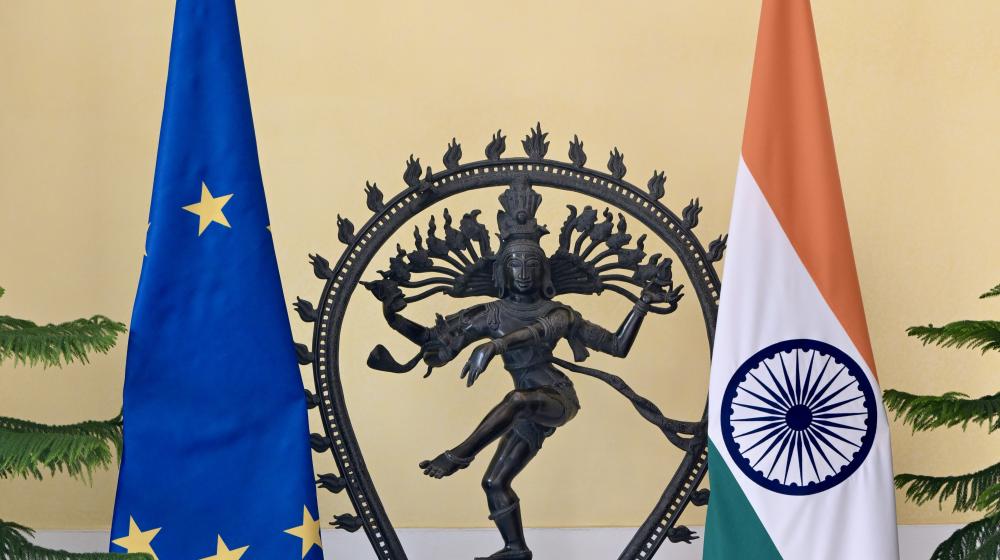
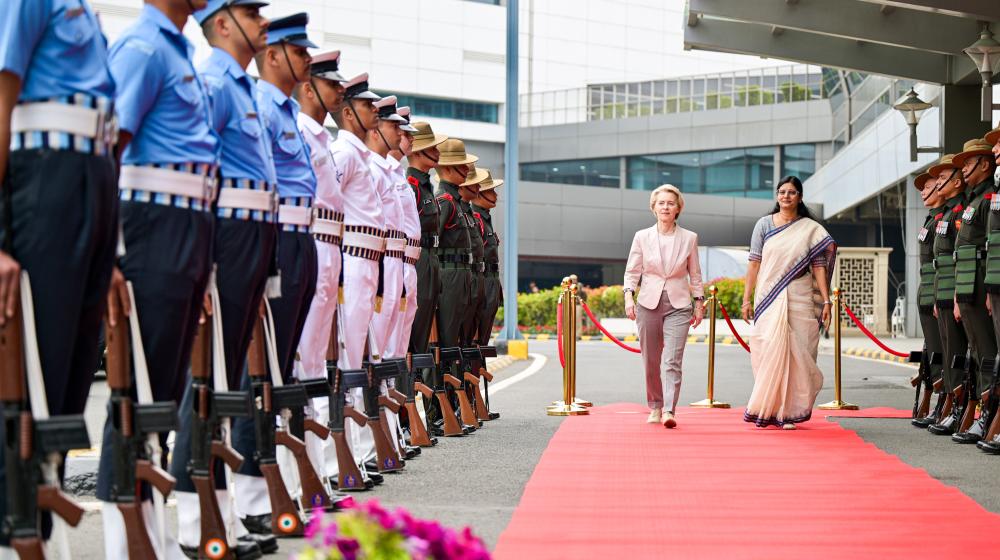
On 12-13 September 2026, Indian Prime Minister Narendra Modi will host the 18th BRICS summit in New Delhi. He is expected to welcome Russian President Vladimir Putin, Chinese President Xi Jinping, Iranian President Masoud Pezeshkian and a host of other high-level delegates from across the increasingly diverse grouping. The optics will be markedly different from those of January, when Modi welcomed European Council President António Costa and European Commission President Ursula von der Leyen for the EU-India Summit. Yet much of the language around the two summits will echo familiar themes: resilience, sustainable growth, technology, supply chains and the need to cooperate despite growing global uncertainty. The contrast points to an increasingly networked form of multilateralism, in which cooperation depends not only on consensus within institutions but also on countries capable of working across different groupings despite fundamental disagreements.
A fluid institutional landscape
That New Delhi can host such different sets of leaders within the same year speaks volumes about India’s growing adeptness as a practitioner of multi-alignment. The significance of this approach becomes clearer when set against the increasingly crowded and fragmented institutional landscape in which India operates.
In the past few decades there has been a proliferation of institutional frameworks driven by very different philosophies and political objectives. These multilateral, minilateral, and plurilateral institutions engage with diverse issues ranging from security, trade, climate change, technology, development – and everything in between. In the Indo-Pacific alone, the institutional ecosystem now features an eye-watering constellation of acronyms. Everything from the G20, ASEAN, BRICS, the Quad, SCO, AUKUS, CPTPP, RCEP – the list goes on.
These are, of course, not the same kinds of institutions. What they do have in common is that they are working – in parallel and increasingly in competition – on different variations of the same intersecting problems. Cooperation between countries is also becoming more pragmatic and issue-driven: so much so that even where they may disagree profoundly on questions of security or geopolitical alignment, they may still find sufficient common interest to cooperate on other issues such as technology, trade, climate or development. This more fluid landscape has also created room for countries operating across these institutional divides to advance their own agendas rather than simply choosing sides. At the same time, these coalitions often approach common challenges from different vantage points. The so-called Global South may prioritise economic development and access to technology, capital and resources, while many developed economies place greater emphasis on the language of protectionism and de-risking.
These agendas are not necessarily mutually exclusive. Collective challenges do not need to have one single solution. But different starting points matter because they shape the solutions societies will find acceptable even when the underlying challenges are the same.
Bridging the divide
This is what makes India’s BRICS presidency interesting. It is not simply another demonstration of New Delhi’s ability to balance competing relationships. The summit itself is part of the test: an expanded and politically diverse BRICS brings into the same institutional space countries divided by profound geopolitical differences, including Iran, the UAE and Saudi Arabia, whose security interests in the current Gulf conflict diverge sharply. That they continue to meet within the same forum is, at minimum, a test of BRICS’ ability to retain its convening power despite those differences. It also raises a broader question of whether India’s ability to operate across competing institutional environments could serve a wider purpose: keeping channels of communication open across political divides and helping workable ideas circulate between them. The goal is not necessarily convergence but to prevent differences from becoming more permanent forms of separation.
Digital public infrastructure (DPI) offers one example of what this can look like in practice. DPI was a core priority of New Delhi’s 2023 G20 presidency, during which India also launched its Global DPI Repository as a flagship initiative to support the agenda. India has since been able to promote the idea across several different institutional settings. Under Brazil’s BRICS presidency in 2025, BRICS recognised the importance of interoperable DPI, work that New Delhi has carried forward during its own BRICS presidency. Meanwhile, the January EU-India Summit committed both sides to continuing cooperation on digital public infrastructure and interoperable digital ecosystems.
The point is not that India alone is responsible for DPI gaining traction across these different settings. Nor does the appearance of similar language across institutions mean that the underlying political priorities are identical. What it does show is that the same policy agenda can advance across different frameworks and that countries with a credible presence across those environments may be well placed to preserve some degree of continuity between them.
DPI is also a relatively less contentious issue to carry across competing institutional divides than, for example, questions around reform of global governance, trade protectionism, and geopolitical and security disputes. The bar for reaching a global consensus on one approach to AI governance, for instance, will be considerably higher. But the takeaway is instructive: countries operating across these divides may be able to identify areas of compatibility and preserve common ground that would otherwise be lost.
This is a potentially useful way of thinking about the next phase of multi-alignment: not only as a means of preserving strategic autonomy but also as a means of creating a kind of connective tissue across divides. The implication is not that countries should be trying to join every grouping available to them. Institutional presence is, by itself, probably insufficient. But in a fragmented ecosystem, some countries may have genuine value precisely because they have the credibility and diplomatic network to operate across political clusters.
This matters for Europe as well.
The EU remains one of the most developed examples of institutionalised multilateral cooperation and is deeply embedded in some of the world’s most consequential institutional arrangements. Yet it also remains absent from others. This gives the EU’s relationships with countries such as India a significance beyond the bilateral agenda, especially in forums where the EU has limited or no direct presence. This does not mean that New Delhi would act as a mouthpiece for Brussels. But countries like India can potentially help preserve links between increasingly disparate parts of the international system precisely because they understand the vocabulary, constraints and priorities in play across those divides and are well placed to identify where compatibility remains possible. The EU and India could also help identify areas of compatibility by sharing what each is advancing in the different forums in which they participate, from BRICS to the G7. In that sense, the EU should view India’s strategic autonomy not only as a constraint on the partnership, but also, in some circumstances, as part of its value.