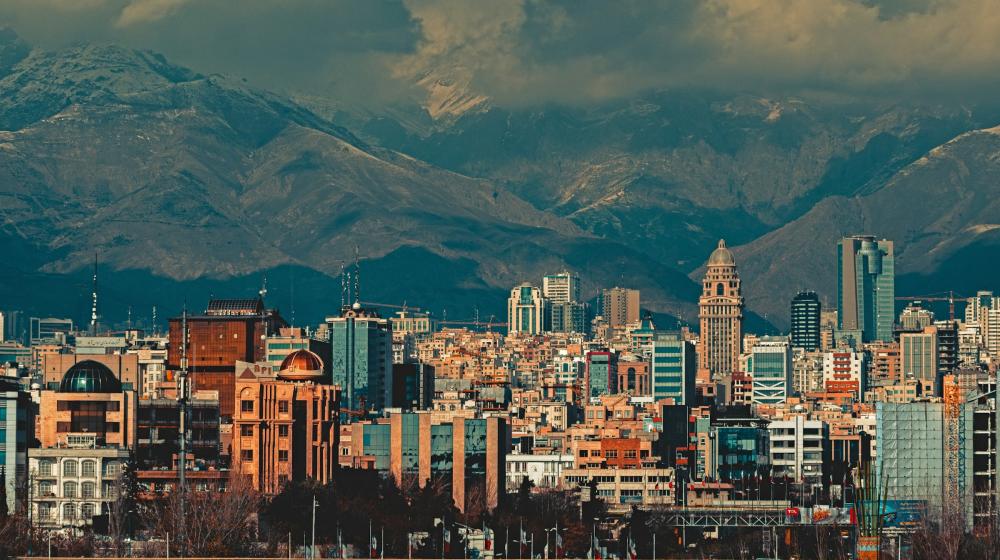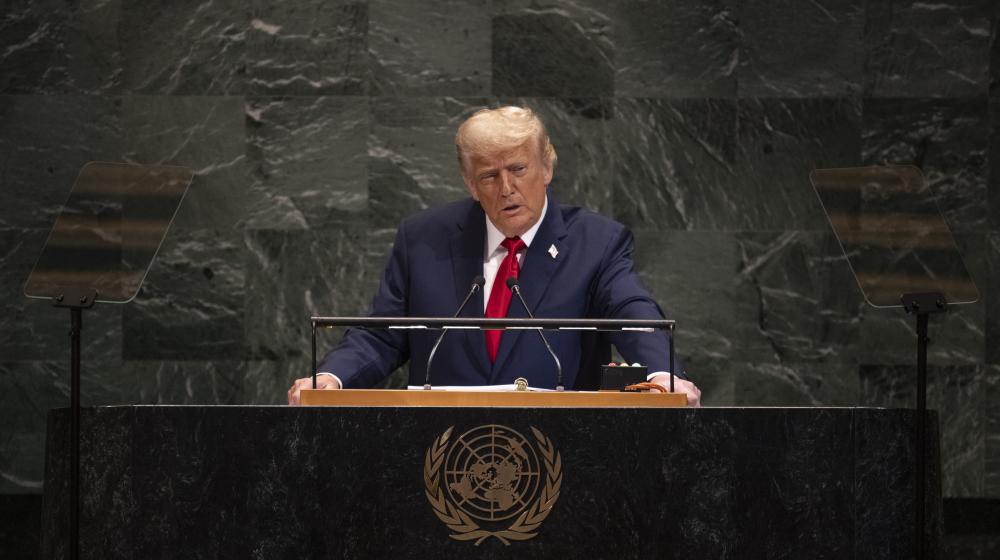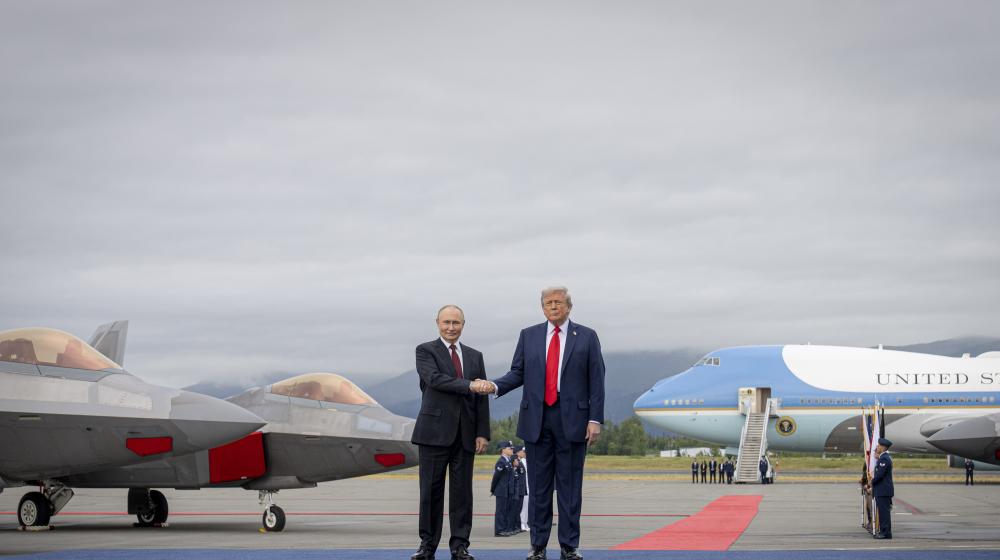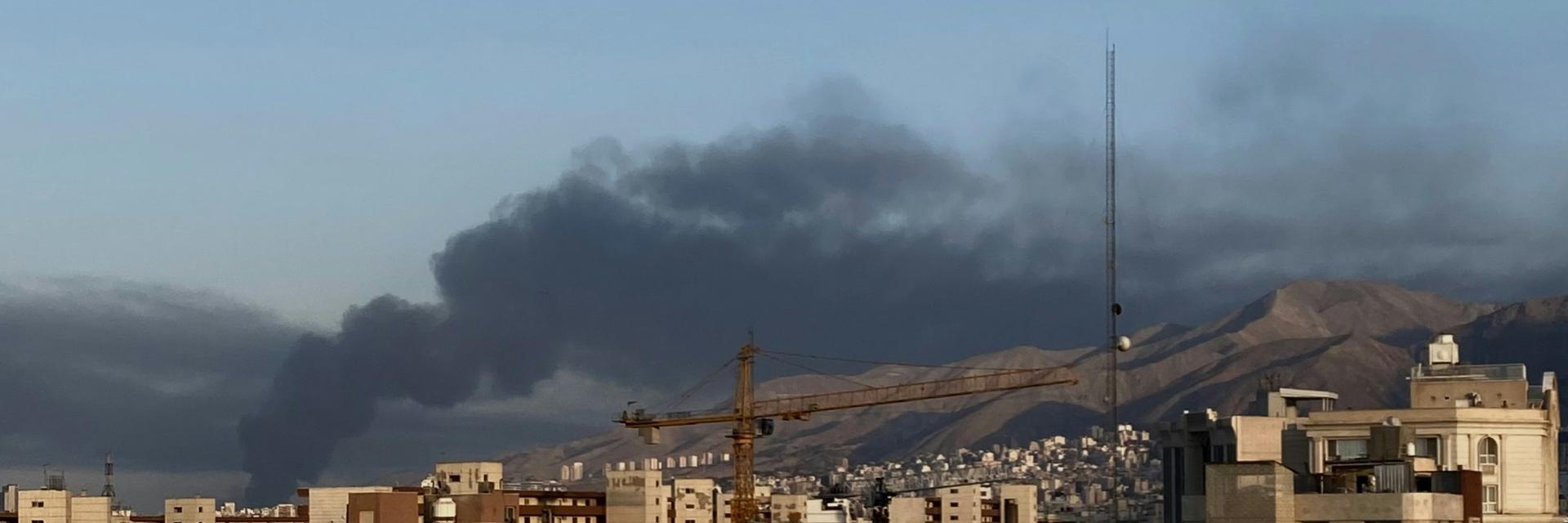
On the morning of 28 February 2026, US and Israeli forces launched a large-scale attack across Iran. The initial strikes killed Ayatollah Ali Khamenei and other senior members of the Iranian leadership. Iran has responded by striking US bases across the region and targeting American allies. The risks of escalation into a wider regional conflict are high.
In this joint commentary, EUISS analysts examine the implications of the war across the world and options for EU policymakers. Director Steven Everts begins by setting out three concrete options for Europe to actively shape the war, protect its interests and prevent further escalation. Various analysts in their contributions trace reactions among the actors most directly exposed to escalation, in the Middle East and North Africa. They also look at the effects of Trump’s latest gamble on US military power, regional alliances and domestic public opinion. The commentary also considers the extra-regional consequences, looking at Russia, China, and adjacent regions in Africa and the Indo-Pacific – as well as the effects on the oil market.
What should Europe do now that the US and Israel are redrawing the map of the Middle East?
Steven Everts(*)
So far, Europe’s response has been marked by shock, scepticism, a certain inward focus and, above all, a retreat into debates about principles. As so often happens in Europe, the discussion is about how to interpret the events rather than what to do about them.
All this is unfolding with Europe on the sidelines. Europeans were not consulted at the outset and are not directly taking part in the offensive military operations.
This is therefore a completely different war from Afghanistan or Iraq, or even from last summer’s strikes on Iran’s nuclear facilities. In all those cases, some European countries were involved, including to protect Israeli airspace. Here, Europe’s role is more limited.
This war is also of a different order and has a different objective. Europeans are watching it from a distance and with deep reservations. But their interests are also at stake: regional stability, energy security, and our credibility as supporters of democracy.
Of course it matters what principled position Europe takes. But it must be careful not to get stuck in mere moral outrage and predictions that Trump’s ill-considered campaign will end badly for an Iranian population that has been oppressed for so long. While the future is uncertain, the question is what the EU is going to do to shape it. How can it become more of a player and less of a commentator?
Here are three ideas on what Europe can do.
First, Europe is calling for de-escalation – and rightly so. That was the clear message from the 27 EU foreign ministers who met on Sunday in an emergency session at the initiative of High Representative Kaja Kallas. The question is how you achieve that de-escalation, now that Iran is doing everything it can to drag neighbouring countries into a larger regional war. Missiles and drones are literally flying in all directions, even towards EU Member State Cyprus. Nothing suggests that Israel and the US will quickly reduce the tempo of strikes in Iran. After the death of Supreme Leader Khamenei and the first images of anti-regime protests, they want to press on. But the more the regime and the Revolutionary Guard are squeezed, the harder they will strike, at home and abroad.
The key to a path of de-escalation lies in the Gulf states. The EU should urgently invest in a coalition with those countries, together with Turkey, the UK, India, China and others. None of these countries wanted this war, yet all feel its consequences. The priority now is a diplomatic initiative that offers both Trump and Iran an off ramp. Europe can push for a diplomatic summit with this group, in Riyadh or Istanbul, or elsewhere in the region once the airspace reopens.
Second, there is the threat that the Strait of Hormuz will be closed or remain unstable. Reports suggest that Iran is deliberately attacking tankers, and it is certain that insurance premiums will shoot up quickly. That more than 20% of total oil and gas exports are at risk is well known. But the stakes go beyond energy: fertilisers and many other strategic products are also affected, goods that must also move to and from Europe.
There are already numerous military operations aimed at improving maritime security in the region. There is Operation Sentinel, led by the US and the UK, but also Operation Agenor, in which Europeans, including the Netherlands, and the Gulf states cooperate. For the latter, expanding Agenor may well be preferable, precisely because the US is clearly a party to the war. The EU itself also has Operation Aspides in the Red Sea, which it is beefing up and that operation should help to provide broader coverage for freedom of navigation.
Finally, the hardest question: what can the EU do for the Iranian people and their democratic aspirations? This is a genuine dilemma. On the one hand, there is an opening after the death of Khamenei and other senior figures. But at the same time, the debacles of Iraq and Afghanistan lie fresh in our memory. Perhaps the current situation most resembles Libya after the fall of Gaddafi in 2011 - and that did not end well either.
No one knows whether the regime will stay in power and, if not, what would replace it. What is certain is that the Iranian opposition deserves every support: morally, financially and with modern communications technology, to help it withstand and evade the regime’s repression. Europeans can act here too. Their role should extend beyond statements or social media expressions of solidarity.
The political map of the Middle East is being redrawn. Europe must bridge the gap between reciting principles and exerting influence. You don’t win a match from the sidelines.
MENA at a crossroads: reactions and spillovers from the Iran confrontation
Katarzyna Sidło
The US-Israeli attack on Iran, carried out as Oman-led mediation efforts were still under way, triggered a rapid regional escalation once Iran’s retaliatory strikes hit third countries.
In the Gulf, Kuwait, Qatar and the UAE were among the hardest hit, but Saudi Arabia and Oman were also targeted, despite not hosting major US bases, and some strikes included civilian or symbolic targets. Official reactions combined strong assertions of sovereignty with calls to keep diplomacy alive. Qatar condemned the targeting of its territory as a violation of sovereignty and the UN Charter, summoned Iran’s ambassador, affirmed its right to respond under international law, and urged an immediate return to dialogue. Saudi Arabia’s statement signalled its readiness to take ‘any measures’ to protect its population, including retaliation.
At an extraordinary meeting on 1 March, GCC foreign ministers condemned what they described as ‘blatant’ Iranian attacks and emphasised the need for coordination, while influential commentators in the UAE portrayed Iran’s decision to strike Gulf neighbours as politically isolating Tehran and validating threat perceptions around its missile programme.
Oman’s response stood apart. Muscat publicly expressed dismay that negotiations which had shown signs of progress had been undermined, urged Washington not to deepen its involvement (‘I urge the United States not to get sucked in further. This is not your war’.), and then stressed that ‘the door to diplomacy remains open’. Yet the fact that Oman was also hit underscored that mediation and neutrality do not shield a country from regional spillover.
Beyond the Gulf, Arab state reactions largely prioritised territorial integrity and restraint, with varying degrees of explicit attribution. Algeria shifted from a balanced expression of concern about the failure of mediation efforts to a firm condemnation of Iranian attacks on ‘brotherly’ Arab states. Egypt and Tunisia likewise called for de-escalation, with clear rejection of violations of sovereignty and condemnation of strikes on Arab neighbours, while Morocco confined its criticism to Iran’s attacks on fellow Arab states. Syria’s new authorities issued direct condemnations of Iranian attacks on Gulf and Arab states while endorsing dialogue, and Jordan stressed that it would take all necessary steps to protect its citizens and sovereignty (Iranian missiles were intercepted over its territory). Iraq’s official posture remained constrained by the role of Iran-aligned militias embedded within or operating alongside state-sanctioned forces.
Among broader regional actors, Türkiye has adopted an unusually explicit position on the sequencing of the crisis: Foreign Minister Hakan Fidan stressed that events ‘began with Israel and the US attacking Iran, and continued with Iran targeting third countries’. Türkiye tried to avert strikes on Iran, out of concern that escalation could trigger large refugee flows (with contingency planning along the border reportedly underway since June) and create openings for Kurdish separatist groups if a power vacuum emerges in Tehran.
At the same time, Ankara’s posture reflects a delicate balancing act shaped by its close ties with Washington and the Erdoğan–Trump relationship, alongside rising tensions with Israel (underscored by former Israeli Prime Minister Naftali Bennett’s claim that Türkiye is ‘the new Iran’). Erdoğan’s public condolences to the Iranian people following the assassination of the Supreme Leader fit this dual-track approach of keeping channels with both Tehran and Washington open while seeking to contain regional spillover.
Pakistan condemned the attacks on Iran while also denouncing Iranian strikes against Gulf states and urging restraint, reflecting both its broader regional ties (including a mutual defence pact with Saudi Arabia signed last September) and domestic sensitivities, with demonstrations erupting over the killing of Iran’s Supreme Leader.
Non-state ‘axis of resistance’ actors like Hamas and Hezbollah largely framed the crisis as US-Israeli aggression and expressed solidarity with Tehran, but their operational responses have differed. Hamas publicly mourned Iran’s Supreme Leader following reports of his killing and blamed Washington and Israel for the escalation. Hezbollah launched a military response only following the killing of Khamenei, which it had defined as a red line – the attack was promptly met with Israeli retaliation. The Houthis declared themselves ready for ‘any developments’ while emphasising Iran’s capacity to respond, signalling deterrence without positioning Yemen as the primary theatre. In Iraq, Iran-aligned armed groups face a more acute constraint: retaliation from Iraqi territory risks escalation that would not only target US forces but also draw the Iraqi state directly into the confrontation.
Moving on to escalation risks, Lebanon and Iraq are the theatres most immediately exposed. In Lebanon, sustained exchanges between Hezbollah and Israel could quickly widen the conflict and erode the already fragile post-ceasefire environment; Israeli Defence Minister Israel Katz said on Monday that Hezbollah chief Naim Kassem was now a ‘target for elimination’. Iranian and Lebanese warnings about being dragged into a broader regional conflict underline this vulnerability.
In Iraq, risks of escalation are heightened by the role of Iran-aligned armed groups. One such militia, Saraya Awliya Al-Dam, claimed responsibility for attacks on US bases in Erbil, with explosions reported near the airport. Although Iranian influence in Iraq has weakened in many respects, it remains significant, with multiple Iran-backed factions operating within the country. Their willingness and capacity to engage directly in the conflict vary, but any sustained activity from Iraqi territory carries clear risks for Iraq’s internal stability and raises the prospect of the country being drawn more directly into the confrontation.
The conflict is also constraining movement and access across Israel–Palestine: closures of crossings into Gaza, including Rafah (which opened only last month and is coordinated by the EUBAM Rafah mission), would further exacerbate already dire humanitarian conditions and affect international operational footprints, while the West Bank remains exposed to additional restrictions and security incidents, with reports of missile fragments falling in several areas. In Syria, missile debris has reportedly damaged electricity infrastructure. Across the region, risk premiums are rising for aviation, shipping, trade and tourism.
The next phase of the conflict is fraught with uncertainty. For Gulf states, the dilemma is becoming more acute. Although all continue to express a preference for diplomacy and de-escalation, a campaign lasting several weeks, as indicated by signals from Washington and Tel Aviv, would make their current balancing posture increasingly difficult to sustain. Ongoing Iranian attacks would heighten domestic expectations of a firmer response, while pressure from the US could draw governments into deeper operational involvement.
Gulf capitals are therefore reassessing their options. A central question is whether to allow their territory to be used for strikes on Iran, a step they had previously ruled out before coming under direct attack. The calculus may shift if other partners move in that direction (for the time being the only example is the United Kingdom agreeing to allow American use of British bases for strikes – but only defensive ones). Another possibility is expanded military cooperation focused on countering Iranian missiles, or, less likely, more direct participation in operations against Iran. The trajectory will depend not only on internal deliberations within Gulf capitals, but also on how Iran calibrates its next steps and how much pressure Washington is prepared to apply.
Trump’s latest Iran gamble: repeating the playbook and taking new risks
Giuseppe Spatafora
Operation Epic Fury reflects many features of Trump 2.0’s foreign and military policy. First, despite the ‘predisposition to non-intervention’ claimed in the National Security Strategy, this administration has shown a greater readiness to use force than previous ones. Nor does its proclaimed focus on the Western hemisphere preclude intervention elsewhere. Trump sees the whole world, not just the Americas, as the US sphere of influence.
Second, Trump is using force to finish what he started in this first term. He began his feud with Iran by withdrawing from the JCPOA and ordering the killing of General Qasem Soleimani in 2020. He claimed to have ‘obliterated’ Iran’s nuclear programme last June in Operation Midnight Hammer. But Trump’s fight with Khamenei’s regime was not over: as with Maduro earlier in the year, Trump appears intent on settling scores with long-standing adversaries.
Third, the US is continuing its approach to regime change ‘on the cheap’, that is, without putting boots on the ground. The US hopes that decapitating the Iranian leadership at a time of economic and military weakness could trigger a popular uprising within the country. As Trump said in his address to the Iranian people, ‘when we are finished, take over your government. It will be yours to take.’ At the same time, the US appears to be drawing on elements of the Venezuela playbook, seeking out figures who are willing to abandon Khamenei’s hardline stance and accommodate American demands. In either case, boots on the ground are not an option.
Despite all the above, Operation Epic Fury differs in significant respects from previous missions – and carries additional risks for Trump. Unlike in the case of Venezuela or in Operation Midnight Hammer, this mission was not over in a day. Trump has acknowledged that the war may last for weeks. A prolonged operation would further strain already stretched US supplies of critical munitions and air defences – as military leaders have already warned. As an aside, this could also divert resources from US assistance to Ukraine, including provisions financed by European contributions through the PURL initiative.
Moreover, Iran has fewer incentives to de-escalate. Hoping to increase the costs of the US operation, Tehran is striking American bases across the Middle East. Several US soldiers have already been killed – and Trump has acknowledged that more loss of life may follow. This is a sharp contrast to Trump’s previous boasting (over Venezuela and in other cases) that US forces had carried out missions without suffering any casualties.
Another difference is the role of US allies in the region. In June of last year, Israel was the first to strike Iran, and the US decided to intervene later in the Twelve Day War. This time, the US had to persuade Israel to join the mission, coordinating the strikes. Other US allies in the region were opposed to the war, fearing – rightly – that they would be targets of Iranian retaliation.
While just a quarter of the US public backs the operation, and Congress is once again overstepped, the MAGA base continues to show support for Trump. However, some cracks in the movement are emerging. The restrainer wing is complaining against another war of choice in the region. The bulk of MAGA will rally behind Trump if he can point to tangible wins, like the killing of Khamenei. But the longer this war drags on, casualties grow and US vulnerabilities emerge, this could shift.
This creates a number of dilemmas for Trump. As usual, the president has made several contrasting claims to justify the operation – from complete regime change to reducing the threat of Iran’s missile arsenal – to keep his strategic options open. If he can force Tehran to de-escalate or find a new leadership that will yield to US demands, he will be able to showcase Operation Epic Fury as another foreign policy win. Trump has already signalled that negotiations may resume.
But if the war continues and no clear objectives are defined and achieved, the perception of US military, now at its peak, may begin to diminish. This will affect extended deterrence elsewhere. US allies in the region may hedge further from Washington. And domestic opinion, including in MAGA, could turn decisively against Trump. The stakes are high – in the Middle East and across the Atlantic.
Russia: Less than may meet the eye?
Ondrej Ditrych
‘A cynical violation of all norms of human morality and international law’, is how Vladimir Putin described the assassination of Khamenei, an ‘outstanding statesman’. The Ministry of Foreign Affairs was more diplomatic when it called strikes on Iran a ‘deliberate, premeditated and unprovoked act of armed aggression’, but the gist was the same. While Russia’s theatrical outrage at breaking international law is surely staged, it may not be entirely insincere. Moscow would like U.S power to be more constrained by international law – even while, as far as its own actions are concerned, the Kremlin will continue to claim to be beyond reproach.
The net consequences for Russia of the action against the ayatollahs’ regime may be either negligible or positive, depending on the depth of political transition in Iran as well as the scale and duration of the political crisis in the wider region.
There is no Moscow-Teheran axis in the sense of an enduring partnership based on shared (authoritarian) values. The relationship between Russia and Iran has been far more transactional and opportunistic. True, Moscow’s network of global relationships is shrinking, from Syria to Venezuela and now, potentially, pending further developments, Iran as well. While this complicates Russia’s ambition to project itself as a global power, it does not necessarily entail significant ‘reputational costs’ – there is no commitment to common defence between Russia and Iran currently in place – and in material terms the losses may also not amount to much in the final instance. Much of the Iran-designed drone production on which Russia relied in its war against Ukraine has since been localised, and any disruption to the remaining supply of components is unlikely to significantly alter Russia’s capabilities.
Russia will use these events to reinforce the counterhegemonic narratives it disseminates globally, seeking to increase their appeal and its standing as an advocate for the ‘global majority’ against US interventionism. More immediately, if the crisis persists, Russia stands to benefit from more competitive prices of Urals oil compared to Brent. Recent sanctions and a more assertive crackdown on the shadow fleet have lately pushed Russian oil prices down (and increased the discount at which Russian oil is sold). But the evasion tactics deployed by the shadow fleet are also evolving. Even if pressure against the fleet intensifies, the opportunistic and opaque network sustaining the parallel oil trade will attract increased demand if the gains are worth it. This may have a geopolitical impact – strengthening the foundations of the relationship between Russia and China, while New Delhi will want to counterbalance this by cultivating its own relationship with Moscow, despite the recently announced trade deal with the US.
Beijing walks a Gulf tightrope
Tim Ruhlig
Beijing’s public messaging has been unambiguous in opposing the operation. On 28 February, a spokesperson for the Ministry of Foreign Affairs stressed ‘high concern’, insisted that Iran’s ‘sovereignty, security and territorial integrity’ be respected, and urged an immediate halt to military action and a return to talks. At the emergency meeting of the UN Security Council, Chinese Ambassador Fu Cong framed the strikes as a breach of the UN Charter’s purposes and principles and condemned the ‘use or threat of force’. He also described the timing of the strikes – which took place during US-Iran talks – as ‘shocking’. After reports that Iran’s Supreme Leader had been killed, the ministry sharpened its language, calling the act a ‘serious violation’ of Iran’s sovereignty and a trampling of the UN Charter and basic norms of international relations, again demanding an immediate end to military operations.
Chinese state media further emphasised that the strikes did not reflect a failure of diplomacy but the deliberate abandonment of diplomacy. The military strikes were framed within Beijing’s broader worldview of the US clinging to an ‘outdated notion of hegemony’ and unable to adapt to ‘a multipolar reality’. Killing or deporting foreign leaders, like Khamenei and Maduro, could further destabilise global security, state media has argued.
For Beijing, quite a lot is at stake. Iran has been a major energy supplier to China. Estimates suggest that Teheran could account for as much as 15% of China’s crude shipped oil, even though Chinese customs data have reported no direct Iranian oil imports since 2022. Beijing has also invested diplomatic capital in strengthening Iran’s international standing—e.g., supporting Iran’s admission into an expanded BRICS (BRICS+) from 1 January 2024 and its membership in the Shanghai Cooperation Organisation.
However, Chinese officials have publicly supported efforts to prevent Iran from obtaining nuclear weapons. The Chinese government’s official discourse states that Iran should ‘continue honouring its commitment to not developing nuclear weapons’, while China supports a JCPOA-based ‘new consensus’.
Beijing’s chief concern is a spillover that could threaten key chokepoints like the Strait of Hormuz – critical for energy flows to Asia – and disrupt China’s trade and oil imports from the Gulf. Iran’s retaliation against Gulf states also deepens Beijing’s dilemma: China’s commercial exposure in the GCC often outweighs its political investment in Tehran, and Gulf condemnation of Iranian strikes increases the likelihood that regional partners will demand stronger US security guarantees.
In the near term, Beijing looks sidelined: it had touted diplomatic influence after brokering the Saudi–Iran détente, but this crisis reduces the space for such a mediating role. A worst-case outcome for Beijing is regime change with a transition towards a pro-Western leadership in Tehran, which would jeopardise a key sanctioned energy channel and weaken an important anti-US pillar in the region.
It could also complicate China’s alignment with Russia: Iran still matters for drone-related know-how, iterative upgrades, and – crucially – sanctions-evasion procurement networks for key components. That helps explain why Chinese messaging, including Wang Yi’s reported remarks to Lavrov, firmly condemns strikes during negotiations and the killing of a sovereign leader as illegitimate and destabilising.
Yet Beijing may also see an upside if the crisis settles into contained, intermittent escalation: higher costs for the US posture in the Gulf, distraction from the Indo-Pacific, and gradual depletion of US resources – all of which would serve China’s broader strategic objectives.
Middle East war, African fallout
Rossella Marangio
The African Union, through its Commission Chairperson, denounced the escalation in the Middle East, warning of repercussions for energy markets, price stability and food security, and calling for restraint and respect for the UN Charter. The A3 group (DRC, Liberia and Somalia) echoed this position at the UN Security Council, where Somalia reiterated support for a Middle East free of nuclear weapons and urged states to join the Non-Proliferation Treaty — a call also voiced by the League of Arab States.
Most African governments struck a balancing tone. Senegal, Nigeria, Kenya and South Africa stressed the need for diplomatic solutions, recalling that military means cannot resolve political problems. Chad, by contrast, expressed solidarity with Iran while condemning attacks against countries in the region.
The most immediate consequences of war with Iran for Africa are economic. The conflict is likely to push oil prices upward unless major producers increase output. While higher prices could benefit exporters such as Algeria, Angola, Nigeria and South Africa – and possibly gold producers – the resulting inflation, currency depreciation and rising trade and debt-servicing costs would outweigh any gains. Disruptions to maritime and air transport are already visible, with companies suspending vessel traffic in the area, insurance companies raising premiums and rerouting shipping through the Cape of Good Hope. Their impact on trade and food security will depend on the war’s duration.
Beyond economics, Gulf politics is deeply intertwined with African security and economies. From the Sahel to the Horn, Iran, Israel, Türkiye and several Gulf states have expanded their footprint, alongside China, the United States and Russia. Iran has strengthened ties with the Alliance of Sahelian States – which has recently also renewed ties with the US – supplied drones in African conflicts, and, through BRICS and branches of Al-Mustapha University, deepened links with countries such as Ethiopia and South Africa while reaching out to Shia communities in Nigeria and elsewhere. Since 2023, Israel has renewed its African outreach through new embassies and high-level visits, while monitoring possible Hezbollah-linked networks. Meanwhile, Gulf states and Türkiye have broadened investments and cooperation, particularly in infrastructure, as well as in education and humanitarian sectors.
The depth of Gulf involvement is most visible in the Sudan war and in the web of rivalries shaping the Horn of Africa, where regional actors have backed competing factions and leveraged political, financial and military influence.
The worst-case scenario would be an expansion of the conflict towards the Red Sea and the Horn of Africa, where geopolitical tensions have intensified. Multiple fault lines converge there: rival alignments in Sudan’s war, tensions between Saudi Arabia and the UAE, instability in Ethiopia, frictions between Ethiopia and Eritrea over Red Sea access, the dispute with Egypt over the Grand Ethiopian Renaissance Dam (GERD), Israel’s recognition of Somaliland and engagement with Addis Ababa, and existing links between the Houthis and both the Islamic state and Al-Shabaab in Somalia.
Regional dynamics are further complicated by overlapping security partnerships and external courtship. Ethiopia signed a police cooperation agreement with Iran in 2025 and previously received Iranian drones during the Tigray war, while also engaging with Saudi Arabia, Türkiye and Israel. China’s economic weight, Russia’s proximity to Eritrea and ambitions in Port Sudan, and Djibouti’s concentration of foreign military bases, including those of the United States and China, add further layers of competition.
If the war were to widen into this corridor, the consequences for maritime trade, transport logistics and the global economy could be severe. The density of actors and overlapping rivalries increases the risk of miscalculation. As past interventions in Iraq and Libya have shown, the outcome can be far more destabilising than initially envisaged.
The Indo-Pacific’s Exposure to the US-Israel-Iran Crisis
Lizza Bomassi
Most Indo-Pacific countries, both close and far from Iran, have a direct stake in how the conflict evolves.
One key vulnerability lies in labour migration. Gulf economies host millions of workers from South and Southeast Asia (particularly India, Pakistan, Bangladesh, Nepal, the Philippines, and Indonesia) concentrated in construction, services, and healthcare. Remittances from these workers form a significant share of household income and foreign exchange in several of these countries, accounting for roughly a quarter of GDP in Nepal and around 8-9% in Pakistan and the Philippines. A prolonged disruption to Gulf labour markets could translate quickly into economic pressure at home, even if the shock is not immediate or uniform. Past crises suggest that while remittance systems tend to recover over time, they are highly sensitive to short-term shocks. A severe escalation in the crisis could also trigger pressures for a large-scale repatriation. A process that would likely be logistically complex should air spaces be closed and also create additional pressures domestically for migrant-sending countries.
A second vulnerability runs through maritime trade. The Red Sea corridor typically carries around 15% of global trade, including a large share of Asia-Europe shipping. Recent security risks have already forced vessels to reroute around the Cape of Good Hope, adding roughly ten days to transit times and significantly raising freight and insurance costs. Continued instability risks entrenching these higher logistics costs and uncertainty for export-dependent Asian economies – in particular the advanced economies of East Asia and the regional production hubs – that rely heavily on just-in-time logistics and carry vulnerable time-sensitive cargo like perishables.
India, a regional heavyweight, faces additional longer-term concerns. The Middle East accounts for roughly a fifth of India’s exports and over half of its crude oil imports, underscoring the depth of its economic ties to the region. Prolonged instability complicates progress on the proposed India-Middle East-Europe Economic Corridor (IMEC), a flagship connectivity initiative intended to deepen transport, energy and digital links between the region and Europe. Yet India’s long ties with Israel, its recently renewed engagement with the US and its complicated relationship with Iran make it an unlikely candidate for taking the lead in brokering any form of de-escalation.
These dynamics indicate an Indo-Pacific region with multiple material stakes and strong incentives to support rapid de-escalation. Recent calls for restraint by Malaysia’s Prime Minister and the Indonesian President’s offer to mediate suggest that these dependencies are already shaping diplomatic positioning. Such statements do not guarantee diplomatic success, but they should not be dismissed as routine rhetoric either. For the EU, this underscores the importance of widening the lens beyond traditional actors to include partners across the Indo-Pacific that have a direct stake in stabilising the crisis.
Long-term pain for oil and gas
Caspar Hobhouse
The outbreak of conflict in the Persian Gulf is a worst-case scenario for the global oil and gas trade. The region is also home to about half of global oil reserves and 40% of its gas. A third of the world’s seaborne oil and a quarter of its LNG pass through the Straits of Hormuz alone. Unsurprisingly, early trading on Monday 2 March showed a near 10% rise in oil prices while European gas surged over 50%, at least initially. Three tankers had already been struck in the straits on Sunday leading to a logjam of ships trapped on both sides unwilling to pass through. The EU and other major oil and gas importers will pay the price.
Two major questions stand out: how far the situation could escalate and how long it might last.
Crucially, since the first strikes on Iran aimed to decapitate the command-and-control structure, much of the drone strike and missile operating capabilities have likely been granted to local commanders. This adds unpredictability, a greater likelihood of escalation and makes longer disruption more likely.
There is currently no formal blockade of the Straits of Hormuz, but the risk of attacks has already driven up uncertainty and insurance premiums. Several major shipping firms are already avoiding the Straits of Hormuz and the Bab al-Mandab out of concern of strikes. Although a full blockade would be hard to maintain, a consistent volley of drones and missiles would have similar effects.
Further escalation could engulf the extensive oil and gas infrastructure in the region. Most of Iran’s fossil exports, upon which the regime relies, pass through Kharg island, which US-Israeli missiles reportedly struck on 28 February. Equally, the sprawling infrastructure in the Gulf states is a major pressure point, as seen in the 2019 strike on Aramco’s facilities at Abqaiq and Kurais. Iran appears willing to hit civilian sites in the Gulf states to apply pressure on the US. Oil and gas infrastructure were next in the firing line, with strikes on Qatari and Saudi facilities reported just two days into the conflict.
The situation does not bode well for long-term stability in the global oil and gas market. Iran will likely test the resolve of the US and its allies in the region, none of whom appear to relish the prospect of a long conflict. Oil and gas facilities are a key point of weakness in a region which heavily depends on export revenues from fossil fuels. They will remain a high-value target.
For the EU, the instant effects of the crisis will be considerably higher prices at the petrol pump and for household heating. It means pain for European consumers and industries, already grappling with inflation and declining competitiveness. Higher oil and gas prices will be a boost to Russia, potentially prolonging its ability to continue to wage war against Ukraine.
In the long term, this crisis, created by others despite European efforts to deescalate, proves the importance of removing dependencies on imported fuels to safeguard the EU’s energy security. The lessons of 2022 were only partially learned. It is the fuels, not just the suppliers, that are the problem.
*This text is based on an opinion piece by Steven Everts originally published in Dutch in NRC on 2 March 2026 under the title 'Europa moet niet blijven hangen in enkel morele verontwaardiging over Iran’. It is reproduced here in English and adapted with the permission of NRC.