The US operation that led to the capture of Nicolás Maduro has had ripple effects across the world. It showed that the US will use all means at its disposal to reshape the Western Hemisphere. It sent a warning to regional actors who may oppose US plans and signalled to global adversaries that the Americas are off limits. It also offered new ideas for dealing with hostile governments or runaway vessels.
In this joint commentary, EUISS analysts examine reactions to the ousting of Maduro across the world. Responses range from outspoken support among the United States’ closest allies, to ambiguous reactions and ‘strategic silence’ by others, to strong condemnations by adversaries like China and Cuba.
The contributions show that US actions in Venezuela present both challenges and opportunities. Russia may have lost an ally, but finds an opportunity to deepen the transatlantic rift. China’s foothold in Venezuela may diminish, but its image as a responsible superpower, contrasted with a reckless US, could improve. Countries in Latin America, the Middle East and Africa are navigating the implications of the ‘Donroe Doctrine’ and developing new strategies to deal with Trump. And the EU, despite the transatlantic uncertainty, may also draw inspiration from US actions in its fight against the Russian shadow fleet.
The lesson for Latin America: Take US threats seriously
By Giuseppe Spatafora
To many in Latin America, the US abduction of Maduro brought back memories of regime change – the most recent parallel being the intervention in Panama that toppled Manuel Noriega in 1989.
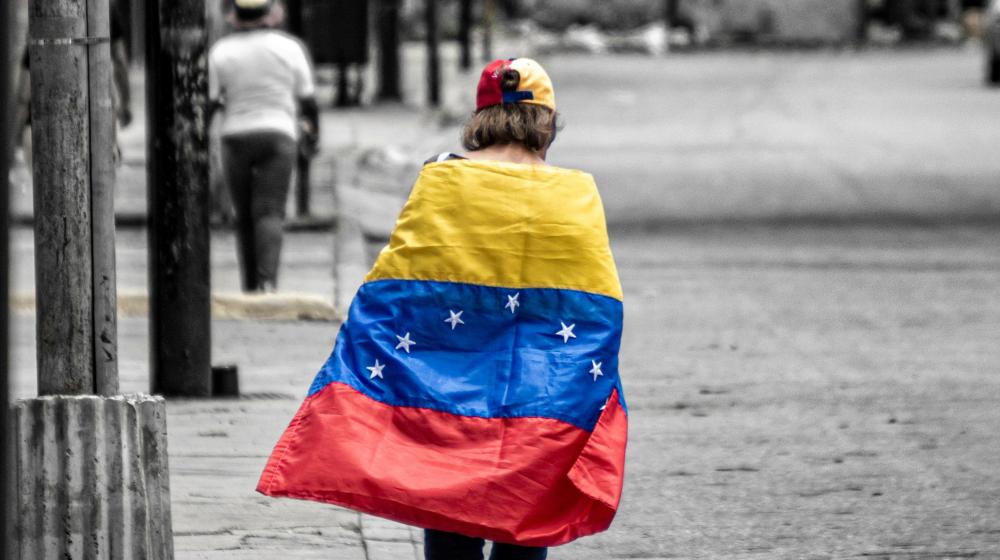
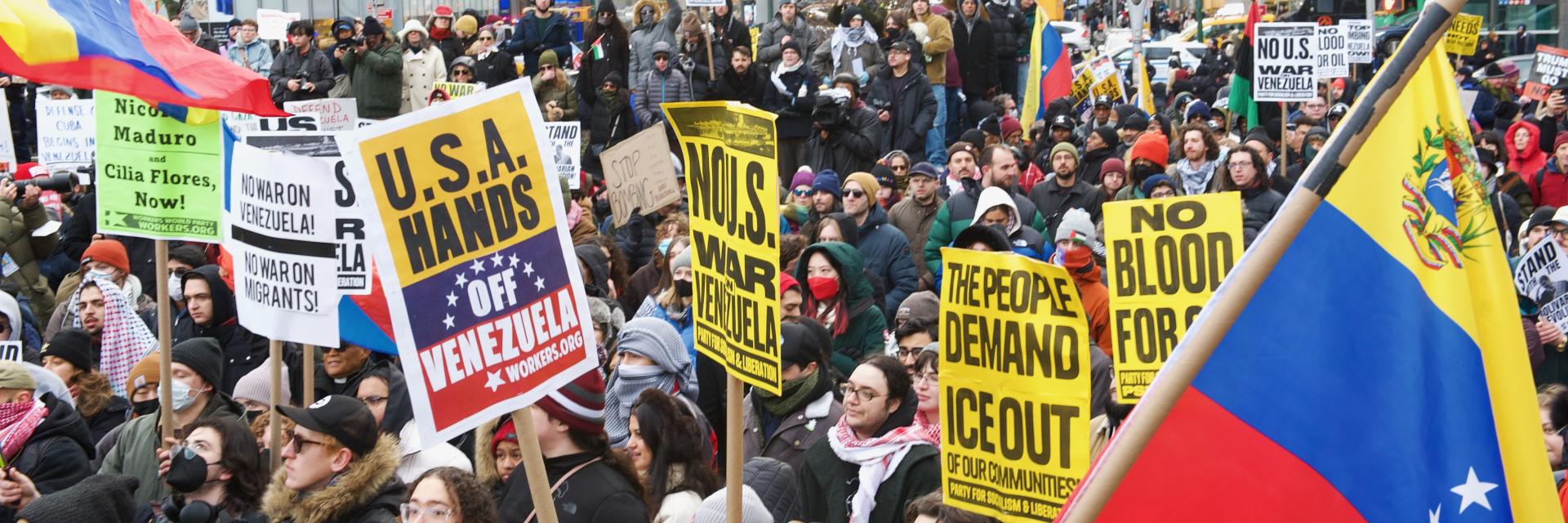
Regional leaders’ reactions have ranged from condemnation to support. Venezuela’s ideological allies, Cuba and Nicaragua, demanded Maduro’s release and vowed to fight back. Brazil, Chile, Colombia, Mexico and Uruguay (with Spain joining in from Europe) issued a joint statement rejecting unilateral intervention in Venezuela. Trump’s allies, including Argentina’s Milei, El Salvador’s Bukele and Ecuador’s Noboa, welcomed the fall of Maduro. Guyana and Trinidad and Tobago, Venezuela’s smaller neighbours, focused on reassuring their population amid concerns about instability.
The threat of further US intervention in the Western Hemisphere appears very real.
With the new National Security Strategy proclaiming a ‘Trump Corollary’ to the Monroe Doctrine, the threat of further US intervention in the Western Hemisphere appears very real. Cuba is perhaps the most exposed. Toppling Havana’s government has long been the goal of Latino constituencies in South Florida, today represented at the highest levels by Marco Rubio. Cuba had close ties to Maduro – 25 Cuban soldiers died in the US raid – and has long relied on Venezuelan oil, now under strict US embargo. Trump has hinted that the country could face economic collapse soon regardless, urging Havana to ‘make a deal before it’s too late’.
While Cuba appears defiant (at least in words), other Latin American leaders have chosen to appease Trump. Colombia’s President Petro held a phone call with Trump to defuse tensions and secured an invitation to the White House. It is not the first time that leaders’ relations with Trump have suddenly shifted: Brazil’s President Lula also had a cordial meeting with Trump last September, following months of US tariffs and interference in the trial of Bolsonaro. Petro seems to have adopted a similar tactic. Trump may also prefer to avoid confrontation: as Colombian presidential elections are due in May this year, and Petro cannot be re-elected, he might prefer to wait for a new, more ideologically aligned leader.
Mexico was also the target of Trump’s threats. President Claudia Sheinbaum has so far carefully navigated relations with Trump, giving in to some of his demands while avoiding a major spat. With the USMCA trade agreement review due this year, and the US considering land operations against drug cartels in Mexico, Sheinbaum’s balancing act will soon be put to the test.
In the aftermath of Maduro’s abduction, the lesson for most countries in the region appears clear: take the threat seriously. The ‘Donroe Doctrine’ is very much alive in the Western Hemisphere.
Russia: Never let a crisis go to waste?
By Ondrej Ditrych
The official Russian response to the US intervention in Venezuela has been measured – with the foreign ministry expressing ‘deep concern’ and stressing the importance of respecting state sovereignty. Later, Sergei Lavrov cautioned that the ‘illegal action’ was destroying the international system the US helped to build. The crisis is hardly something the Kremlin can celebrate. After Syria and Iran, whose tyrannical regimes it had failed to protect, the crisis exposes the limits of Russia’s ability to act as a reliable patron. Despite having served as a key security partner to the beleaguered and isolated regime in Caracas, once supplying large quantities of arms and paramilitaries, Moscow was reduced to the role of a distant bystander. The value of Russia’s protection has declined markedly of late.
What is more, the decapitation of the regime leadership in Venezuela has highlighted the scale of the failure of Russia’s strategy in Ukraine – a point that did not escape the notice of Russia’s military bloggers. Russia’s foreign policy bricolage can sometimes circumvent others’ strengths and exploit their weaknesses for tactical gain. But one would be hard pressed to cite a clear-cut strategic success that Russia has achieved in global politics in recent years.
Beyond reputational damage, political change in Caracas will almost certainly impose tangible asset losses on Russia. Venezuela had become too dysfunctional to serve as a pivot for Russian influence in the region, and Rosneft’s investment in the country’s oil sector turned into a colossal failure. Even so, it still offered a useful base for intelligence and covert operations. This loss comes as recent political transitions in the region have driven countries such as Argentina and Bolivia away from Moscow and towards Washington. Given Cuba’s dependence on Venezuela’s fuel imports and subsidies, cutting ties between Caracas and Havana could soon further destabilise yet another pillar of Russia’s regional presence.
Beyond reputational damage, political change in Caracas will almost certainly impose tangible asset losses on Russia.
Finally, prospective US control of Venezuela’s oil and the resulting downward pressure on global prices could spell deep trouble for the Russian economy, for which oil remains a critical source of income. Russian companies already offer additional discounts to regular buyers, pushing Urals crude to under $40 per barrel, lower even than the pessimistic forecast made last year by Rosneft CEO Igor Sechin. A sustained slump in oil prices, driven by increased Venezuelan output – although this is likely to take time, given the country’s dilapidated mining infrastructure – combined with growing risks to Russia’s shadow fleet would further constrain Russia’s capacity to wage its war against Ukraine, despite official optimism about openings in Asian markets.
That said, Russia is certain to seek to convert any short-term losses into long-term opportunities. The crisis will not give Moscow a free hand to pursue imperial ambitions in Eastern Europe. President Trump may favour great-power deals, but he does not treat Russia – or even China, for that matter – as an equal whose backyard the US would vacate or where it would tolerate unfettered action. On the contrary, he appears convinced that the United States’ indomitable power will deter future wars in Ukraine (or Taiwan).
However, a renewed US push for dominance in the Western Hemisphere will add fuel to Russia’s efforts to project normative power and mobilise a global coalition against the ‘unreliable’, ‘system-breaking’ United States. Moscow has pursued this approach both in Latin America – where it has long sought to undercut US soft power – and globally in an effort to align other countries with its interests. Russia will also spare no effort to exploit the ‘Trump Corollary to the Monroe Doctrine’ as a new centre of gravity for covert operations designed to drive a wedge within NATO and weaken the allies’ collective capacity to check Russia’s ambitions in the strategically important Arctic region – ambitions that are currently focused not on Greenland but on areas closer to Europe’s Arctic and North Atlantic shores.
China: Outright condemnation
By Alice Ekman
China condemned the US abduction of Nicolás Maduro in very strong terms. The operation took place while a Chinese delegation was visiting the country, just a few hours after a meeting between Maduro and Qiu Xiaoqi, the Chinese government’s Special Representative for Latin American Affairs. A foreign ministry spokesperson rapidly declared that China was ‘deeply shocked’ and condemned what it described as ‘hegemonic acts of the US’. Since then, it has repeatedly called on the US to release President Maduro and his wife immediately.
At the same time, China is trying to protect its interests in Venezuela, first and foremost in the energy sector. Although bilateral trade remains limited (at USD 6.4 billion in 2024), China remains the largest buyer of Venezuelan crude oil, and has taken advantage of US sanctions imposed against Venezuela in 2018 to buy oil from the country at a discounted rate. Beijing is also one of Caracas’s main diplomatic supporters, and an increasingly important exporter of technological infrastructure and products. The growing presence of companies such as BYD and Huawei has been welcomed by Maduro, who last year proudly displayed a Huawei phone gifted by Xi Jinping, describing it as the ‘best phone in the world’, which ‘Americans can’t hack’.
The abduction of Maduro opens a period of uncertainty for China in Venezuela and in the wider region. Trump’s attempt to persuade big Western oil companies to invest USD 100 billion in the country’s infrastructure is likely to erode China’s comparative advantage in the market. This will certainly represent a serious challenge for China, but not a disaster in terms of energy security, as Venezuela represents less than 4% of the country’s oil imports.
There is no evidence that US operations in Venezuela will serve as a blueprint for China with regard to Taiwan.
The removal of Maduro, as well as the currently ongoing protests in Iran, is likely to have indirect domestic repercussions in Beijing, as the Communist Party of China has always been very fearful of potential internal or external threats to its hold on power. Against this backdrop, and especially after the forthcoming adoption of the 15th Five-Year Plan (2021-2026) in March this year, the party is set to further entrench its central role and tighten political and social control at home. In this context, China is also likely to reinforce cooperation with Russia, in line with a joint statement signed on 22 March 2023 in which both countries agreed to ‘strengthen cooperation in law enforcement such as preventing the ”color revolution”’.
There is no evidence that US operations in Venezuela will serve as a blueprint for China with regard to Taiwan. China has made no official comparison between events in Venezuela and a potential invasion of Taiwan. Beijing sees Taiwan as a domestic issue to be addressed in a targeted and incremental manner: the dynamics involved are perceived as very different from those at play in Venezuela.
At the multilateral level, China is leveraging events in Venezuela to advance its narrative that the West – and above all the US – is to blame for all the crises and tensions in the world, and to consolidate a coalition of countries around this shared attribution of blame. At the UN, China is now positioning itself as the defender of Latin American countries against the ‘bullying acts by the United States’, and more generally as a responsible power in favour of peace, while portraying the US as a ‘grave threat to peace and security in Latin America and the Caribbean and even internationally’.
It is unclear whether China will be able to prevent some of its regional partners from becoming the next targets of US actions, but it will certainly remain highly active in seeking to maintain its presence and influence in the region, which for now remains significant. As a result, Latin America may become more polarised in the years ahead.
The Middle East and North Africa: Between cautious silence and taking the hint
By Katarzyna Sidło
Reactions across the Middle East and North Africa to the removal of Nicolás Maduro by US forces were largely muted. Most governments in the region responded cautiously or not at all, despite the close attention the event received. The operation attracted interest across the region not least because of perceived parallels to the US invasion of Iraq in 2003, but also due to Venezuela’s ties with Iran and actors aligned with Tehran, including Hezbollah (which has maintained networks across Latin America), as well as US statements linking the raid to concerns over Iranian and Hezbollah activity in Venezuela and across Latin America.
Unsurprisingly, Iran issued the strongest condemnation, describing the US raid as illegal and warning of its broader implications. Similar statements followed from Iran-aligned groups, including Hezbollah, the Yemeni Houthis, and Hamas. Iranian officials and affiliated media highlighted Venezuela’s status as a partner state and pointed to US pressure regarding Iran’s presence and influence there. Tehran has reason to be concerned. Although Iran and Venezuela differ significantly in strategic position, military capacity, and regional context, the US has repeatedly warned Iran’s leadership during the current protests about the possibility of intervention, using language reminiscent of that once directed at Maduro. Moreover, close political and military ties to Russia and China ultimately failed to prevent Maduro’s removal, underscoring the limits of those partnerships as effective deterrents for Tehran.
Tehran has reason to be concerned.
Israel, by contrast, openly welcomed the US action. Prime Minister Benjamin Netanyahu praised President Donald Trump’s decision, describing it as ‘bold and historic leadership’, while Israeli officials and commentators explicitly framed the operation through the lens of Iran. The operation reinforced hopes in Jerusalem that Washington might apply similar resolve toward Iran itself, with sources reporting that Israel is on heightened alert for the possibility of an impending US move against the Iranian regime. These assessments have been accompanied by indications of close consultation between Jerusalem and Washington regarding Iran-related contingencies, without any public confirmation of specific plans.
Türkiye, which initially offered cautious criticism of the operation in Caracas and urged restraint and respect for international law, later expanded its messaging to warn against intervention in Iran as well. While Ankara did not explicitly link the two cases, the timing and framing of its statements appeared to reflect concern that the Venezuela operation could serve as a precedent, implicitly raising the prospect that Iran might face similar pressure.
Elsewhere in the Arab world, a small number of political actors outside government circles in Morocco, Iraq and Tunisia were among the few Arab voices to openly condemn what they described as ‘US imperialist aggression’. By contrast, most governments issued no immediate response. Even Algeria, despite its historically friendly relations with Venezuela, released no official statement, reflecting a broader pattern of silence that encompassed both close US partners and states that traditionally emphasise non-alignment.
Among the governments that did respond, language was carefully calibrated. Oman issued a statement expressing concern and urging dialogue, consistent with its established neutral and mediating foreign policy posture. Qatar voiced ‘deep concern’ over developments in Venezuela, called for de-escalation, and reiterated its readiness to contribute to mediation efforts, referring to its role in facilitating channels of communication between Washington and Caracas. Egypt, another close US ally - heavily dependent on its foreign aid - confined its response to stating that it was closely monitoring the situation of Egyptian nationals in Venezuela and that they remained safe.
MENA countries may not be in the Western Hemisphere, and the ‘Donroe Doctrine’ formally deprioritised the region, but most still prefer to err on the side of caution.
Africa: Between sovereignty and pragmatism
By Rossella Marangio
The removal of Maduro sparked diverse responses across Africa. Between outright condemnation (South Africa, Ghana, Uganda, Eritrea, Namibia) and explicit accusations of invasion (Burkina Faso, Mali, Niger), and the open support expressed by Somaliland, most African states opted either for calls to respect international law and the UN Charter (African Union, ECOWAS, the A3 at the UN Security Council) or for strategic silence.
Beyond the Venezuelan case itself, what stands out is the interconnection between this episode and broader geopolitical trends marked by intensified competition, an increased reliance on force, and a growing number of conflict scenarios worldwide and across the continent. Thus, as multiple external actors expand their presence and interests in Africa and regional tensions mount, African responses reflect a wider geopolitical contest in which states navigate competing priorities and partnerships.
Somaliland’s support reflects its hope for US recognition of its independence, bolstered by Israel’s recent move. Somalia, which took over the UN Security Council presidency in January 2026, avoided alienating Washington by aligning with the A3 statement delivered by Liberia and the position of the African Union (AU). South Africa’s condemnation must be read against the backdrop of already strained relations with the US, including allegations concerning its domestic policies, the imposition of 30% tariffs — the highest on the continent — and its exclusion from G20 meetings under the US presidency. Nigeria, by contrast, opted for silence following US pressure over religious violence and reported US strikes against ‘Islamic State’ targets in the country’s north-west on 25 December 2025.
African responses reflect a wider geopolitical contest in which states navigate competing priorities and partnerships.
In the broader game of international and regional rivalries — from the Red Sea and the Horn of Africa to the Sahel and the Great Lakes — African positioning has also reflected proximity to Russia, notably the Alliance of Sahelian States and Eritrea – also concerned by Ethiopian quest for sea access. By contrast, countries closer to the US largely favoured caution, especially as the US Congress considers reviving the African Growth and Opportunity Act (AGOA) which expired at the end of 2025.
The return of the Monroe Doctrine, with its emphasis on spheres–of-influence logic, revives deep-seated African sensitivities shaped by painful historical experiences. While Africa is unlikely to fall within any formalised ‘Western hemisphere’, its resource wealth continues to expose it to global competition, and its security challenges still attract US attention, as shown by the recent strikes in Nigeria and sustained operations in Somalia over the past year.
The challenge for Africa will be to resist the normalisation of military might, notably by preserving continental cohesion. For the EU, the challenge will be not to lose sight of its closest continent amid its own challenges. International law remains a collective responsibility — for all those who still believe in it – and the EU and Africa, primarily through the AU, are partners of choice in this endeavour.
How to fight the shadow fleet: Ideas from the US seizure of the Marinara
By Caspar Hobhouse
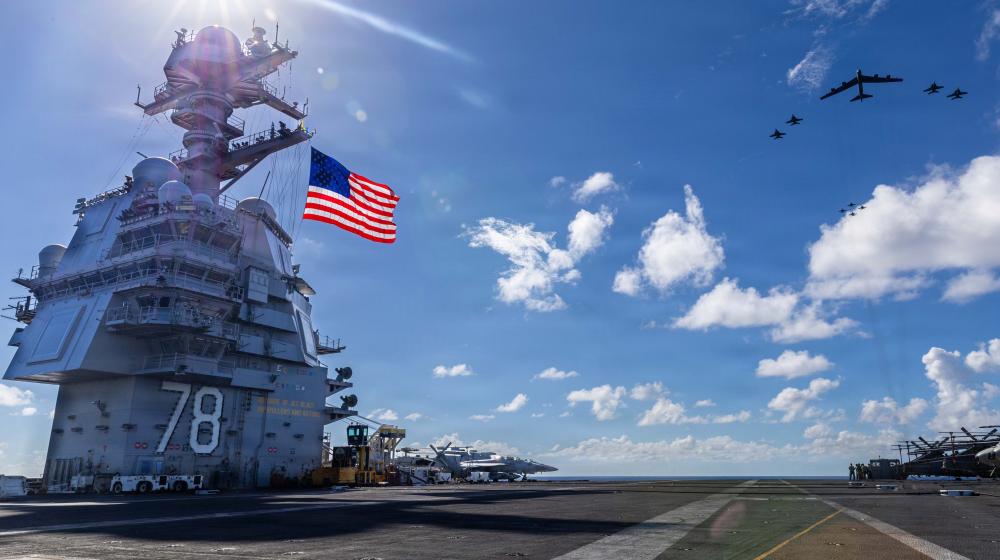
On 17 December 2025, Donald Trump ordered a blockade of all US-sanctioned oil tankers entering or leaving Venezuela. On 7 January, as part of this strategy and after a long pursuit, US forces seized the ‘Marinera’ in the North Atlantic. This moment may well mark a watershed in efforts to combat the global shadow oil tanker fleet, with potentially major consequences for Europe.
The seizure marks an escalation against the global shadow oil tanker fleet which has largely operated unimpeded despite international sanctions. In Europe, shadow fleet vessels, the vast majority of which are linked to Russia, have been linked to hybrid attacks including drone launches and undersea cable cutting. The seizure of the Marinera proposes a new response – one which could prove effective in constraining the shadow fleet and reducing oil revenues for both Caracas and Moscow.
First, the ship was sailing under a false flag, despite efforts to re-register itself as Russian, which made it a stateless actor in the seas, stripping it of protection under international law. This is common among shadow fleet vessels, showing the value of up-to-date intelligence on vessels and their flag states.
Second, efforts by the Russian navy to provide support to the vessel, long a concern in any active seizure of shadow fleet vessels, proved little more than a bluff in the North Atlantic. The episode thus exposes a long-standing weakness of the Kremlin: it lacks the capacity to credibly protect its oil exports, leaving it to protest alleged violations of international law before swiftly lapsing into silence.
This incident demonstrates that a more assertive policy against Russian shadow fleet vessels is possible.
Third, the US has demonstrated its willingness to intercept and seize shadow fleet tankers that it has sanctioned. This list includes 180 Russian vessels added in January 2025 alone, which could be a serious problem for the Kremlin, especially as the US is not a signatory to UNCLOS, which has broadly shielded them from attack until now.
For the EU and European states, this incident therefore offers a major opportunity. It demonstrates that, under the right conditions, a more assertive policy against Russian shadow fleet vessels is possible. Indeed, on 12 January the UK announced it was reconsidering legal options for the seizure of shadow fleet vessels seemingly as a consequence of the episode.
Hence, the capture of the Marinera illustrates how a more assertive policy could be implemented in the future. US forces subsequently seized the Olina on 9 January in the Caribbean, a vessel previously sanctioned by Washington for supporting Russia’s war in Ukraine.