The Middle East and North Africa (MENA) is a fragmented region: in spite of its relative cultural and historical homogeneity, it has some of the lowest levels of intra-regional trade, political cooperation and legal migration in the world.
This is largely due to the fact that, since the end of the Second World War, it has experienced the full spectrum of political violence. Conventional, hybrid, and civil wars, revolutions, and terrorism have hindered political and economic development, and created fertile ground for further violence. Breaking this ‘conflict trap’ is imperative for the states of the region, as well as those actors who have a stake in it.
For the EU, the MENA is of strategic importance for three reasons:
- it is an immediate geographic neighbour,
- a crucial passage for goods traveling to and from Europe (including oil and gas),
- and it has been historically unstable.
The region’s security and economic situation is consequently closely intertwined with that of Europe. This explains the Union’s desire to contribute to regional stability through different means such as the European Neighbourhood Policy (ENP), the Barcelona Process and the Union for the Mediterranean.
The EUISS seeks to contribute to the EU’s overall effort in the MENA by providing in-depth analyses on a number of key issues affecting the region.
The 2019 Yearbook of European Security provides an overview of events in 2018 that were significant for European security and charts major developments in the EU’s external action and security and defence policy.
This Brief launches a new EUISS series on conflicts, by focusing on the renewed attention to prevention in international peacebuilding at a time when the human and economic costs of violent conflict keep rising.
The 150th Chaillot Paper produced by the EUISS, this publication aims to alert decision-makers to potential developments with significant strategic impact while they can still prepare for, or even avoid them.
Few international actors blur the lines between politics and business to the point of making them indistinguishable as some Gulf Cooperation Council (GCC) states do. This Brief looks at their distinct political and economic models, which allow the GCC states to deploy economic...
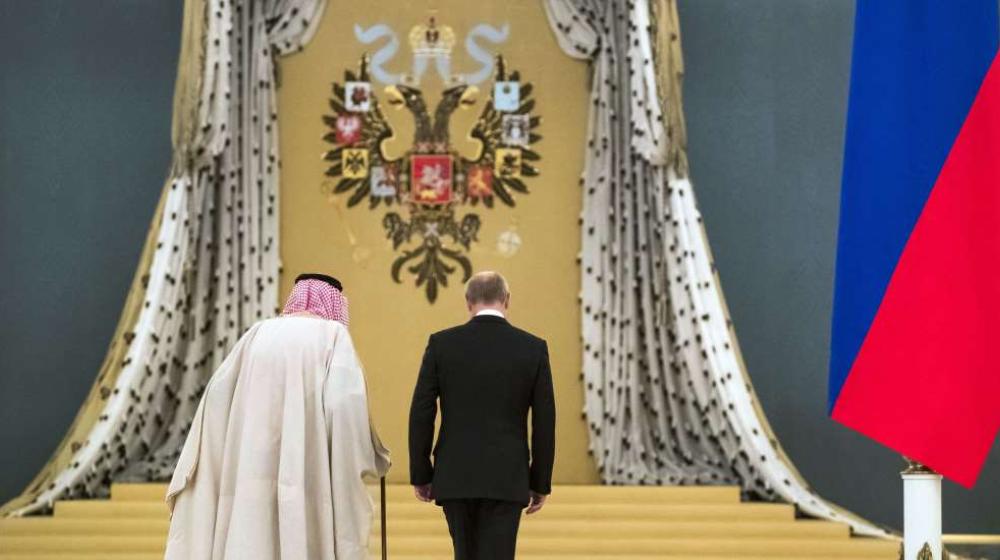
Russia’s political, diplomatic, military and economic footprint in the Middle East and North Africa has expanded visibly over the last decade. This Chaillot Paper provides a detailed account of Russia’s spectacular return to the region.
The Yearbook of European Security (YES) is the Institute’s annual publication compiling key information and data related to the CFSP and CSDP in 2017. YES 2018 provides an account of the EU’s engagement with the world through evidence-based, data-rich chapters.
This Brief looks at the economic and political implications of drug trafficking and consumption for the Middle East and North Africa (MENA). What problems do states face and how have they responded? And how deep is the symbiotic relationship between drugs and terrorism?
Baathists, jihadists, insurgents: stereotypes about the Sunni Arab community of Iraq abound. But what is the truth about this community? And how can their grievances be addressed?
Since the end of the Second World War, 2.3 million citizens in the Middle East and North Africa (MENA) have died as a result of political violence. This Brief explains what needs to be known about conflict in the MENA in order to support peace in the region.
This Report presents a number of grey swan scenarios which are designed to help decision-makers think about possible responses to crises and how they can be prevented.