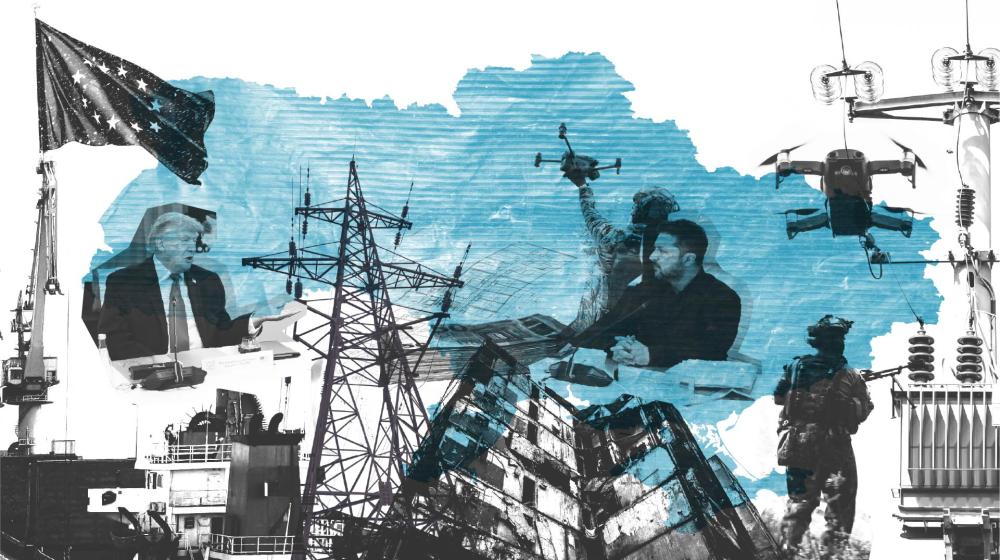
The talks in Abu Dhabi produced no diplomatic breakthrough. Nor is one likely before winter, as Russia seeks to use the intervening months both to weaken Ukraine and to raise the cost of supporting Kyiv for its partners. Instead of showing any readiness to compromise, as the increasingly impatient US negotiators taken in by the prospect of lucrative business deals dangled before them by Russia’s rainmaker-in-chief Kirill Dmitrev had hoped, Russia succeeded in placing a future European security architecture on the table.
The EU should recognise Russia’s renewed ‘interest’ in the European security architecture for what it is: an attempt to sow discord. Moscow’s intent? To portray the alleged failure of the European security system as the ‘explanation’ for the war, rather than its own imperial ambitions; to keep the Americans busy talking and limit their involvement in efforts to contain Russia; and, crucially, to confront Europeans with a dilemma. The latter do not wish to renegotiate existing security institutions but may fear that, unless they get involved, the basic contours of a new architecture may be negotiated over their heads before they muster the strength and resolve to stand their ground.
An architecture of Russia’s aggression
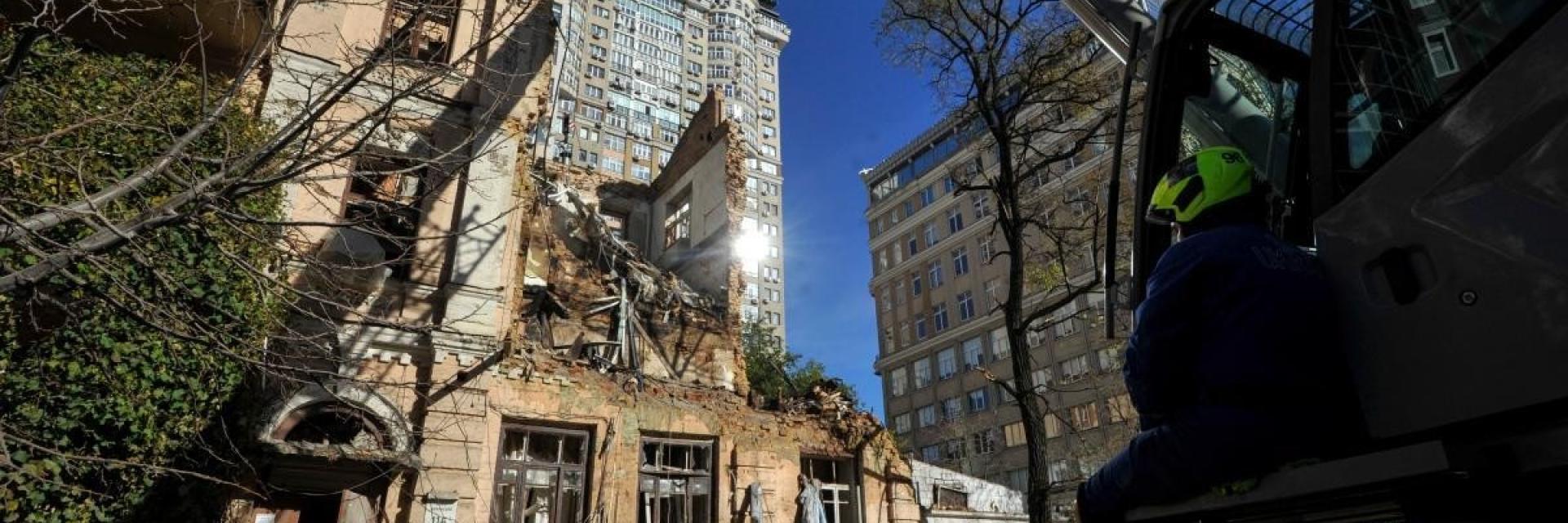
Electricity in Kyiv is already available for only a few hours a day at best, and the population now has to contend with water shortages as well. Why would Russia reduce the pressure now, when it can hold out for the possibility of a new political landscape emerging in Europe next year, hoping that these two factors will combine to force Ukraine to sue for an unfavourable peace?
But that is precisely the point: Russia is not interested in peace. Instead, it deploys diplomacy as a continuation of war by other, parallel means.
This is plainly evident from the nature of Moscow’s proposals for the ‘new, long-term architecture of indivisible peace and security’. These proposals have little in common with the security system outlined in the Helsinki Final Act (1975). Unlike the principles set out in the declaration signed by 41 states at the European Political Community meeting in Dublin last Thursday, which actually do mirror the original Helsinki ‘decalogue’, Russia’s demands reflect a desire to carve up the continent in the spirit of Yalta.
As reported, the demands the Russians made in Abu Dhabi concerning the future European security architecture echo those contained in the draft treaties on European security that Russia proposed in December 2021. NATO must not expand further, and must withdraw its military personnel and infrastructure from allied territory, reverting to its 1997 military posture. Thanks to this gesture of benevolence from Moscow, Central and Eastern Europeans could remain in NATO, but the Alliance could do nothing to defend them.
The EU should recognise Russia’s renewed ‘interest’ in the European security architecture for what it is: an attempt to sow discord.
But never mind the 1.5 million casualties that Russia has sustained while failing to achieve its strategic objective of subduing Ukraine. The Kremlin wants more. In its vision of indivisible security, France and the UK could not extend their nuclear deterrence to allies. Ukraine would not only be forcibly neutralised and the size of its armed forces constrained; it would now also be unable to receive any military assistance from its partners. This would fatally weaken both Kyiv and the rest of Europe, spelling an end to the defence industrial cooperation that the EU sees as a fundamental pillar of its own future defence and deterrence capacity.
According to some accounts, Moscow also made the extrardinary demand that Finland quit NATO. Never one to be outdone in generosity, Russia offered in exchange to withdraw its nuclear weapons from Belarus – the actual presence of which is hard to assess with certainty – and promised not to deploy new intermediate-range missiles. Presumably, this means above all the not yet operational Oreshnik.
These demands should make it perfectly clear that what Russia seeks is not mutual restraint, but restraint imposed on others. Putin’s Russia is a revisionist power, for which expansion and defence are closely intertwined. It seeks to impose a new security architecture not as a solution to insecurity in Europe, but to remove the constraints on extending its rule and influence beyond its borders.
Russia’s long-standing problem with the US presence on the European continent, which it has tried unsuccessfully to resolve since World War II, may eventually resolve itself. However, Moscow appears increasingly concerned about the possibility of a rearmed Europe with an independent capacity to contain Russia.
The security architecture ploy would stifle Europeans’ ability to defend themselves by imposing partial disarmament. Far from paving a path to peace, it would be more likely to lead to further war and conquest, with potentially devastating consequences for the security and prosperity of the entire continent.
How should Europeans prepare for what comes next?
Europeans should not dismiss diplomacy a priori as a moral compromise. They should see it rather as an essential tool of statecraft for translating the EU’s assistance to Ukraine, and the pressure it exerts on Russia, into a positive future outcome.
But good timing is part of competent diplomacy. The European negotiating team can discuss risk reduction and security management proposals with third parties: both the US and others, who could one day be part of a multilateral arrangement designed to increase the likelihood that Russia honours any future compromise agreement.
But under no circumstances should Europeans fall into the trap of negotiating a new security architecture in the midst of the war, in the vain hope that this would bring peace. Far from ending the conflict, such talks would risk prolonging the war and exacerbating human suffering.
Even in the technical discussions on confidence-building measures (CBMs), the team should operate under a clear and broad mandate to ensure its legitimacy. It should equally draw on all available expertise to identify the conditions under which Russia honours its agreements – admittedly a rather rare occurrence – and design appropriate tests of its commitment, recognising that compliance is be a process rather than a one-off event. It should also reliably assess how conciliatory measures, such as the conditional suspension of sanctions, might affect the evolution of Russia’s military threat to Europe.
The shape of the ceasefire in Ukraine will be a critical variable for the future of continental security. Europeans are less likely to contribute to a favourable ceasefire through deft diplomacy than by maintaining and increasing efforts to unpower Moscow and support Ukraine. The immediate test of these efforts will be a new joint loan of €45 billion to cover at least two-thirds of Ukraine’s funding gap in 2027.
The EU’s commitment to supporting Ukraine over the long term is key to changing the Kremlin’s calculus that it can prevail in the geopolitical gambit upon which it has embarked.