Summary
- The Caribbean region is entering its most geopolitically volatile phase in decades as the Trump administration reasserts US primacy in the hemisphere. The removal of Maduro in Venezuela and economic coercion against Cuba are forcing Washington’s two long-standing adversaries in the region to adapt.
- Governments across Central America and the Caribbean are under growing pressure to accommodate Washington’s demands. Organised criminal groups and extra-regional actors are also adjusting to the new reality.
- Even at a time of wars in Europe and the Middle East, the EU cannot afford to look away. The Caribbean matters for the EU’s security, especially in the fight against organised crime. The EU has significant expertise in non-military aspects of security, which will be in high demand as an alternative to the US-led heavy-handed approach, allowing the EU to play a role in regional geopolitics.
The Caribbean region is experiencing its most severe geopolitical turmoil in decades. The second Trump administration has proclaimed a renewed effort to assert US dominance over the Americas. In January 2026, Washington removed Venezuela’s President Maduro from power, leaving Vice-President Delcy Rodríguez in place. It then increased pressure on Cuba, threatening regime change in Havana. Countries across Central America and the Caribbean, either out of fear of Trump’s retaliation or because they align ideologically with his agenda, are adapting to the new US posture towards the Western Hemisphere. Non-state actors, including organised criminal groups, are also recalibrating their strategies in response to this new reality.
Amid wars in Europe and in the Middle East, a case could be made to avoid engaging in remote regions. However, that would be short-sighted. This Brief argues for increased EU engagement in Central America and the Caribbean. Events in the Caribbean have an impact on European security, by putting critical infrastructure at risk, altering drug trafficking routes, and weakening multilateral institutions. As Washington pushes for a militarised approach to countering criminal gangs, demand for non-military security assistance is likely to grow. The EU can leverage its assets and expertise to affect geopolitical dynamics in the region.
Adapt or perish
The 2025 National Security Strategy (NSS) codified the US administration’s approach to its neighbourhood in the form of a ‘Trump Corollary to the Monroe Doctrine’, also dubbed the ‘Donroe Doctrine’. The doctrine lists two main courses of action: ‘enlisting’ regional champions and ‘expanding’ the US influence network. But it also includes an implicit coercive element: forcing regional adversaries to submit or capitulate.
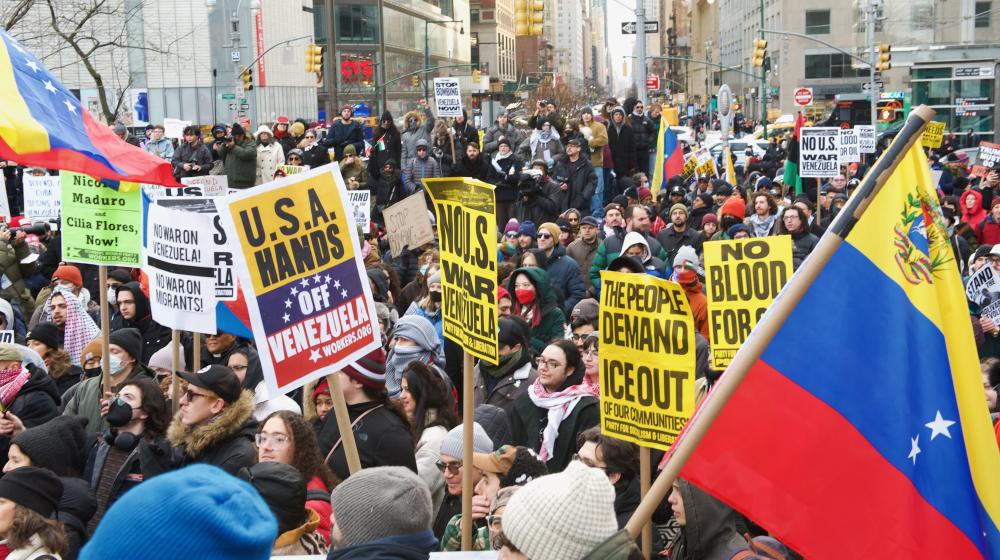
Venezuela was the first to face this coercion through Operation Absolute Resolve, which led to the removal of Maduro. Some US constituencies and regional actors hoped that a swift transition to democracy would follow, perhaps under opposition leader María Corina Machado. Instead, the regime has remained in place. The new leader in Caracas, Delcy Rodríguez, issued an amnesty, allowed political protests and removed some key figures who were closely associated with Maduro, such as defence minister Vladimir Padrino López. But the repressive machine remains largely intact, and some political prisoners were arrested shortly after their release(1).
The US might be aiming to replicate the Venezuela playbook in Cuba.
US acceptance of Rodríguez’s government as the legitimate interlocutor was key to its survival. Washington has rewarded the latter for its acquiescence to US demands since January, and is prioritising economic liberalisation over democratic transition, at least for the time being. Venezuela passed a law authorising US companies to buy, sell, transport, store and refine Venezuelan crude oil, with Chevron and Shell signing new oil production deals in April(2). CIA Director John Ratcliffe, Energy Secretary Chris Wright, Interior Secretary Doug Burgum and SOUTHCOM Commander Francis Donovan have all visited Caracas, indicating the breadth of cooperation.
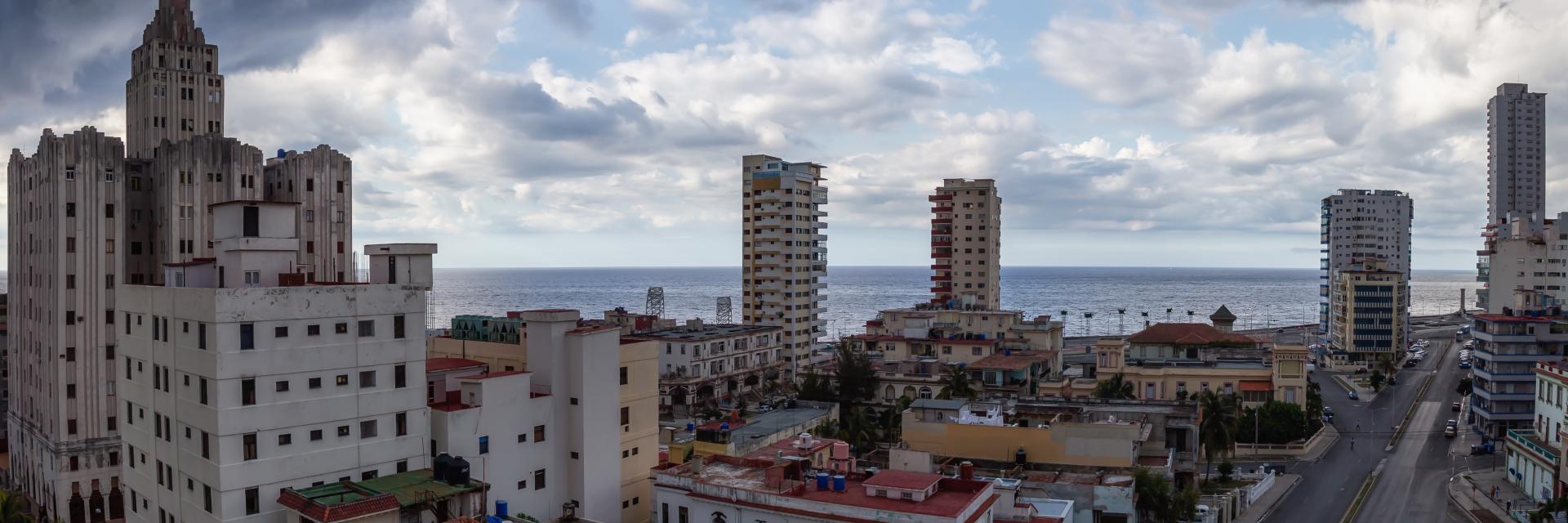
After removing Maduro, the Trump administration ratcheted up pressure on Cuba. According to experts, the regime is in a deeper crisis than it was after the collapse of Soviet support in the 1990s. Havana’s main oil providers, Mexico and Venezuela, have both cut off their supplies due to US pressure and threats. This has worsened the island’s energy shortage, resulting in frequent blackouts. Tourism, mining and manufacturing, which last year generated USD 2 billion in foreign currency, have collapsed. Exports fell by 75% between 2000 and 2025(3). This has resulted in new anti-government protests.
The US might be aiming to replicate the Venezuela playbook in Cuba: ensuring compliance from the regime but keeping existing structures in place. Cuban President Miguel Díaz-Canel has acknowledged that his government is negotiating with Washington(4). However, the large Cuban-American community, a key component of Trump’s support base, might not be satisfied. Many argue that, unlike Venezuela, the economic model run by the Castro family and the GAESA military conglomerate is too entrenched in the Cuban system to allow for a transition(5). The Pentagon has drawn up plans for a military intervention to topple the regime – but these could be constrained by resource limitations and the stalemate in the US over Iran.
Regional ripple effects
Beyond Cuba and Venezuela, other countries in Central America and the Caribbean Basin are adapting to the new US posture. Some governments are ideologically aligned with Trump. On 7 March 2026, the US convened the ‘Shield of the Americas’ Summit in Doral, Florida, bringing together leaders from across Latin America that support Trump’s hardline stance on migration and organised crime. Participants included close Trump allies such as Honduras’s Nasry Asfura, El Salvador’s Najib Bukele as well as Argentina’s Javier Milei.
Other countries are keen to avoid becoming Trump’s next target. Colombia’s president Gustavo Petro, who at various points fought a diplomatic war with Trump and came under US sanctions, managed to de-escalate tensions at a meeting in the White House in February. Mexico’s president Claudia Sheinbaum, who often has to fend off US threats to intervene on Mexican territory to pursue drug cartels, has halted oil shipments to Cuba to avoid further tensions with Washington – ahead of negotiations for the renewal of the US-Mexico-Canada (USMCA) free trade agreement.
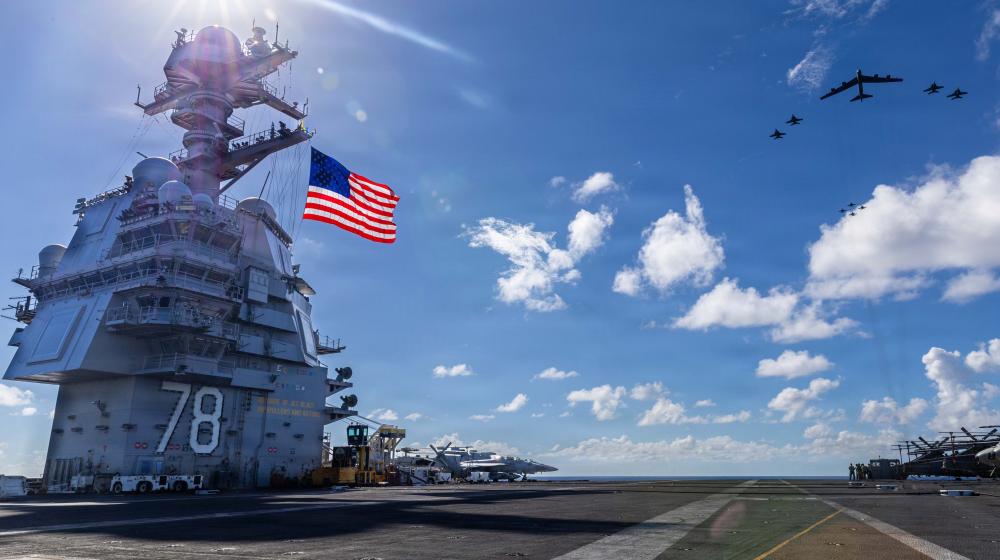
Organised criminal groups are also adapting. The US military buildup in the Caribbean was initially a counternarcotics operation. Since the strikes began, the use of speedboats to cross the Caribbean from Venezuela appears to have declined. However, criminal gangs increasingly take the southern route towards Guyana, Suriname and Trinidad and Tobago(6). Colombia’s Ejército de Liberación Nacional (ELN) continues to operate freely across the Colombia-Venezuela border. Hence, rather than weakening these groups, the new US posture appears to be displacing criminal markets and forcing them to adapt.
The ‘Donroe Doctrine’ and subsequent US actions have also affected extra-regional actors, such as China and Russia. The NSS aims to ‘deny non-Hemispheric competitors the ability to position forces or other threatening capabilities, or to own or control strategically vital assets’ in the region(7). The main target of this action, though unnamed, is China, who has significantly strengthened its penetration in the Caribbean. In 2025, the US pressured Panama to deny Chinese companies operating rights over the Panama Canal. Maduro’s removal from power has deprived Beijing of its privileged access to Venezuelan oil. After condemning the operation, China has kept a low profile in the Caribbean.
Moscow has taken more overt steps. In January, the Russian tanker Marinera tried to evade the US embargo of Venezuelan oil but was seized near Iceland. In March, Russia sent two tankers to Cuba: one sought to bypass the blockade, while the second one was allowed by the US Coast Guard to approach Havana(8). This could indicate Russia’s desire to maintain a foothold close to the US mainland.
The stakes for Europe
The Caribbean may seem peripheral to European interests compared to other regions. However, the EU will be affected by the political changes that are taking place. First, EU Member States have territories in the Caribbean Basin, such as French Guyana and the Dutch Antilles, which may be affected by changing migration and trafficking routes. Second, the Caribbean and the South Atlantic are increasingly relevant maritime routes for Europe. These waterways represent a key alternative to the Red Sea in the event of disruptions(9). Total trade between the EU and the Caribbean countries more than doubled between 2014 and 2024, reaching €22.1 billion. With the conclusion of the EU-Mexico Modernised Global Agreement, the EU’s economic presence in the region is also set to expand.
Data: EU Global Threats; FIAAP; COPOLAD; InsightCrime.org; European Commission, GISCO, 2026
Third, the Caribbean and Europe face shared security challenges, notably from narcotrafficking. Almost 99% of the cocaine seized in Europe reaches the continent via Caribbean hubs such as Haiti, the Dominican Republic and the Lesser Antilles(10). Many European criminal groups – such as Italian, Albanian and Balkan mafias – have established partnerships with Latin American counterparts like the Gulf Clan (Colombia), PCC (Brazil), and Sinaloa Cartel (Mexico)(11). The Caribbean is key to their trafficking network.
Fourth, Europe’s geopolitical adversaries are active in the Caribbean. Russia’s continued presence in Cuba could potentially be traded in the future in exchange for US acquiescence to Moscow’s actions against Ukraine and Europe. China, already the second-largest trade partner and top sovereign creditor in Latin America and the Caribbean, plans to further strengthen its presence in the region by leveraging economic connections and a shared identity with regional actors as members of the Global South(12).
Fifth, trends in the region will shape the future of democracy, multilateralism and international law. The EU has a stake in a true, peaceful democratic transition in Cuba and Venezuela. By contrast, the US appears to prioritise regime compliance. At the same time, Washington is promoting new regional formats with politically aligned governments, like the Shield of the Americas. These formats challenge established multilateral institutions with which the EU traditionally engages, such as the Community of Latin American and Caribbean Countries (CELAC).
Leveraging our strengths
The deteriorating security environment in Europe’s neighbourhood may suggest that the EU has few resources to dedicate to the Caribbean. The bloc’s ability to bring about democratic transition in Venezuela and Cuba is objectively limited. Nevertheless, there are ways for the EU to play a more significant role in the region, especially in enhancing efforts to counter organised crime and foster societal resilience.
The US is pressuring Caribbean and Central American countries to adopt a hardline, militarised approach to countering drug trafficking and illegal migration. This approach risks neglecting other aspects such as training law enforcement agencies and tackling the root causes of criminal recruitment. Taking a hardline approach could be costly for countries in the region, potentially resulting in social tensions and upticks in violence. For example, Mexico is experiencing a new wave of violence after the army killed the leader of the Jalisco New Generation Cartel (CJNG) in February 2026.
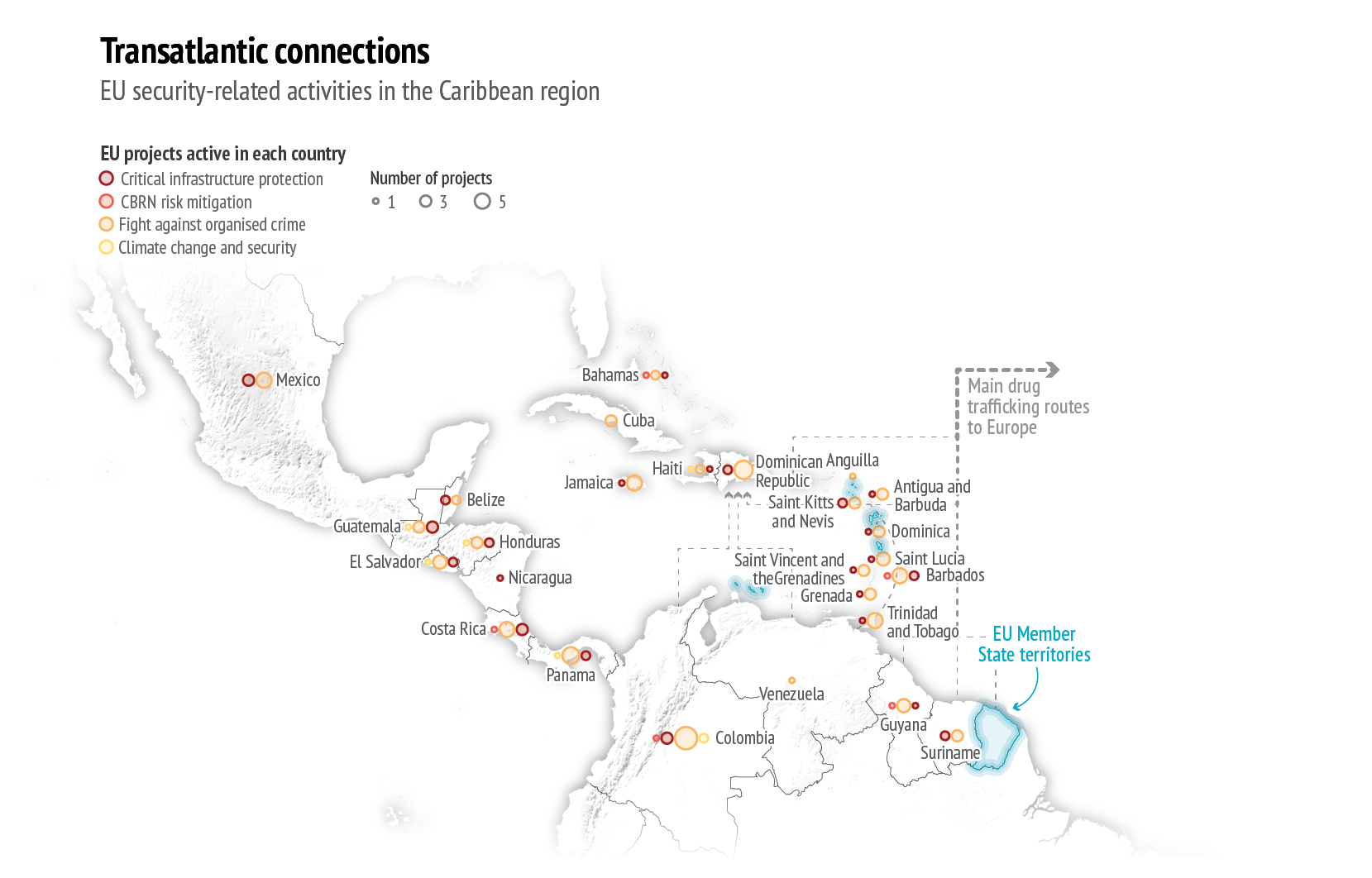
Demand for assistance in the non-military aspects of security is likely to increase, and the EU is well placed to provide this kind of support. It is largely engaged in the region through projects aimed at fighting organised crime, protecting critical infrastructure and enhancing digital connectivity (see map on page 3). In February 2026, justice ministers from EU Member States and Latin American countries met in Brussels to strengthen bi-regional judicial cooperation. All these tools will become increasingly necessary to combat organised criminal groups as they adapt to different conditions and find new ways of reaching the European market.
At the fourth EU-CELAC summit last year, leaders adopted a new declaration establishing the EU-LAC Alliance for Citizen Security, in which they pledged a whole-of-society approach to threats to society and security(13). Implementing this declaration will help develop a cross-regional approach to societal resilience. If it works, it will also increase support for multilateral and value-based approaches to countering insecurity. But if these declarations are not followed up with real action, local actors may conclude that there is no alternative to a hardline approach. Multilateral institutions could weaken further, regional instability will continue to affect European security, and the EU’s ability to develop useful partnerships will diminish.
References
* The author would like to thank Alessandro Vitiello, EUISS trainee, for his support in researching data for this publication.
1. Breda, T., ‘Forceful capture of Venezuelan politician hours after release from jail’, ACLED, 9 February 2026.
2. ‘Chevron, Shell to sign agreements for oil, gas areas in Venezuela, sources say’, Reuters, 13 April 2026.
3. ‘Cuba’s broken economy leaves it at Donald Trump’s mercy’, The Economist, 19 March 2026.
4. ‘Cuban leader says talks were recently held with the U.S. amid energy crisis’, NBC Miami, 13 March 2026.
5. Oppenheimer, A., ‘Will Trump liberate Cuba — or save the Cuban dictatorship?’, Miami Herald, 20 March 2026.
6.‘Cocaine in Venezuela: the “Cartel of the Suns” after Maduro’, InSight Crime, 25 February 2026.
7. The White House, 2025 National Security Strategy, p. 15.
8. ‘US tightens sanctions waiver on Russian oil after tanker reportedly delivers fuel to Cuba’, The Moscow Times, 20 March 2026; Nicas, J. and Schmitt, E., ‘U.S. allows Russian oil tanker to reach Cuba, despite blockade’, The New York Times, 29 March 2026.
9. Marangio, R. and Spatafora, G., ‘Southern Currents: Mapping geopolitics in the South Atlantic’, EUISS Brief no. 29, 11 December 2025.
10. ‘Tracking transatlantic drug flows: cocaine’s path from South America across the Caribbean to Europe’, Center for Strategic and International Studies, 19 September 2023.
11. ‘European organized crime in Latin America’, Rosa-Luxemburg-Stiftung, 2025.
12. The State Council of the People’s Republic of China, ‘Full text: China’s Policy Paper on Latin America and the Caribbean’, 10 December 2025.
13. European External Action Service, ‘An EU–LAC Alliance for Citizen Security – Joint Declaration’, November 2025.