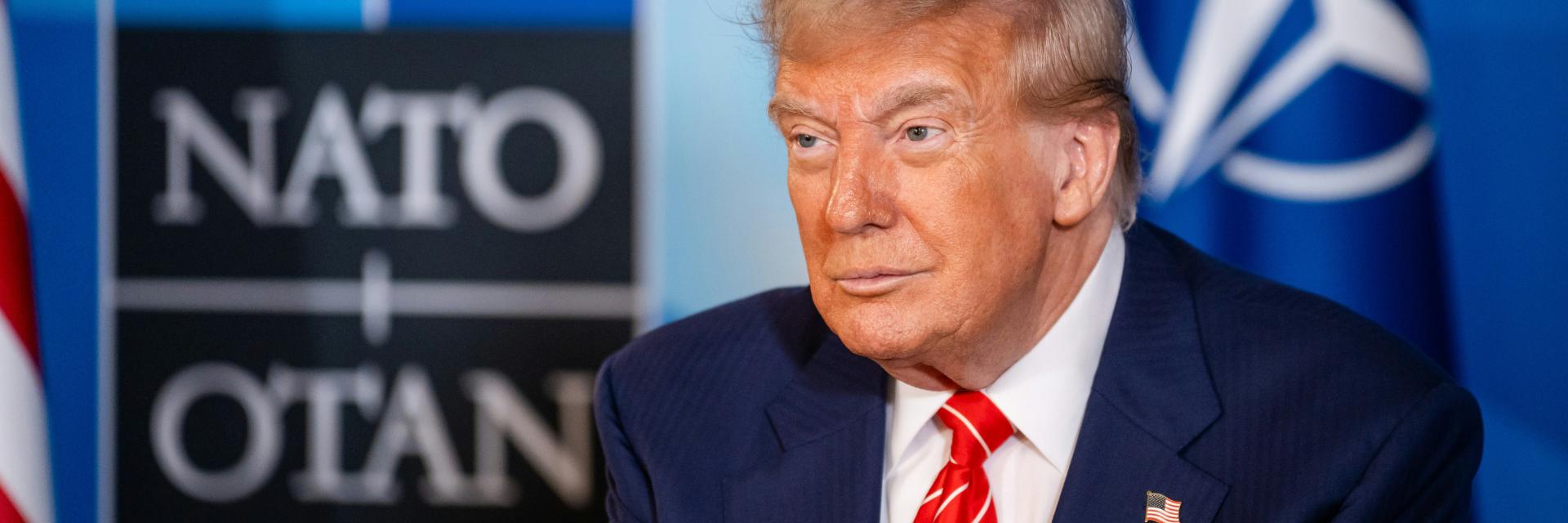
The debate about how Europeans organise their defence has been going on for years and often feels like a repetition of moves. That is, until Donald Trump came along and cast doubt on the US commitment to NATO’s Article 5, and accused European allies of freeloading. At NATO, they claim that last year’s summit in The Hague solved the problem, because Europeans agreed to spend 5% of their own GDP on defence. But the cracks in the transatlantic relationship are real. The mistrust is equally so. Sometimes public opinion sees it more clearly than the elite: 73% of EU citizens now say that Europe ‘must go its own way’.
Trump’s war against Iran has made this discussion more urgent. Europeans may have a neat slogan – ‘This is not our war’ – but it *is* our problem. The risk of energy shortages is growing, economic growth is levelling off, and interest rates will likely have to rise. Even worse: this war is also a European security problem. Precisely those resources that Ukraine and Europe need most – air defence, ammunition, but also political engagement – are being diverted, delayed, or used as leverage. Washington has made it clear that there will be delays in the delivery of orders already placed. That hits Ukraine hard, but it also threatens to create gaps in European defence.
The core of the problem is not that America wants to shift more responsibility to Europe. That is inevitable and perfectly defensible. The danger is that Trump views burden shifting as an instrument of personal reward and punishment. One day Germany is publicly punished with the threat of troop reductions; the next day Poland is rewarded because an ideological ally is well-received there. That may be political theatre, but it does have strategic consequences.
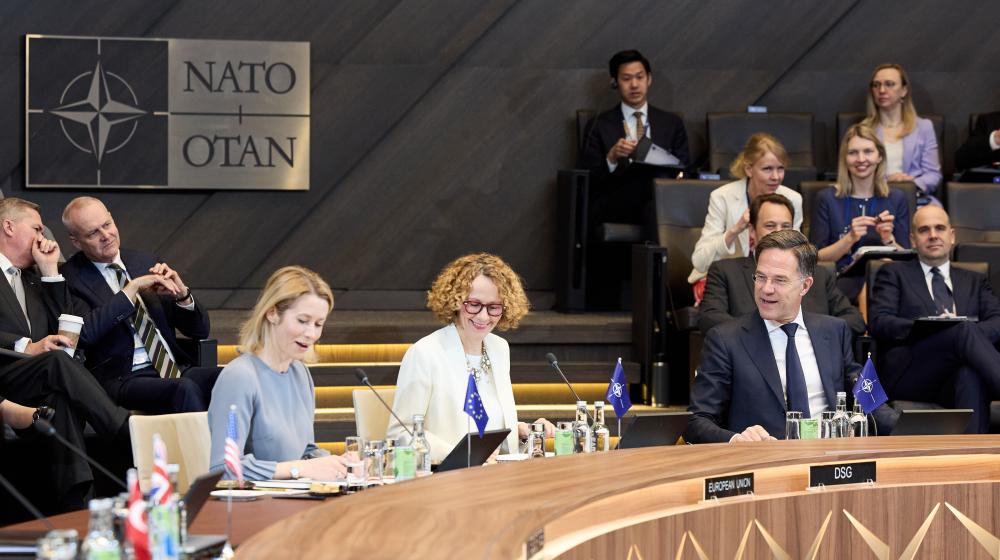
If you listen to Mark Rutte, the NATO script will be primarily about pleasing Trump: Europe spends much more, moves towards the 5% mark, and does so thanks to Trump's leadership. But if that becomes the framing, Europe once again misses the essential point. More money is needed, but it is no longer the core of the problem. The question is: how do we organise European deterrence against the Russians, where necessary with much less American support?
A concrete plan for Europe
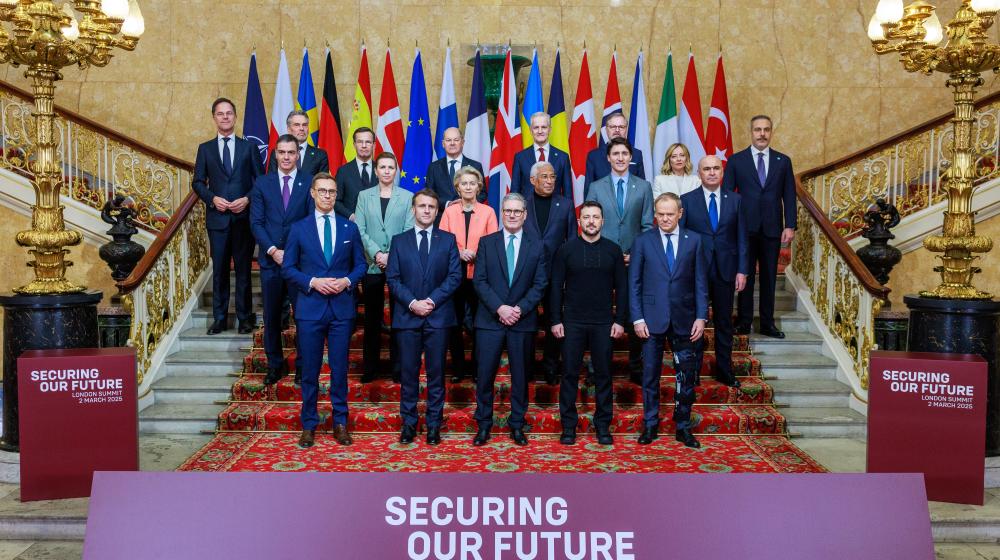
Europe is not powerless. The continent is wealthy, technologically advanced, and populous enough to shoulder the burden of conventional deterrence itself. With Ukraine included, it possesses drones, electronic warfare capabilities, and a hundred combat-ready brigades. The main obstacle is psychological: are we ready to think and act in terms of European power and deterrence? Are we willing to break taboos?
Europe must go to the NATO summit with a concrete European transition plan. Not to push the US out, but to prevent a chaotic American withdrawal from eroding deterrence. That plan must prioritise an emergency programme (like the Manhattan Project in 1942) for everything Europe needs and for which we are currently dependent on the Americans: air defence, long-range strike, satellites, intelligence, and command and control. We must acquire and organise these at the European level.
The main obstacle is psychological: are we ready to think and act in terms of European power and deterrence?
Hundreds of billions of extra euros are now going to defence, not to appease Trump, but to keep Putin at bay. It is crucial to spend the majority of that money in Europe, rather than buying roughly 60% of new weapons in the US, as is currently the case. This is important for obtaining those supplies faster – the US is clearly indicating that its own needs and requirements take precedence – and for maintaining public support for higher European defence spending.
The integrated command structure is perhaps the most important thing NATO offers. After all, to defend yourself, you need not only weapons and technology, but also a structure with decades of experience in planning, training and fighting together. It is now up to Europe to put a concrete plan on the table for how we want to Europeanise that command structure. Until now, the highest-ranking NATO military commander in Europe has always been an American. Perhaps switching to a British SACEUR is a good option – European, but not EU?
European pitfalls
There are two things we must avoid. First, conducting the discussion under the banner of a 'European army' – whether presented as an attractive prospect or a nightmare. The goal is not an EU army: that will not happen, and it is not necessary. But that framing distracts from what is necessary and possible: establishing European deterrence and doctrine.
Secondly, we should not begin the discussion with the nuclear component of this deterrence. That dimension is part of it, but it must become the end point of European independence, not the starting point of the discussion. The Americans emphatically state that the nuclear umbrella remains. They even want to deploy nuclear weapons in more European countries, while simultaneously aiming to reduce the number of American troops. And although French President Emmanuel Macron has opened the door to expanding the role of the force de frappe (the French nuclear deterrent force), everyone knows that its Europeanisation is still a long way off.
Europe must avoid those pitfalls and move faster to organise its own defence. Those who focus solely on keeping Trump on board accept that the American president sets the agenda and dictates the terms. Those who come up with their own plan make European security a European responsibility at last, as it should be.
This opinion piece by Steven Everts was originally published in Dutch in NRC on 10 June 2026 under the title, 'Europa moet zichzelf verdedigen, niet Trump tevreden houden'. It is reproduced here in English with the permission of NRC.