Russia's hybrid warfare against the EU has escalated in recent weeks. The large-scale incursion of drones into Poland on 9 September and airspace violations by fighter jets over Estonia on 19 September are among the most striking examples. However, these incidents are only the most visible in a wider pattern of hostile activities. Some of these are overt, like drones straying into Romania, while others are deniable, such as the unidentified drones that shut down Danish airports and snooped on military bases in Germany, Denmark and Sweden.
Some of these incidents may be the result of inexperience or poor command and control. But the pattern and sheer number of incidents points to deliberate intent. Russia is testing Europe’s defences to see how quickly Europeans detect and react to threats, how they use their defensive assets, and how co-ordinated their response is. At the same time Moscow is attempting to foster divisions by exploiting different threat perceptions across different European countries. Russia is also likely trying to undermine European support for Ukraine by forcing Europeans to prioritise their own defences rather than strengthening Ukraine’s. Finally, Moscow is attempting to gauge Donald Trump’s willingness to back Europe.
All this amounts to a pattern of coercive testing that aims to stretch Europe’s defences and political cohesion. The challenge for Europeans is deterring future Russian provocations. The risks of not acting are high. Russia will only test Europeans' boundaries more brazenly unless Europeans respond with resolve.
Moscow is attempting to gauge Donald Trump’s willingness to back Europe.
The first element of a European response should be strengthened readiness. NATO’s Eastern Sentry operation, which brings together contributions by a range of EU and non-EU allies, is a step in the right direction, but there is a case for a broader shift towards a stronger posture. More generally, Europeans need to have the right equipment to deal with the threat of Russian grey-zone incursions. As recent events have shown, European anti-drone defences are a weak spot. The drones that entered Poland were downed by advanced (and very expensive) Western equipment, including F35 jets and a Patriot air defence system. This highlights a stark cost asymmetry compared to the estimated USD 10 000 price of the Gerbera drones used by Russia.
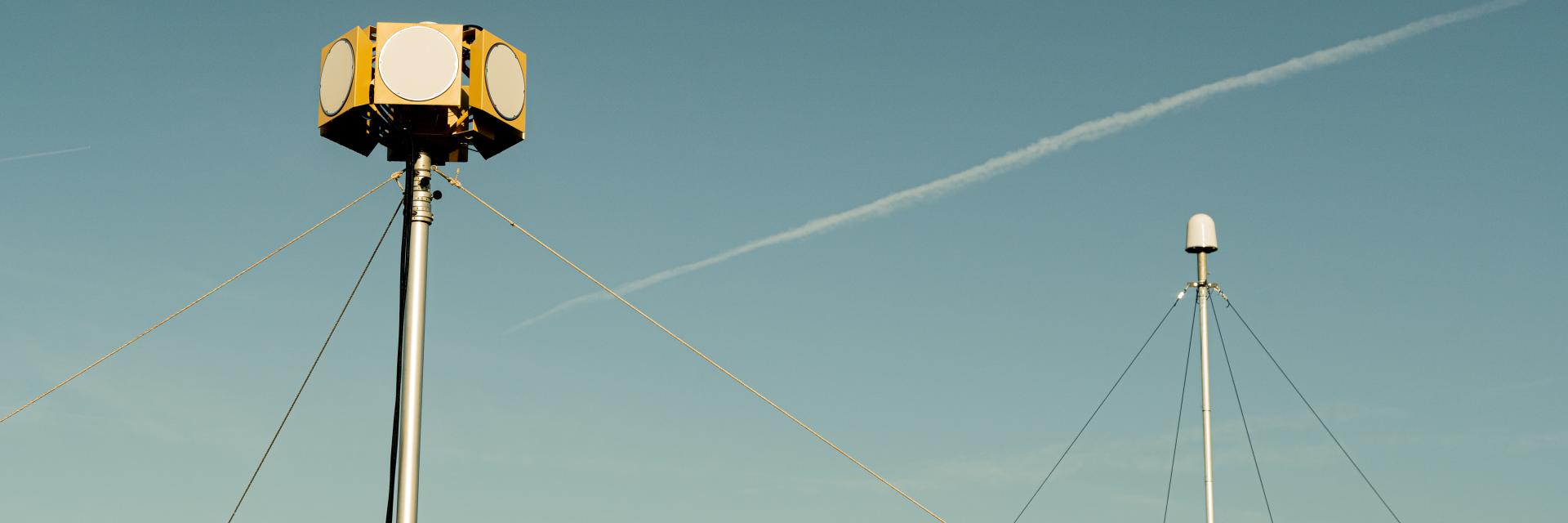
A range of European companies are working on anti-drone capabilities, and Europeans should look to Ukraine for guidance on how to counter cheap drones. Kyiv is successfully countering Russian drone attacks every night, and shooting down the majority of them. Effective countermeasures include radars and acoustic sensors for detection, jamming and electronic warfare equipment, radar-assisted guns and anti-drone-drones, as well as an expanding range of AI systems. Capabilities are evolving at a very fast pace – systems become obsolete in a matter of months. Therefore, Europeans will not be able to treat capability acquisition as a one-off: adaptation will have to be continuous.
The strengthening of anti-drone defences should extend beyond the military domain. Civilian infrastructure operators such as airports should be ready to deal with disruption from drones, for example by acquiring more powerful radars, or specialised equipment to neutralise drones. At the same time, Europeans need to look at the security of critical sites even far away from their borders with Russia. Ukraine’s drone attack on Russian military facilities in Siberia this June demonstrated the threat that infiltrated drones can pose far from the frontlines. This will be costly, but far less so than the costs of sustained disruption or the loss of precious military equipment.
Civilian infrastructure operators such as airports should be ready to deal with disruption from drones.
Co-ordination is a key challenge. If defences are purely national, there are bound to be gaps. Initiatives to strengthen anti-drone defences in a coordinated manner, such as the Drone Defence Initiative proposed by the European Commission, can help address such gaps. The most promising avenue is for groups of countries to take the lead in strengthening defences, while ensuring interoperability and coordination through both EU and NATO frameworks. The EU could support the acquisition of specific anti-drone systems by groups of countries. Moreover, as with the Act in Support of Ammunition Production, the Union could help fund the necessary expansion in industrial capacity.
Europeans will also need to strengthen their ability to strike back at Russia. For most Member States that will mean bolstering their long-range strike capabilities and acquiring drones of their own. However, some countries are also likely to start thinking about how to deter Russian grey zone activities in kind, for example through sabotage of Russian drone factories.
Beyond enhanced readiness, solidarity needs to be at the heart of a European response. The more Europeans show that their security really is indivisible by deploying troops and assets to each other’s territory, the more it will be clear to Russia that efforts to weaken NATO are futile. At one level that means firm rhetorical signalling to underscore red lines and support Member States under pressure. But rhetoric alone is not enough. Practically, more substantial deployments of planes and air defence assets by countries perceived by Russia as less willing to respond to provocations would send a strong signal to Moscow.
Finally, Europeans should show resolve when dealing with provocations. The question of whether Europe should explicitly shift to a more assertive posture in dealing with Russian incursions is a complex and divisive issue among EU Member States and more broadly within NATO. The response to each incursion should be calibrated to its seriousness. Europeans should have no qualms about shooting down drones over their territory. Shooting down drones approaching Europe from within Western Ukraine is a low-risk measure. Downing Russian fighters who pose an active threat is necessary. But downing Russian jets briefly transgressing European airspace without posing a threat, rather than escorting them out as has been the practice so far, is a different matter. So too is retaliating to Russian grey zone activities in kind, for example with drone incursions. Europeans cannot be sure of how Russia will respond: rather than forcing Moscow to back down, these could prompt it to undertake ever more reckless operations. Moreover, such steps may not gain endorsement at EU level and could create cracks in European and transatlantic political cohesion, for example if a Member State were to shoot down a Russian plane and others failed to sufficiently support it, or even chose to distance themselves from its response.
The manner in which Europeans deal with Russian grey-zone activities is only one way of signalling resolve.
In essence, Europeans should be more assertive while maintaining their composure. The rationale is broader than managing escalation risks and preserving cohesion. An assertive but measured response is important to sustain public support over time, both when dealing with Russian grey-zone activities and more broadly in sustaining Europe’s defence build-up. Overreacting to Russian provocations and alarming risk-averse publics in some Member States may be exactly the response that Russia seeks to provoke. Conversely, a nuanced conversation about how Europeans are calibrating their responses to the escalating threat can help secure public support. More broadly, the discussion over showing resolve should not be construed in narrow terms. The manner in which Europeans deal with Russian grey-zone activities is only one way of signalling resolve and imposing consequences. There are a host of other measures Europeans could take, especially in terms of providing Ukraine with more advanced equipment than they have done so far, or tightening sanctions against Russia.
Russia’s escalating grey-zone attacks on Europe are reckless and unsettling. Yet there may be a silver lining: by exposing Europe’s vulnerabilities and alarming European publics, Moscow may inadvertently be providing the catalyst for the sustained surge in investment and coordination that European defence needs.