European Union Institute for Security Studies

Main navigation

  • About us
    • Director
    • Analyst Team
    • Staff
    • Opportunities
  • Publications
    • Briefs
    • Chaillot Papers
    • Commentaries
    • Analysis
    • Books
  • Activities
    • Events
    • News
  • Topics
    • EU Foreign Policy
    • Global Governance
    • Security and Defence
    • Transnational Challenges
    • Strategic Foresight
  • Regions
    • Africa
    • Asia
      • CSCAP EU
    • Eastern neighbours and Russia
    • MENA
    • The Americas
    • Western Balkans
  • Projects
    • Advancing the Cyber Programme of Action (PoA)
    • Chips Diplomacy Support Initiative
    • Countering Foreign Interference
    • EU Cyber Direct
    • SCOPE

The EUISS is an agency of the European Union

Breadcrumb

  1. Home

Geopolitics

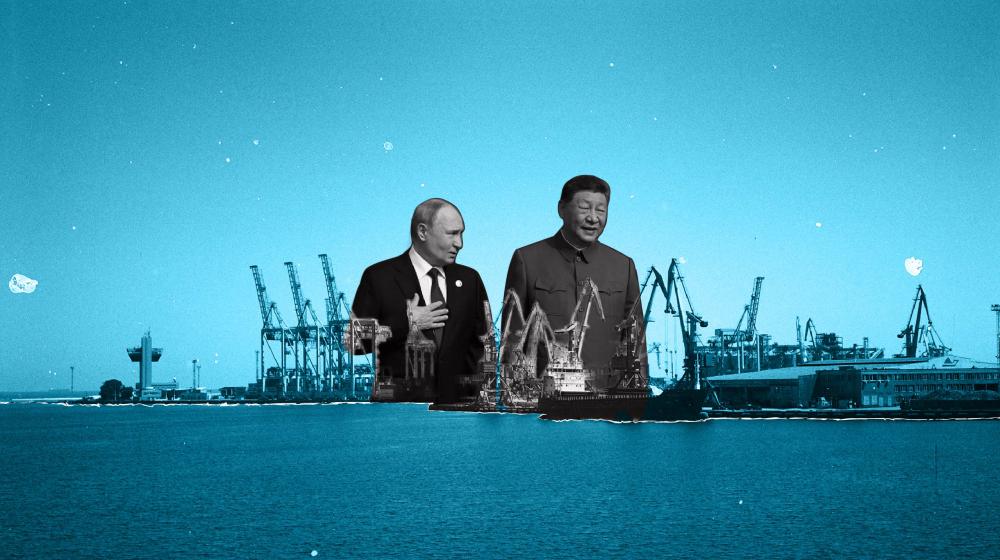
  • Putin and Xi Jinping on background of contain port

    The dependence gap in Russia-China relations

    Tracing where pragmatism ends and geopolitical signalling begins.

    Analysis
    2 October, 2025 By: Alessia Caruso, Tim Rühlig
  • African spaces

    Global powers are increasingly scrambling to project influence in Africa. This Chaillot Paper asks the question: what are the emerging spaces where power competition is taking place in the African continent?

    Chaillot Papers
    10 March 2022 Edited by: Giovanni Faleg
  • Stand by Me! The Sino-Russian Normative Partnership in Action

    China’s and Russia’s shared antagonism against the West fuels cooperation at bilateral and multilateral levels. In its normative dimension, this cooperation is driven by the overarching aim of defining and re-interpreting existing international norms in a way that reflects the...
    Briefs
    6 August, 2020 By: Alice Ekman, Sinikukka Saari, Stanislav Secrieru
  • African Strategies

    This Chaillot Paper analyses the evolution of EU member states’ strategies towards sub-Saharan Africa, as well as those of global actors, against the backdrop of systemic changes, including the implications of the Covid-19 pandemic. It seeks to identify the points of convergence...

    Chaillot Papers
    30 June 2020 By: Giovanni Faleg, Carlo Palleschi
  • Under pressure: can Belarus resist Russian coercion?

    This Brief analyses the current dynamics underpinning the Belarusian-Russian relationship and its possible future trajectory in the light of new factors which limit Belarus’s room for foreign policy manoeuvre. It highlights how, under increasing pressure from Russia and faced...

    Briefs
    7 July, 2020 By: Anaïs Marin
  • Deciphering China in the Middle East

    Beijing’s new activism in the Middle East reflects the evolution of Chinese foreign policy thinking, in line with the country’s rise as an economic superpower. Economic goals rather than ideological considerations have become key criteria in China’s selection of partners in the...

    Briefs
    30 June, 2020 By: Erzsébet N. Rózsa
  • The Butterfly Effect: why does Eastern Europe matter to Japan?

    In recent years Japan has sought to rekindle diplomatic, political and economic ties with Eastern Europe. This Brief examines how Russia’s annexation of Crimea in 2014 may have motivated this charm offensive, prompted by Tokyo’s fears that such aggression could potentially be...

    Briefs
    27 May, 2020 By: Daisuke Kitade
  • Arctic stress test

    In the three decades after the Cold War, the perception of ‘Arctic exceptionalism’, the sense that the Arctic region is immune from broader geopolitical tensions, prevailed. However, this notion is currently being challenged: climate change is accelerating the opening of new...
    Briefs
    30 April, 2020 By: Simona R. Soare
  • Russia's forays into sub-Saharan Africa

    Russia is mounting a remarkable political comeback in sub-Saharan Africa through a ‘low costs, high returns and visibility’ approach. Can a coherent strategy be discerned behind this push? And how is sub-Saharan Africa reacting to Russia’s overtures and what does it mean for the...

    Briefs
    31 March, 2020 By: Giovanni Faleg, Stanislav Secrieru
  • Russia in the Western Balkans

    Russia's grand aspirational objective is to bring back what is deemed in Moscow to be a more natural state of play for the Balkans: multipolarity. But what is the Russian modus operandi in the region? Is it confined only to coercion, as the headlines suggest, or is there a softer...

    Briefs
    2 July, 2019 By: Stanislav Secrieru

Subscribe to our newsletter

We will keep you informed about our latest publications and analysis. You can unsubscribe at anytime. Find out more in our privacy notice

Subscribe

European Union Institute for Security Studies

Follow us:

  • Twitter
  • Facebook
  • Linkedin
  • YouTube
  • Bluesky
  • RSS Feeds

Footer menu

  • Document Register
  • Careers
  • Contact us

© EUISS 2026

The information on this site is subject to a Disclaimer, Copyright Notice, Cookies and Protection of personal data.