Faced with an increasingly unpredictable US administration and ongoing Russian hybrid aggression against Europe, the European Union and United Kingdom should strengthen their security cooperation. While the summit that took place in London on 19 May delivered a new Security and Defence Partnership (SDP), a number of sensitive matters remain to be addressed – above all Russia’s increasingly brazen hybrid campaigns.
Russian operatives have been conducting a growing number of cyber and arson attacks, while Moscow's shadow fleet routinely carries out large-scale undersea sabotage operations. At the same time, the Kremlin's propaganda channels rewrite history and its proxies deploy increasingly sophisticated Foreign Information Manipulation and Interference (FIMI) tactics. These efforts – including widespread disinformation – pose a serious security threat to the whole of Europe and resilience alone is not enough to counter them. A dedicated EU-UK task force on Russian hybrid threats could enable more targeted analysis and foster the development of innovative strategies to disrupt the Kremlin’s destabilising activities.
The new Security and Defence Partnership
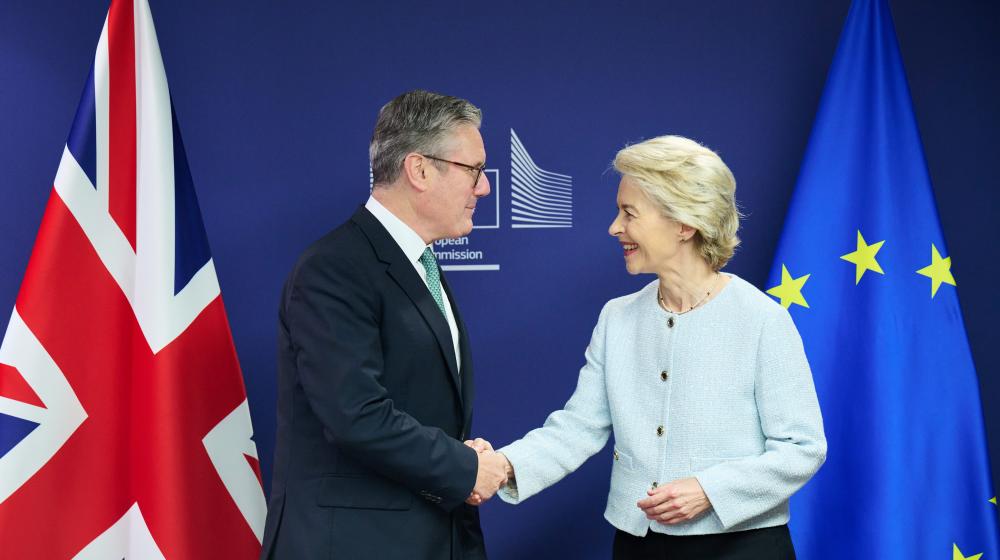
On 19 May in London the EU and the UK held their first annual summit since Brexit, against the backdrop of a broader reset in their relationship. Over the past three years – since Russia launched its war of aggression against Ukraine – the lack of structured EU-UK defence cooperation had become increasingly untenable. Recently, however, shifting political dynamics have created the conditions for a serious rethink of the bilateral relationship.
The meeting's agenda covered a broad spectrum of issues, ranging from trade to migration. While some key matters remain unresolved – chief among them, the participation of the UK in the SAFE defence instrument – the new Security and Defence Partnership stands out as a major outcome of the Summit. The document conveys a clear message: in today's geopolitical environment, the security of the EU and UK is interdependent and the two partners are committed to strengthening ties in this field.
In today's geopolitical environment, the security of the EU and UK is interdependent.
The SDP recognises that the EU and UK share security interests that extend 'beyond traditional strategic domains' and establishes a framework for strategic consultations on countering hybrid threats and enhancing the resilience of critical infrastructure. It also commits both partners to step up their cooperation in countering FIMI 'in order to raise the costs for malign actors'.
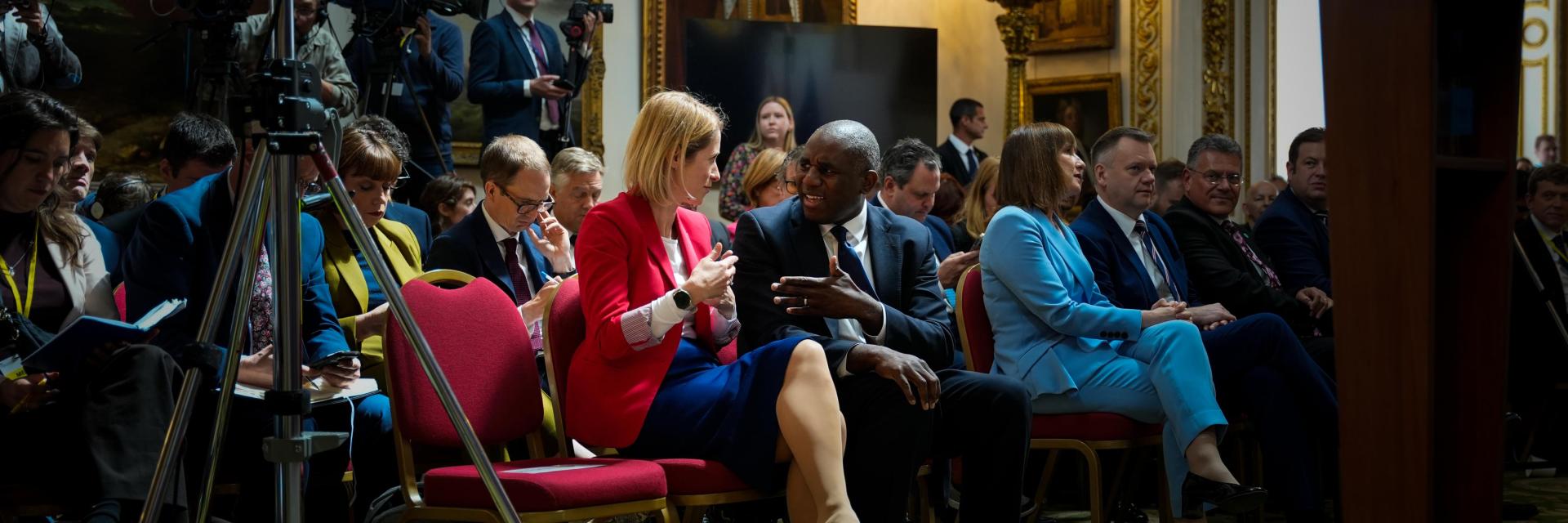
The parties also agreed on a six-monthly foreign and security policy dialogue between the UK Foreign and Defence Secretaries and the EU High Representative. While overarching strategic coordination remains important, the need to counter Russian interference is growing more urgent. Cooperation on this front should be swiftly operationalised by means of the creation of a dedicated hybrid task force bringing together working-level officials from the European External Action Service (EEAS) and the Foreign, Commonwealth & Development Office (FCDO).
A common front against Russian interference
Russian hybrid threats and interference in Europe are here to stay. A ceasefire in Ukraine might be a further opportunity for Moscow to 'expand and strengthen its subversion campaign in Europe', increasing the likelihood of it resorting to a wider array of hybrid attacks.
London has traditionally been at the forefront of efforts to counter the Kremlin's destabilising activities – starting with the Magnitsky Act sanctions and the unequivocal condemnation and attribution of numerous illegal activities on British soil, such as the Salisbury attack in 2018. More recently though, Brussels has taken a more prominent role in countering Russian FIMI activities. Last year several Russian proxies behind the Doppelganger campaign were sanctioned by the British Government after having been already identified by the EEAS and the French agency Viginum.
Russian hybrid threats and interference in Europe are here to stay.
When it comes to sanctions, London still holds significant expertise and intelligence capabilities – not to mention substantial Russian assets in its banks. Meanwhile Brussels has introduced a new sanctions regime targeting Russian hybrid activities. Most recently, the UK has sentenced six Bulgarian nationals accused of spying for Moscow, and also sanctioned shadow fleet vessels, along with entities and individuals supporting the Russian defence sector or involved in spreading Russian disinformation. In parallel, the EU adopted its 17th sanctions package, including measures targeting the shadow fleet as well as Russia's energy and military sectors. This coordinated effort has added more than 350 vessels to sanctions lists, in an effort to curb the oil revenue streams that continue to fund the Kremlin's war in Ukraine.
More can be done, however. A dedicated task force on hybrid threats – including disinformation – would significantly enhance efforts to impose higher costs on Russia. Such a body could, for example, develop new 'lawfare' measures against Moscow's shadow fleet, facilitate intelligence sharing on attacks on critical infrastructure, while improving coordination on proactive strategic communications to counter Russian narratives. To reflect the multifaceted nature of hybrid threats, the task force should be composed of working-level officials from the EEAS and FCDO, organised into flexible thematic groups and overseen by a joint coordination mechanism.
A dedicated task force on hybrid threats – including disinformation – would significantly enhance efforts to impose higher costs on Russia
Russian efforts to undermine Ukraine and impose its narrative extend far beyond Europe. Moscow has been recruiting cyber mercenaries and digital propagandists in contested areas like the Caucasus, the Western Balkans and sub-Saharan Africa. Building broader partnerships is essential in countering these activities, and a dedicated EU-UK task force could play a key role in better coordinating projects and funding initiatives aiming at strengthening independent journalism and media literacy – particularly at a time when USAID funds for similar projects are being slashed.
Structures similar to the one proposed here already exist within multilateral settings such as the G7 and NATO – for example, the G7's Rapid Response Mechanism (RRM), and within NATO the 'Innovation, Hybrid and Cyber', 'Public Diplomacy' and 'Joint Intelligence and Security' Divisions. Nonetheless, a dedicated bilateral task force would streamline coordination and intelligence sharing, particularly at a time when larger multilateral structures may be perceived as an impediment to timely action. This is especially relevant amid growing uncertainty over Washington's stance on issues like intelligence sharing, sanctions and countering disinformation – concerns that have emerged even within the Five Eyes alliance.
Moscow's 'desperate attempts to undermine support for Ukraine' through disinformation and political interference are likely to persist. In light of their newly-established comprehensive Security and Defence Partnership, the EU and UK must move swiftly and in concert to counter Russian hybrid threats and safeguard the security of European citizens – on both sides of the channel.