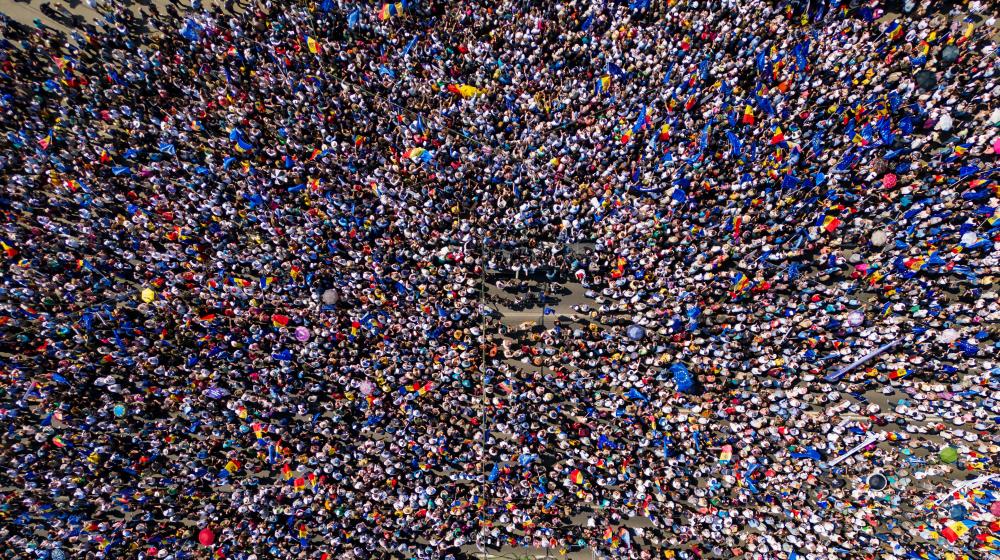
‘We lost the election.’ With these words, Aleksandar Vučić acknowledged defeat on election night in Serbia. Turnout reached almost 69%, approaching the historic levels of September 2000, when elections brought an end to Slobodan Milošević’s rule. Preliminary results indicate that the student-backed list received around 53% of the vote, compared with around 39% for the list led by Aleksandar Vučić’s Serbian Progressive Party (SNS).
High turnout reflected the importance of the vote. While the elections signalled a clear demand for change at home, their implications for Serbia’s foreign policy remain uncertain. A new government could pursue more constructive relations with the EU. However, significant shifts in Serbia’s position on Kosovo*, sanctions against Russia or its strategic ties with China appear unlikely in the near term. Rather than expecting an immediate geopolitical realignment, the EU and its Member States should seize this opportunity to support Serbia’s democratic transition and build a more durable partnership. Political change in Serbia could also help ease regional tensions, potentially creating more favourable conditions for Montenegro’s EU accession.
What does the Student List stand for?
The student-backed list emerged from a leaderless protest movement that began after the deadly collapse of the Novi Sad railway station canopy in November 2024. Organised through university plenums, where students make decisions collectively through direct voting, the movement’s demands for accountability, transparency and the rule of law evolved into the most significant electoral challenge to the SNS-led ruling coalition since it came to power in 2012. Its 11-point programme focuses on domestic reform, prioritising judicial independence, anti-corruption measures, transparency in public procurement, media freedom and the depoliticisation of public institutions, alongside education, economic development, housing and healthcare.
These priorities broadly align with the reforms required for Serbia’s EU accession. The preferences of supporters of the student-backed list also point towards closer ties with the EU: 75% favour closer relations with the EU, compared with just 10% who favour closer ties with Russia.
The immediate challenge will be to translate protest momentum into institutional reform. The window for reform may be narrow, particularly given the likely resistance from within state institutions. A student-backed government of experts would need to confront entrenched political networks, restore trust in institutions and create the conditions for genuinely competitive elections.
The student-backed list may embrace European democratic values, but this does not necessarily translate into a pro-EU foreign policy. Its programme provides little clarity on foreign policy priorities. Statements from the wider student movement suggest continuity on two contentious issues. In a memorandum issued in May 2026, the movement described Kosovo as an ‘inalienable and integral part of Serbia’ and a ‘component of Serbian national identity’, calling for a settlement within Serbia’s constitutional framework. In September 2026, the movement declared its opposition to sanctions on Russia which the outgoing government refused to take part in. Whether these positions would be maintained in government remains uncertain.
What changes for Europe – and what does not?
The next government’s priorities will be overwhelmingly domestic. A student-backed administration would take office with a mandate focused on institutional reform, leaving little political space for foreign policy, particularly where a change of course could provoke domestic opposition or complicate existing partnerships. Public attitudes nevertheless suggest some scope for a shift. According to CRTA’s July poll, 42% of student-list supporters see alignment with the EU as the best way to protect Serbia’s national interests, compared with just 9% who favour an alliance with Russia and China. Neutrality, however, remains the most popular option, at 49%.
A change of government would not erase the foreign policy choices made under the previous administration. Serbia has refused to join EU sanctions against Russia, maintained political and security ties with Moscow and expanded economic and defence cooperation with Beijing. A free trade agreement with China, in force since July 2024, illustrates this approach. Also, China was Serbia’s largest supplier of major arms in 2021–2025, accounting for 61% of its imports. More recently, deepening cooperation between the Serbian and Russian interior ministries has raised questions about the compatibility of Belgrade’s security partnerships with its European ambitions.
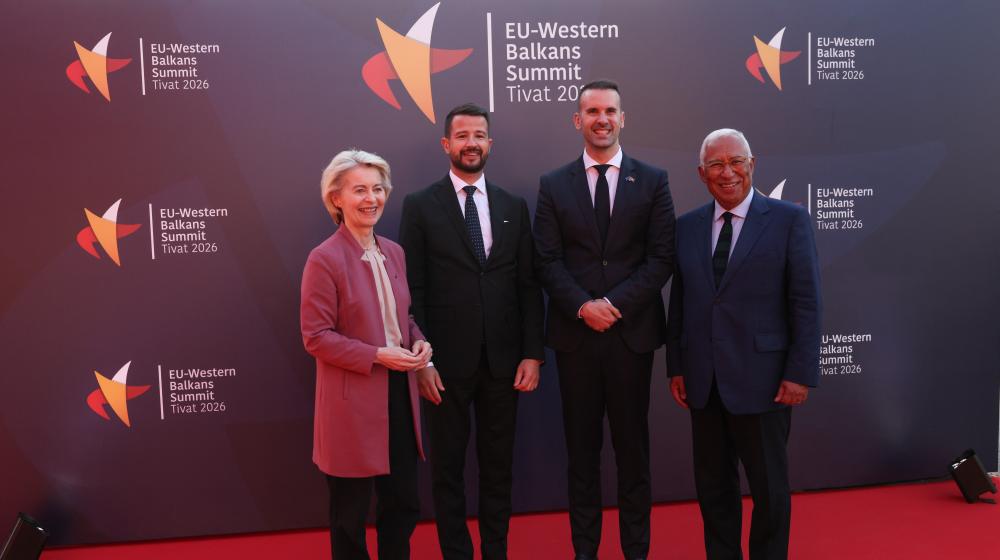
The gap between Serbia’s declared European ambitions and its policy choices has become increasingly difficult to overlook. No new EU negotiating cluster has opened since December 2021, leaving accession talks with little momentum for almost five years. Serbia’s alignment with EU foreign policy declarations and measures stood at around 60% in the first half of 2026, well short of the full alignment that European Council President António Costa described as ‘an essential expression of our unity’ in June 2026. The Commission’s forthcoming 2026 progress report is unlikely to indicate a significant departure from this pattern.
Yet, Belgrade has not rejected cooperation with European partners. Serbia has continued to engage with EU institutions, contribute to EU crisis-management missions and maintain close economic ties with European partners. Its foreign policy has combined practical cooperation with the EU and resistance to some of its key strategic positions, most notably sanctions against Russia over its war of aggression against Ukraine. The next government will inherit this balancing act amid growing international uncertainty. Russia’s war against Ukraine, intensifying US-China competition, instability in the Middle East and uncertainty over transatlantic relations have made foreign policy choices more consequential.
A long road back to Europe
The coming months may bring neither a decisive break with the past nor a return to business as usual, but rather a period of cautious reassessment. A new government focused primarily on domestic reform is unlikely to pursue an immediate geopolitical realignment. Change may instead emerge through greater transparency, more consistent engagement with EU institutions and a willingness to reconsider specific policies.
For Serbia, this transition offers an opportunity to rebuild trust in its institutions and strengthen its standing as a European partner. Yet the responsibility does not rest with Belgrade alone. The EU and its Member States should support reforms to judicial independence, media freedom and public administration through sustained political engagement, targeted technical assistance and investment, without assuming that political change will necessarily lead to greater foreign-policy alignment.
The EU is already Serbia’s largest economic partner. The challenge is to build on these ties and become a more trusted and reliable partner, making closer cooperation a credible choice for Serbia’s government and citizens.
* This designation is without prejudice to positions on status, and is in line with UNSCR 1244/1999 and the ICJ Opinion on the Kosovo Declaration of Independence.