Ukraine faces what may be its most difficult winter defending its citizens and critical infrastructure. With battlefield gains elusive, Russia is intensifying its long-range strike campaign against Ukraine, aiming to undermine morale, disrupt social and economic life, and increase pressure on Kyiv to accept an unfavourable ceasefire. Denying Moscow that leverage by strengthening Ukraine’s air defences should be a European priority. Europeans should pursue three lines of effort: supplying Ukraine with Patriot and SAMP/T systems and interceptors from existing stocks; boosting production in Europe and Ukraine; and focusing on upgrades and developing new systems
Russia’s strikes involve a mix of ‘traditional’ drones (including Shaheds), jet-powered drones, cruise missiles and a growing number of ballistic missiles. Ukraine has built a layered defence system to counter these threats, combining electronic warfare, anti-air guns, interceptor drones, acoustic signals, air-to-air missiles and ground-based air defence systems such as the NASAMS, Iris-T and Patriot.
Ukraine can neutralise many of these threats, although its defences are now under strain due to the intensity of Russian attacks and limited resources. However, the most acute gap remains in Ukraine’s defence against ballistic missiles, which are very difficult to intercept due to their very high speed and trajectory. According to reporting by the New York Times Russia fired 126 of these in July 2026, the highest total of any month in the year.
Securing more Patriot interceptors
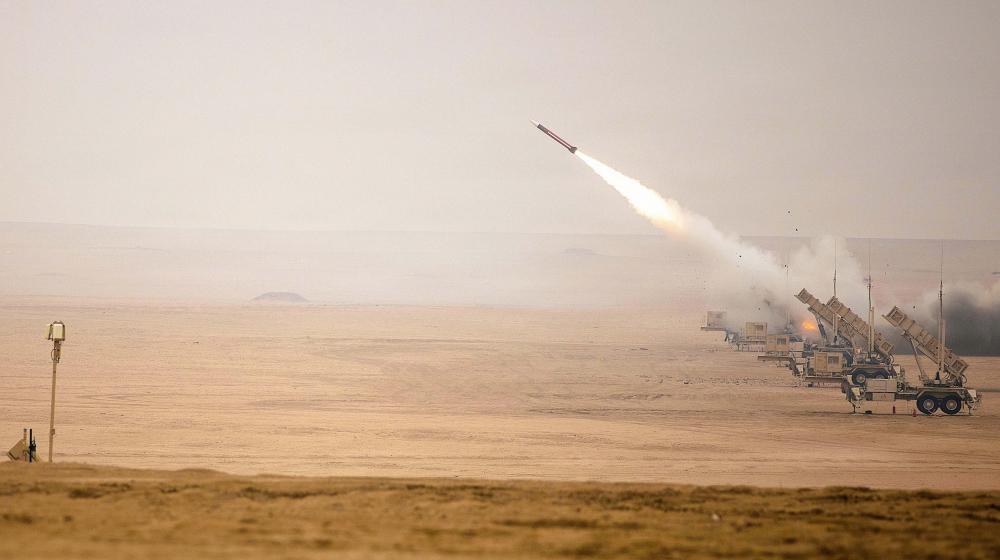
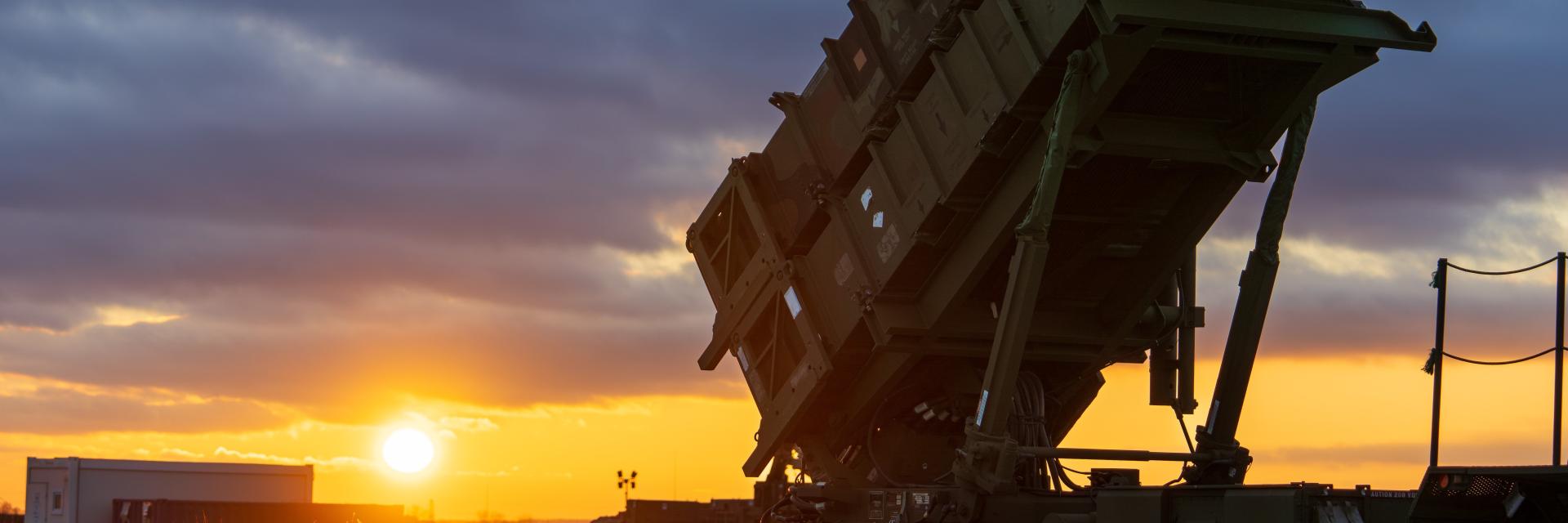
Ukraine’s main defence against Russian ballistic missiles has been the Patriot system, using PAC-3 interceptors produced by the US company Lockheed Martin. Ukraine has obtained Patriot batteries directly from the US, as well as from some European countries. Europeans have also been directly supporting Ukraine’s efforts to secure new interceptors from the US, enabling purchases directly through NATO’s PURL system.
The problem is that Ukraine is now facing a major shortage of interceptors. The key reason is that production is severely constrained. According to Lockheed Martin, production stood at 600 missiles in 2025. However, Russia can hit Ukraine with over 120 a month, as happened in July. At the same time, according to estimates by the Centre for Strategic and International Studies, the conflict against Iran had led the US to consume two thirds of its stock of Patriots by the end of July.
Europe’s immediate priority should be ensuring Ukraine receives as many Patriots as possible from existing stocks and fresh production. European countries should consider whether there are more missiles that they can release from their own stocks. At the same time, they should try to ensure that Ukraine receives as much as possible of the existing limited supply of Patriots coming off US production lines, including by financing purchases.
This strategy has limits, as the supply of Patriots will remain constrained for the coming years. The US plans to scale up production of Patriot PAC-3 interceptors to 2 000 over 7 years. Similarly, plans announced by Trump at the NATO Ankara summit in July to set up Patriot production in Ukraine itself would take several years to get off the ground, both due to technical complexity and to concerns about IP security. In any case the plan appears to have lost momentum, with the US playing down expectations.
Increasing Europe’s air-defence contribution
Beyond maximising Ukraine’s supply of Patriots, Europeans should focus on providing Ukraine with more European-origin systems and interceptors. In particular, IRIS-T systems, anti-aircraft guns and radars will strengthen Ukraine’s ability to deal with drones and cruise missiles. When it comes to countering ballistic missiles, Kyiv has been using the Franco-Italian SAMP/T, with its Aster 30 missile interceptor, currently the only European alternative to Patriot. In July, France agreed to temporarily send two more systems to Ukraine while Kyiv acquires four more modern SAMP/T NG systems, set to arrive from 2027.
The challenge is that the SAMP/T faces similar availability constraints to the Patriot. Until recently France and Italy were the only two users of the system, creating limited demand. Late last year, Denmark also announced it would procure the system, and placed an order in March 2026. Similarly, the supply of the Aster 30 interceptor has been constrained by the limited number of past orders. However, there are plans to scale up production: MBDA says production will double in 2026 and is setting up a second assembly line in Italy.
In the immediate term, transfers from Europeans stocks are the quickest way to make a material difference to Ukraine’s defence. But the situation will not improve unless Europeans double down on increasing SAMP/T and Aster production. The EU should support efforts by Member States to acquire SAMP/T and Aster systems. In parallel, Europeans can try to localise production in Ukraine. In July, France and Italy committed to authorising licensed production of Aster 30 missiles in Ukraine before the end of 2026. Setting up a production line for such a sensitive system in Ukraine from scratch will be very difficult, as with Patriots. However, setting up elements of it could be feasible in a shorter timeframe. Again, this is something that the EU could support.
Building future missile-defence capacity
Increasing the supply of existing systems to Ukraine is the most concrete way in which Europeans can support Ukraine’s defence. But the medium term is also important. The third strand of Europe’s strategy should therefore focus on upgrading existing systems and developing new ones that are potentially cheaper and can be produced more quickly. This is far more challenging for defence against ballistic missiles than for less sophisticated threats. But it is what many European countries, together with Ukraine, are trying to do with Project Freyja, the proposed flagship of the anti-ballistic missile coalition established in July 2026 by Denmark, France, Germany, Italy, the Netherlands, Norway, Spain, Sweden, Ukraine and the UK. Ukraine’s Fire Point will contribute an interceptor, while partners would supply radars and other components. Freyja should not be understood as a single project but rather a broad umbrella from which concrete projects may emerge. As these projects take shape, there would be a strong case for the EU to support them.
The final component of a European strategy should be localising Patriot production in Europe. There are already plans to localise PAC-2 in Germany, with the facility expected to open in September. Some elements of PAC-3 production are already being localised in Poland, but there are currently no firm plans to set up a full production line in Europe. This could help both ease Ukraine’s interceptor shortage and secure future supply for Europe’s own needs. The fact that the US is already localising some production in Europe suggests that Washington may be open to expanding European production. Any interceptors produced in Europe would not automatically belong to Europeans, but it would be practically and politically difficult for Washington to deny them access, especially if contracts specify a guaranteed share for European use. Nevertheless, the US will retain a veto over the onward transfer, meaning that production in Europe would not necessarily automatically benefit Ukraine’s defence.
Strengthening Ukraine’s air defences will not be easy. It is easier for an attacking missile to penetrate defences than it is to intercept it, and currently cheaper too. Improving air defences is therefore only part of what Europeans need to do to persuade Russia that it cannot win. But that does not make air defence any less important: strengthening Ukraine’s missile defences will directly undermine Russia’s theory of victory and put Ukraine in a stronger position. It would also strengthen Europe’s own missile defences by helping to expand European supplies and production capacity.