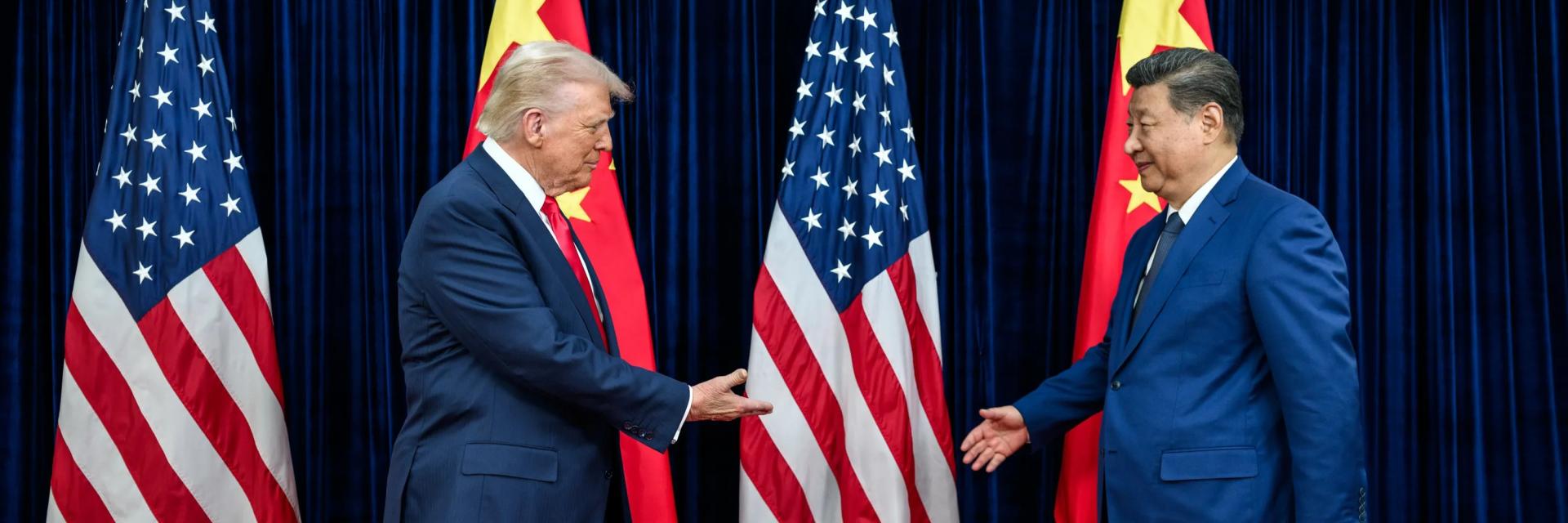
Since Donald Trump returned to the White House in January 2025, international affairs have become less predictable. Yet the Xi-Trump summit in Beijing on 14–15 May 2026 is unlikely to deliver any dramatic strategic surprises. Beijing can orchestrate the visit to provide Trump with the optics of success, and Trump may describe the exchanges in characteristic superlatives. In substance, however, the summit is more likely to focus on managing tensions than on producing a reset in relations. Neither side is ready for a grand bargain, nor does either want a breakdown that would further damage an already fragile global economy. Key issues to watch include whether the Busan trade truce holds, progress on technology governance and AI safety consultations, and whether Beijing is willing to use its influence to help de-escalate the conflict with Iran. For the EU, the stakes lie above all in avoiding further disruption to critical mineral supply chains and in the potential – however slim – for Chinese engagement on Iran to improve energy security prospects.
Managed rivalry, not a grand bargain
In a midterm election year, Trump and the Republican Party have little reason to risk another economic shock. High petrol prices, falling real disposable income in recent months and slower job creation are already creating political pressure. A blow-up with China would add uncertainty to inflation, supply chains and financial markets at precisely the wrong moment for the White House.
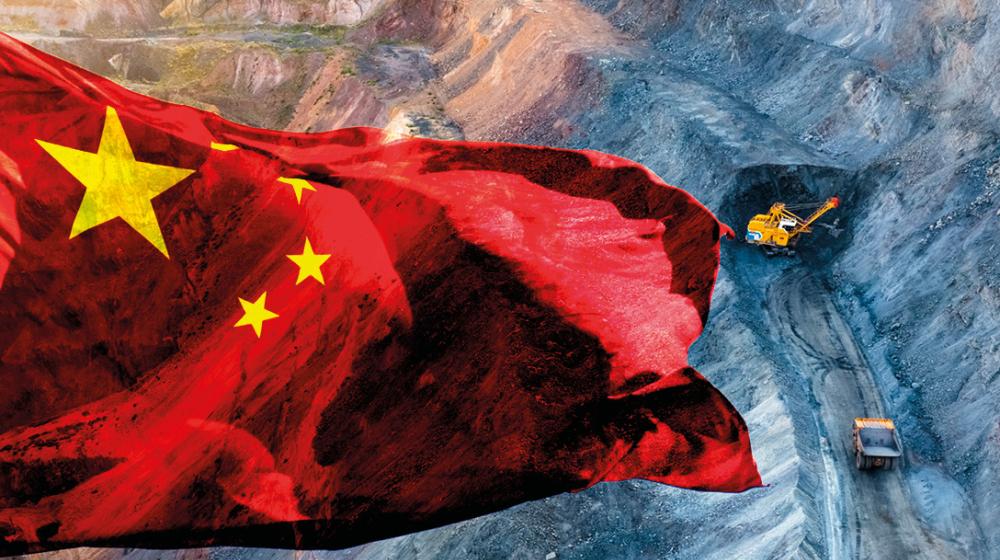
Beijing also has few incentives to escalate. It has weathered Trump’s tariff pressure better than many expected and has shown that it can retaliate in areas where the United States and its allies are vulnerable. China’s April 2025 export-licensing restrictions on rare earths and magnets did not amount to a full embargo, but they showed Washington how quickly Beijing could create bottlenecks in defence, energy, electronics and automotive supply chains. According to interviews conducted by the author with Washington insiders, President Trump changed course on China within a single afternoon in May 2025, acknowledging the extent of China’s leverage. In October 2025, China further extended the rare earth export controls but subsequently suspended the measures after reaching an agreement with Donald Trump. Unless both sides extend the agreement, these controls are due to come back into force in early November 2026. Chinese decision-makers appear to understand that, unlike many in Washington, Trump views China primarily in commercial and transactional terms rather than through the prism of long-term strategic competition. Beijing therefore seems to calculate that a mix of economic inducements and coercive leverage offers the most effective means of influencing the American President.
This does not mean that Beijing is complacent. China’s leaders remain deeply distrustful of the United States. Trump is seen as erratic, and concessions made today can be reversed tomorrow. In less than three years, moreover, he will most likely be gone from office, raising the risk, from Beijing’s perspective, that a more institutionalised and bipartisan China-sceptic consensus – which has not disappeared – will again dominate policy in Washington. This dual uncertainty makes Beijing extremely unlikely to agree to any far-reaching grand bargain.
Even the summit preparations reflect the absence of a clear process on the US side. Washington’s priority is to press Beijing to use its influence with Tehran. China has no interest in a prolonged closure of the Strait of Hormuz, given its dependence on Middle Eastern energy imports and the broader risks posed by an energy shock to the global economy. Yet it remains unclear whether Xi is willing to invest political capital in a US-led diplomatic outcome. Despite clarity regarding the US’s main priority, new topics were reportedly still being tabled at the last minute days before the meeting. Xi Jinping, by contrast, favours thorough preparation over improvised bargaining driven by personal chemistry between leaders. Beijing also detects a contradictory pattern in US policymaking: authority over major decisions is heavily concentrated in the hands of Trump and a small inner circle of advisers, yet poor coordination still allows hawkish measures to emerge without a coherent overarching strategy.
For Xi, tactical stabilisation is valuable because China’s domestic economy remains weak. Consumer demand is low, unemployment is high and exports remain central to growth. If the war with Iran drags on and keeps energy prices elevated, China’s growth could fall significantly below Beijing’s target range of 4.5-5.0%, regardless of the confidence projected by official statistics.
What to watch: trade, security and technology
Apart from Iran, several other questions will be critical in assessing the summit’s outcome. In Busan, South Korea, in October 2025, the two sides reached a tactical ceasefire. Washington reduced fentanyl-related tariffs by 10 percentage points and suspended heightened reciprocal tariffs until 10 November 2026. In return, Beijing committed to stronger action on fentanyl precursors, suspended for one year the additional rare earth export controls introduced in October 2025, and increased agricultural purchases from the US. The deal eased market pressure but did not resolve the underlying conflicts over industrial policy, technology controls or strategic mistrust. Trump suggested that the agreement could be renwed annually, but China may see little tactical benefit in extending it almost six months before it expires. Trump’s tariff leverage has also been weakened by litigation: the Supreme Court ruled in February 2026 that the International Emergency Economic Powers Act (IEEPA) did not authorise him to impose sweeping tariffs, and courts have since struck down his replacement levies too. However, Section 301 investigations into industrial overcapacity remain a possible basis for future tariffs. A more plausible outcome of the summit may be the creation of trade and investment boards to facilitate non-sensitive economic exchanges and manage disputes.
On the security front, the agenda spans a wide range of issues, from China’s partners in the Western Hemisphere (notably Cuba), to Iran and Taiwan. Few observers in Washington expect the US to shift its declaratory policy from stating that it ‘does not support Taiwan independence’ to explicitly ‘opposing Taiwan independence’ – a shift in rhetoric that China had previously pressed the Biden administration to adopt. Nor is there much expectation that Washington will accept constraints on arms sales to Taipei after the State Department notified Congress in December 2025 of possible foreign military sales to Taiwan worth roughly $11.1 billion. Even if Trump made such a concession, he could reverse course within days. More lasting progress could be made if both sides agreed crisis-communication procedures: who answers a hotline, at what level, how quickly and under what rules during naval or air incidents.
Finally, on technology, Washington is unlikely to lift restrictions on frontier semiconductors, although concessions on China-compliant or mid-tier chips are possible. Both sides may also point to the TikTok joint venture – finalised in January 2026 – as a model for managing technology disputes: ByteDance retains a minority stake, while a majority-American investor group, with Oracle responsible for data security and algorithm oversight, takes control of US operations. The most meaningful forward-looking step would be opening consultations on AI safety. This is possible, but far from guaranteed.
What it means for Europe
For Europe, the summit matters because failure to sustain the Busan truce would send further shockwaves through the global economy and could worsen shortages of critical minerals. Chinese help on Iran – although highly unlikely –would also improve the prospects of reopening the Strait of Hormuz and easing energy security concerns.
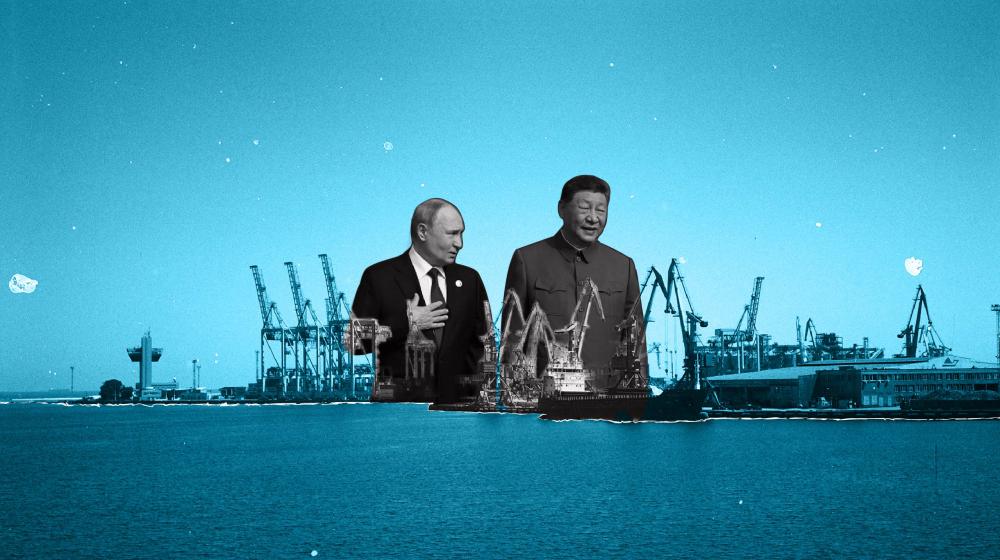
Russia remains the wild card. Putin is expected to visit Beijing shortly after Trump. Xi’s choreography will matter. A lavish reception for Putin could play into Trump’s sensitivity to being upstaged and unsettle whatever modest stabilisation the summit manages to produce. That would underline the fragility of the likely outcome: managed détente rather than genuine trust.