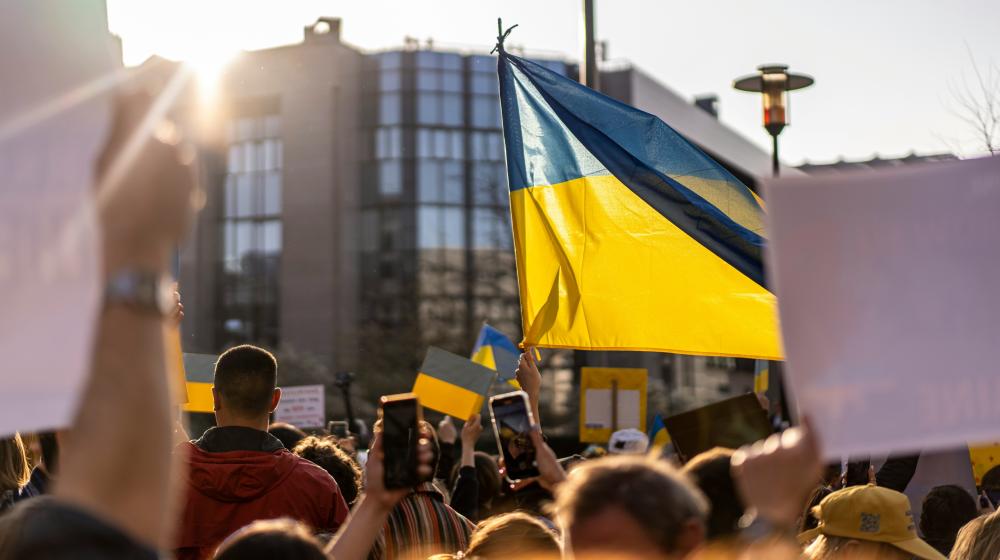
Russia’s economy is not yet collapsing. Nor is its military campaign against Ukraine. But the Kremlin is mortgaging the country’s future as underlying structural weaknesses in the economy begin to emerge. Meanwhile, Ukraine has stabilised its defences, is carrying out successful strikes deep inside Russian territory, and is set to bolster its armed forces with the newly unblocked loan from the EU which allocates €60 billion to cover Kyiv’s military needs.
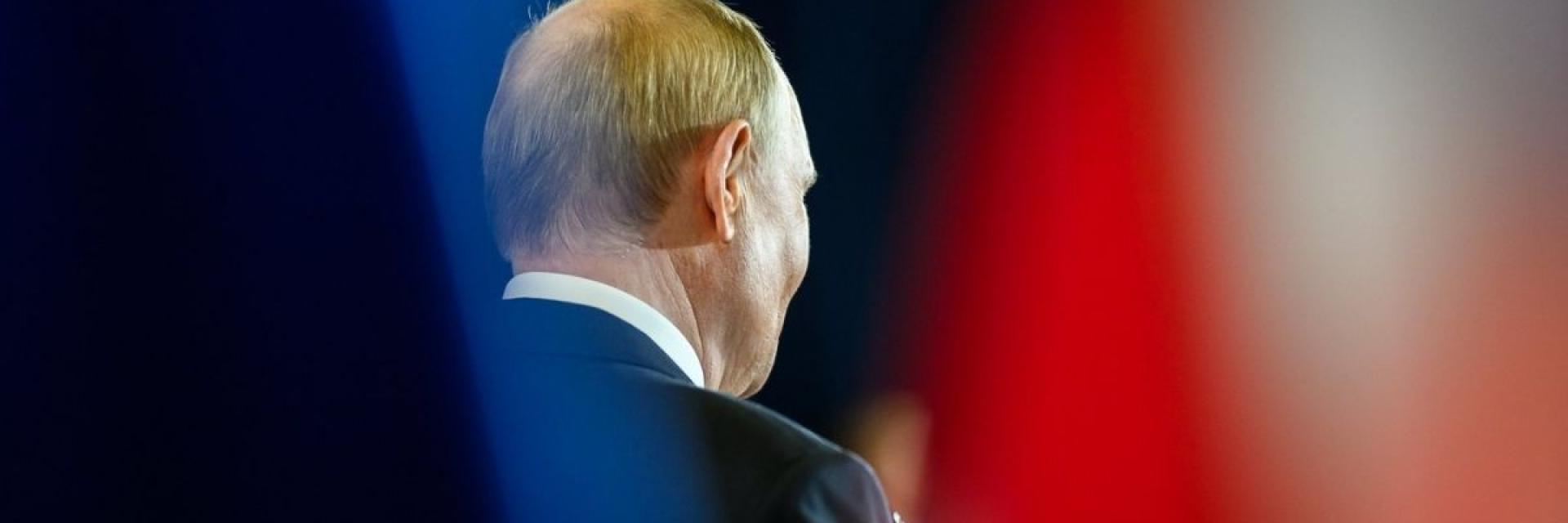
More likely than not, the regime will try to muddle through these difficulties. But if Vladimir Putin concludes that time is no longer on his side and the window to freeze Russia’s war of aggression against Ukraine on favourable terms is closing, he may choose to escalate. Europeans should not be intimidated by this prospect; they should prepare to face it with credible resolve.
Economic and military strains
Moscow is reaping unexpected gains from the US campaign against Iran. This is mostly due to rising oil export revenues. The International Monetary Fund has raised its 2026 growth forecast for the Russian economy by + 0.3 %, to 1.1 % of GDP. The federal budget is expected to collect USD 9 billion in oil extraction taxes for the month of March – twice as much as in February.
This is clearly good news for the Kremlin. But the broader economic picture is more complicated.
The near doubling of the Urals oil price since the start of the campaign may appear impressive, but only at first glance. The baseline was very low – less than USD 40 per barrel in February – and this did not account for the discounts Russian exporters had to offer to major buyers to keep their oil competitive, even as much of it remained unsold at sea.
To offset the widening budget deficit, these windfall profits would need to keep flowing for the rest of the year if Russia is to meet its annual target of USD 102 billion. The first months of the year were particularly poor, partly due to tougher global action against the shadow fleet. However, the US has now delayed by another month the reimposition of sanctions on Russian seaborne oil in an effort to stabilise the market.
That might have pushed the Russian government towards fiscal restraint. This is an option it considered not that long ago – contemplating changes to the budget rule that would have channelled more hydrocarbon export revenues into the National Wealth Fund, whose assets have fallen by more than a half since the start of Russia’s war against Ukraine.
Instead, the government appears to be moving in the opposite direction. In the first quarter, the deficit reached 1.9 % GDP, or USD 60 billion – exceeding the planned deficit for the whole of 2026 and double the level recorded in the first quarter of 2025.
This cannot be explained simply by the annual scheduling of government contracts. It looks more like a response to structural problems that are now surfacing across the Russian economy. In a recent televised meeting with senior officials, Putin, visibly irritated, admitted that the economy had shrunk by 1.8 % in the first two months of 2026, and demanded to know how this ‘degrowth’ could be reversed.
Meanwhile, interest rates remain high, consumption is falling, and Central Bank chief Elvira Nabiullina has warned of a severe labour force shortage, with unemployment at 2 %.
Russia’s economy is a hybrid, combining elements of a market system and a command economy. That provides the Kremlin with unorthodox ways to intervene and avert immediate setbacks. However, such interventions carry political risks. These risks may feel more acute now that the FSB’s unconventional attempts to ‘restore order to the internet’ have triggered rare public discontent and even tensions within the elite. Crucially, the ‘good tsar’ Putin himself (rather than the state bureaucracy) is no longer shielded from public ire.
Meanwhile, there is little for Moscow to celebrate on the battlefield. Ukraine has regained the upper hand in drone warfare, inflicting more fatalities on Russian forces. At the same time, recruitment of new soldiers is likely slowing, as even rising contract-signing bonuses may no longer tempt the shrinking pool of potential volunteers. As a result, Russia is beginning to struggle to replace its battlefield losses.
Ukraine also faces personnel shortages but has nonetheless managed to stabilise the front line, seize the initiative in some areas (such as around Huliaipole in the Zaporizhzhia region) and will now have the resources to strengthen its defences thanks to major new financial assistance from the EU.
Muddle through or try to break through?
How the Kremlin responds to these pressures will depend on whether it still believes time is on its side – or starts to doubt that.
If it maintains that belief, it will probably try to muddle through. The Kremlin will seek to buy time, hoping that elevated oil revenues keep the economy afloat, and that Ukraine and its European partners prove less resilient than Russia. Risk averse and prone to shifting responsibility onto officials (as witnessed in the televised meeting mentioned above), Putin may well prefer this course. Since the economy is still far from collapse, and since any major shift on the battlefield would take months to materialise, the strategy could work in the short term. It is not without risk, however. Quite the opposite: it reduces pressure today but at the cost of mortgaging a perhaps not-so-distant future.
To preserve the time advantage he thinks Russia still has, Putin may also opt for a strategic adjustment. In principle, this could mean engaging seriously in talks on a sustained ceasefire in Ukraine. Not peace: the Kremlin’s hostile intent towards Europe would remain intact. Rather, this would create conditions that allow Russia to consolidate internally (in the expectation that some sanctions would be suspended) and rebuild its armed forces for a renewed bid to restore its empire in Eastern Europe.
More likely, however, is a darker scenario: escalation. The now-or-never belief that the window of opportunity for resolving the war on favourable terms is closing – combined with the need to reinforce discipline and legitimacy at home – could lead Putin to order a new, overt mobilisation, and move the economy more firmly onto a wartime, and therefore command, footing.
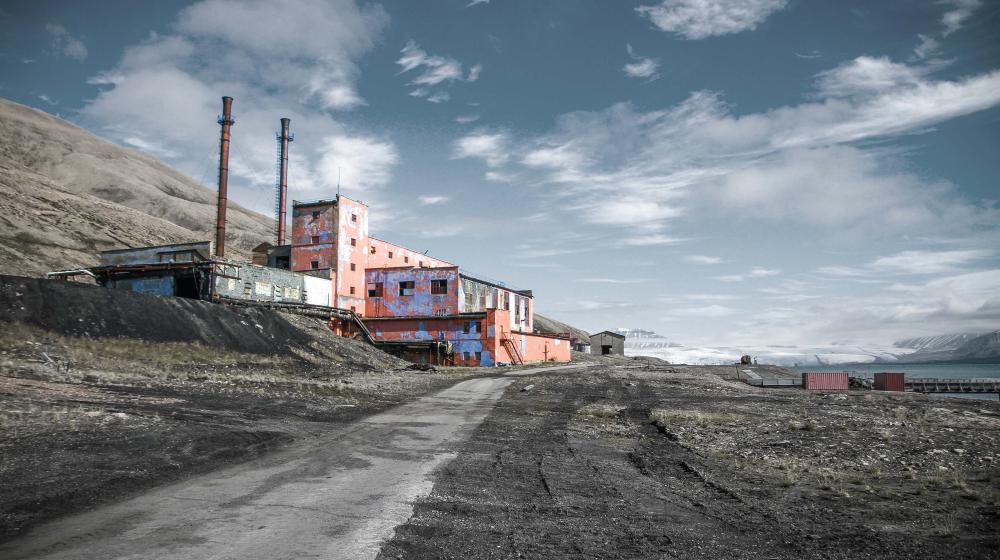
In Russia’s strategic culture, war is a holistic, whole-of-society endeavour. The current ‘special operation’ – while an example of Orwellian Newspeak – has not yet reached that stage. But it could. Europeans should not fear this scenario. Instead, they should work to prevent it by accelerating and strengthening their deterrence and preparedness across all domains, while maintaining their resolve to support Ukraine, which now sits on an extended European frontline – from Svalbard to Odessa – where Russia must be contained.