Europe’s debate on China often starts from a single assumption: that Beijing is steadily rising while Europe can only react defensively. A new Chaillot Paper by Alicia García-Herrero and Tim Rühlig challenges this narrative. China remains powerful, but growing domestic fragilities are increasingly shaping a more assertive external posture—one with direct consequences for European interests.
For the EU, these vulnerabilities also create leverage. China depends heavily on access to Europe’s high-purchasing-power single market as well as key European technologies and inputs. At the same time, greater fragility may increase the risk of retaliation. The report argues that the cost of inaction—accelerating deindustrialisation and deepening strategic dependence—will ultimately exceed the cost of pushback.
The paper therefore calls for a shift towards leverage-based diplomacy: investing in Europe’s technological strengths, making diversification the default de-risking strategy, strengthening escalation control through more credible anti-coercion tools, and conditioning access to Europe’s market and technologies on concrete concessions from Beijing—particularly to prevent deindustrialisation and address China’s role in supporting Russia.
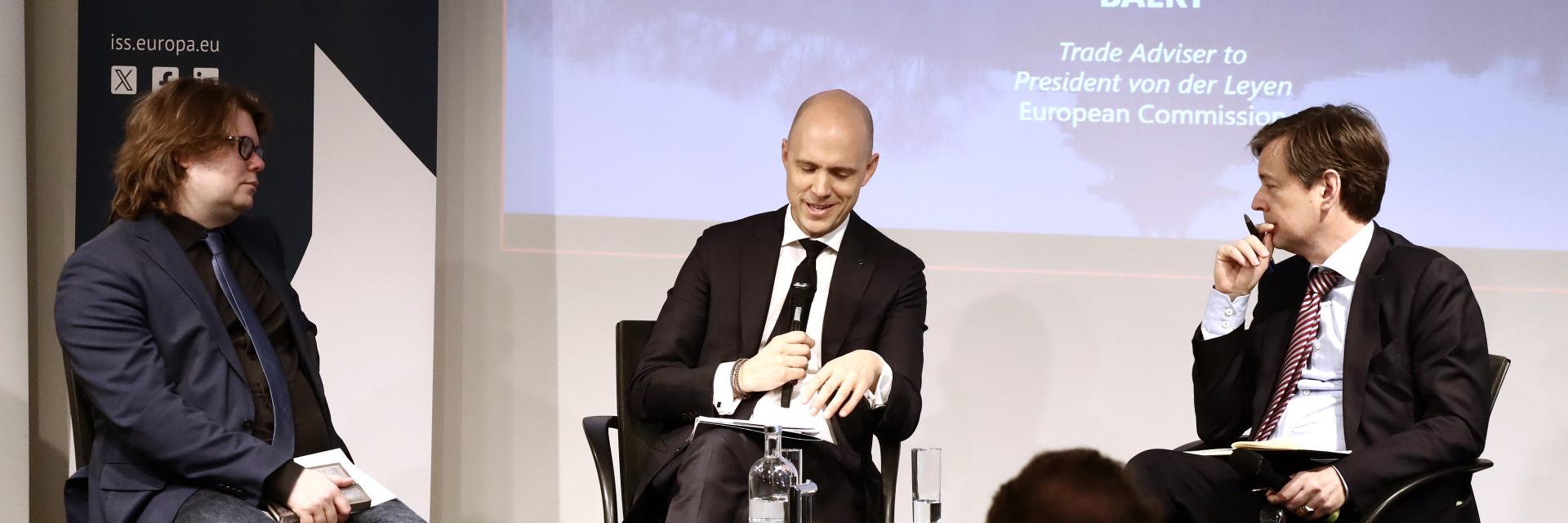
The launch event brought together the authors alongside discussants Tomas Baert, Trade Adviser to Commission President Ursula von der Leyen, and EUISS Director Steven Everts.