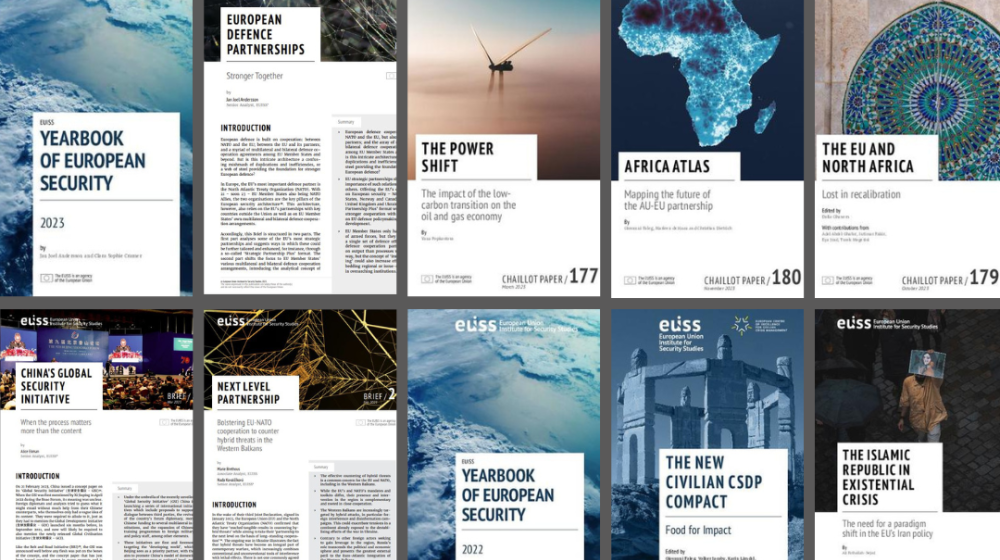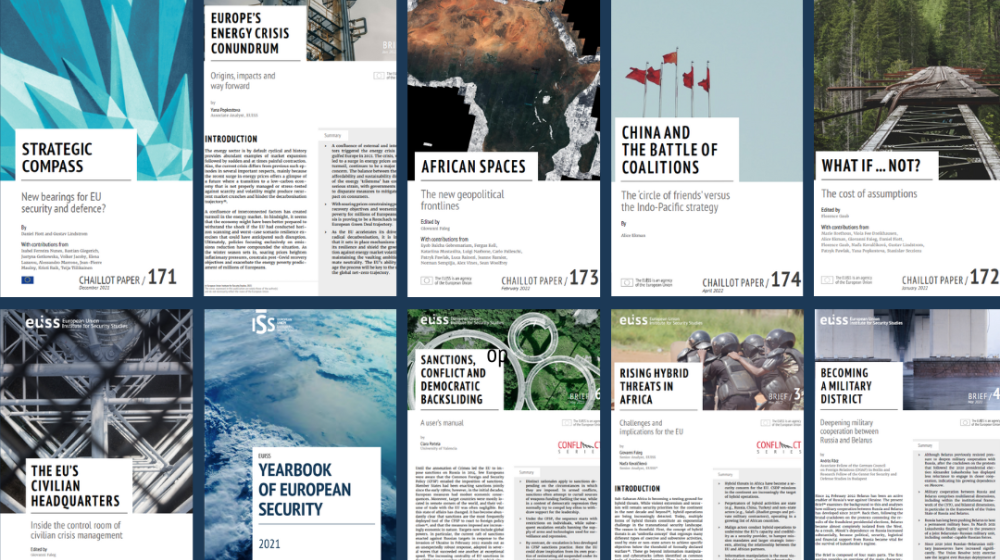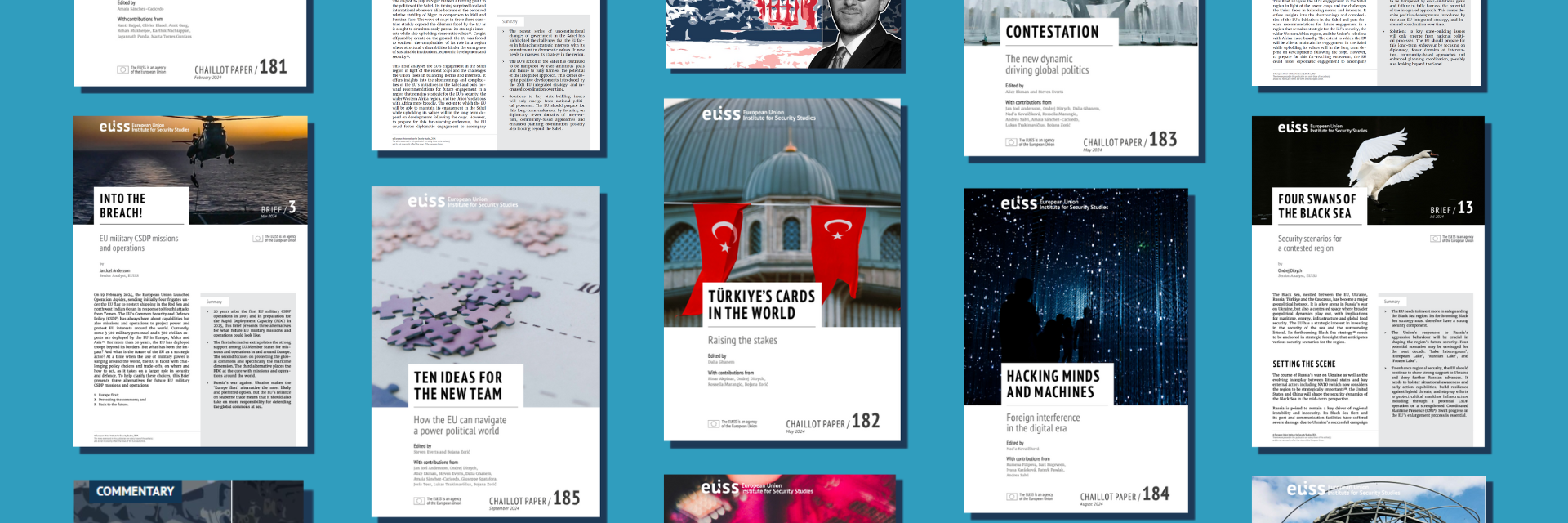
In 2024, the EUISS team tackled some of the most critical challenges facing the European Union. From concrete proposals to strengthen European defence to innovative ideas for revitalising EU foreign policy and insightful analyses of the US elections, our publications explored key issues shaping the continent's future. Discover our most popular works of the year.
1

Türkiye's cards in the world - Raising the stakes
By Dalia Ghanem, Pinar Akpinar, Ondrej Ditrych, Rossella Marangio, and Bojana Zorić
Türkiye's global influence is on the rise. The country has emerged as a key player in the Western Balkans, South Caucasus, Middle East and Africa thanks to a diverse toolbox of diplomatic tools and targeted communication. Our most-read publication of the year explores Türkiye's strategy and what it means for the EU.
2

10 ideas for the new team - how the EU can navigate a power political world
By Steven Everts, Bojana Zorić, Jan Joel Andersson, Ondrej Ditrych, Alice Ekman, Steven Everts, Dalia Ghanem, Amaia Sánchez-Cacicedo, Giuseppe Spatafora, Joris Teer, and Lukas Trakimavičius.
This collective work by the EUISS team presents 10 ideas to revitalise EU foreign policy and adapt it to a changing world. New ways of thinking, working and acting to propel EU foreign policy forward.
3

Contestation - The new dynamic driving global politics
By Alice Ekman, Steven Everts, Jan Joel Andersson, Ondrej Ditrych, Dalia Ghanem, Nad’a Kovalčíková, Rossella Marangio, Andrea Salvi, Amaia Sánchez-Cacicedo, Lukas Trakimavičius, and Bojana Zorić.
Forget "fragmented world." The defining feature of global politics today is contestation. There is a fierce global battle going on over norms, votes, investments and more. In another collective Chaillot Paper, we explore three types of contestation shaping our world and what the EU needs to do to navigate this complex environment.
4

The US elections: what choices for Europe?
By Giuseppe Spatafora and Christian Dietrich
The US presidential election have far-reaching consequences for EU foreign policy. Our interactive map looked at how a Trump or a Harris presidency would affect key flashpoints around the world, the strategic stakes for EU foreign policy and the choices this entails.
5

Hacking minds and machines - Foreign interference in the digital era
By Nad’a Kovalčíková, Rumena Filipova, Bart Hogeveen, Ivana Karásková, Patryk Pawlak, and Andrea Salvi.
This Chaillot Paper investigates the growing threat of foreign interference, examining the interplay of information manipulation and cyber operations and offering recommendations for enhancing EU defences.
6

Into the breach! EU military CSDP missions and operations
By Jan Joel Andersson
20 years after the first EU military CSDP operations, it's time to think about what's coming next. Jan Joel Andersson presents three alternatives for what future EU military missions and operations could look like.
7
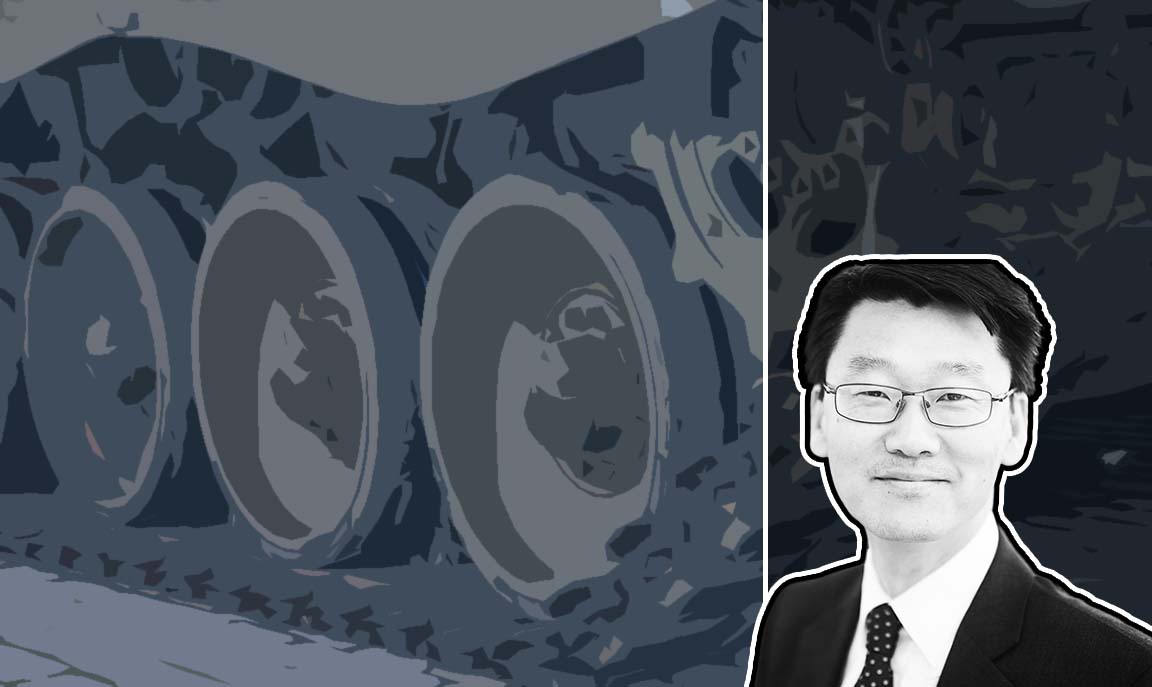
Guns. Lots of guns - EU strategic responsibility and the European defence industry
By Jan Joel Andersson
To continue supplying Ukraine while rebuilding its own arsenals the EU needs guns. Lots of guns. This commentary explores how dual-use strategic enablers could unlock Europe's strategic responsibility.
8

Four swans of the Black Sea - Security scenarios for a contested region
By Ondrej Ditrych
The Black Sea's security landscape has shifted dramatically since Russia invaded Ukraine. Ondrej Dietrich looks at four potential security scenarios for the region in the next decade.
9

EU-India relations - Gaining strategic traction?
By Amaia Sánchez-Cacicedo, Kanti Bajpai, Olivier Blarel, Amit Garg, Rohan Mukherjee, Karthik Nachiappan, Jagannath Panda, and Marta Torres Gunfaus.
This Chaillot Paper examines the evolving EU-India relationship and charts a course for a strategic partnership beyond trade.
10

Sahel reset - Time to reshape the EU's engagement
By Rossella Marangio.
The wave of coups in the region exposes the EU's struggle in Sahel. It's time to rethink its engagement with the region writes Rossella Marangio, emphasizing the need to balance strategic interests with a commitment to democratic values and outlining recommendations for future engagement.