The EU's security, prosperity and geopolitical influence increasingly depend on its ability to develop, control and deploy emerging and disruptive technologies (EDTs). Examples are artificial intelligence, advanced robotics and autonomous systems, and advanced propulsion technologies.
These technologies are becoming central determinants of military effectiveness, economic competitiveness and the capacity of states and political entities to shape international outcomes. Europe's position, however, varies considerably across technologies and across different segments of their value chains. It also faces major obstacles in EDT development, as financial resources, industrial maturity and scale, access to talent, and availability of critical materials remain constrained.
Europe is unlikely to keep pace across the full spectrum of EDTs in the coming decades, making prioritisation essential. Investment should therefore focus on technologies offering the greatest strategic return by simultaneously strengthening Europe's:
- defence capabilities
- economic growth
- indispensability.
Investment priorities must also be assessed in light of Europe's current industrial-technological foundation, to determine whether it already holds – or could realistically build – a comparative advantage throughout the next ten years.
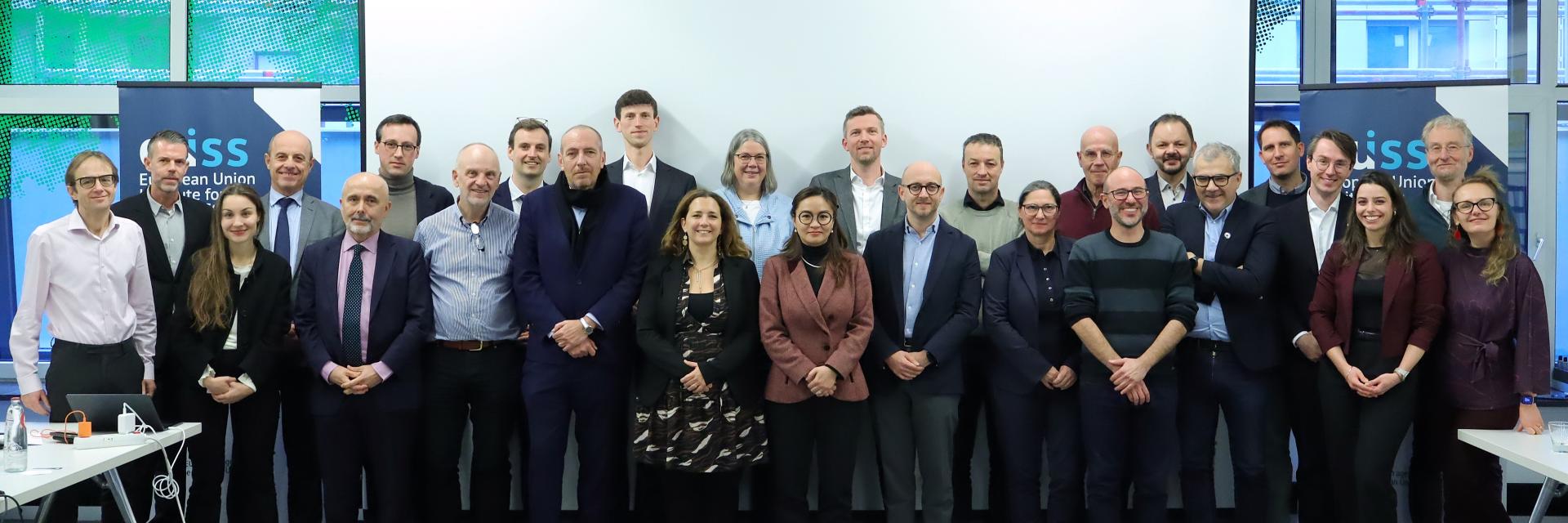
On 26 November, the Institute organised a Delphi-workshop to identify the technologies with the highest 'Triple Dividend' potential for Europe. Led by analysts Clotilde Bômont and Joris Teer, and opened by our Director Steven Everts, the workshop brought together industry, technical, policy and military experts from leading European research institutes, national and EU institutions and agencies, and industry associations.
The findings will inform an upcoming EUISS report, as well as recommendations on the EDTs the EU should invest in and the policies that would make these investments a success.