These are the years of maximum danger for Europe. It faces a world of escalating threats, intensifying power politics and eroding respect for agreed rules and norms.
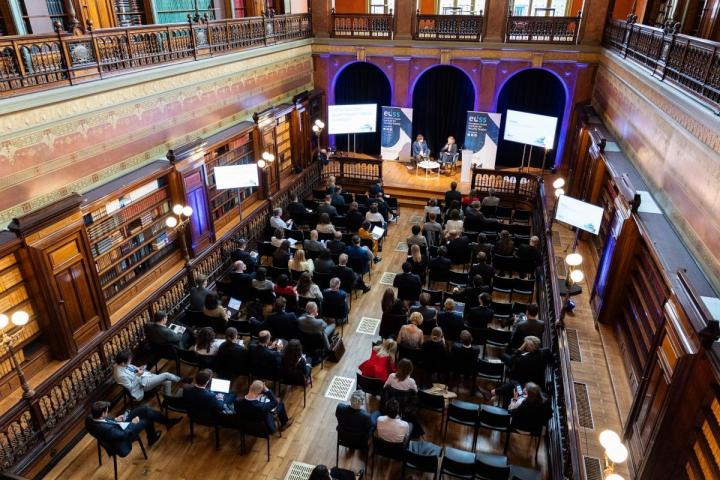
On 3 September, the 2025 EUISS Annual Conference tackled the urgent decisions that Europe must make to defend its citizens and interests.
What should the EU's top priorities be? With whom should it partner? And how can it close the 'performance gap' between the expectations of its citizens and what it can deliver on the ground?
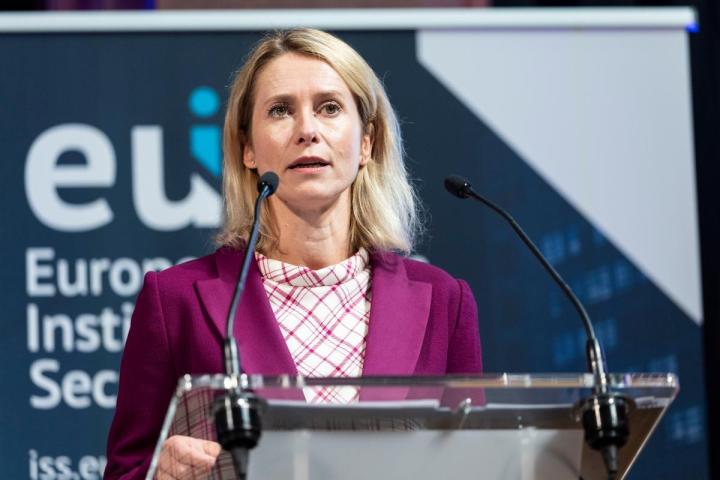
HR/VP Kaja Kallas delivered the opening speech (full transcript)
Agenda
11:45-12:45 SCENARIO WORKSHOPS
1. The EU under attack: a scenario-based exercise on countering hybrid threats.
Moderators: Nad’a Kovalčíková, Senior Policy Analyst, Andrea Calderaro and Marija Antanaskova, Project Leaders, EUISS
Participants explored the scenario of a coordinated, state-sponsored hybrid operation targeting a major European port and discuss possible countermeasures. The simulated disruption combined a sophisticated cyberattack on port infrastructure with disinformation campaigns and physical interference, triggering EU-wide consequences for energy flows, trade, and public trust. Participants were asked to respond by attributing the operation, coordinating diplomatically, and taking concrete steps to counter foreign interference.
2. Solving the trilemma: how Europe should respond to shifting relations between Russia, China and the US?
Moderators: Tim Rühlig, Ondrej Ditrych, Senior Policy Analysts and Giuseppe Spatafora Research Analyst, EUISS
Participants examined two disruptive scenarios, each shaped by a partial or complete US rapprochement with either Russia or China. Through guided discussion and interactive tools, the workshop assessed the likelihood and consequences of these scenarios for the EU in terms of security, technology and trade interests. How can the EU prepare for and respond to such possible shifts in global alliances? What are we missing in analytical terms and response options?
3. De-risking digital dependencies: what price to pay for greater EU autonomy?
Moderators: Clotilde Bômont, Senior Policy Analyst and Joris Teer, Research Analyst EUISS
Participants explored the EU’s policy choices for reducing strategic dependencies across critical raw materials, semiconductors, cloud infrastructure, and AI technologies. Through geopolitical crisis scenarios, participants examined how considerations of resilience, cost, geopolitical (dis)alignment, and industrial capabilities shape EU strategies, from onshoring production and diversifying supply chains to strengthening Europe’s internal digital market. What is effective and feasible? And how can security imperatives be better aligned with corporate interests?
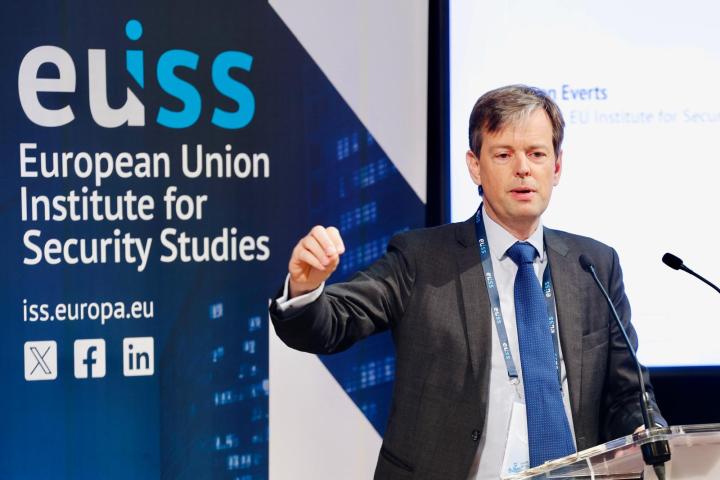
13:55 – 14:00 WELCOME AND OPENING REMARKS
Steven Everts, Director, EU Institute for Security Studies
14:00 – 15:00 KEYNOTE SPEECH PLUS Q&A: EUROPE IN DANGER, BUT NOT ALONE. GETTING SERIOUS ABOUT OUR SECURITY RESPONSIBILITIES
Kaja Kallas, High Representative of the EU for Foreign Affairs and Security Policy/Vice-President of the European Commission
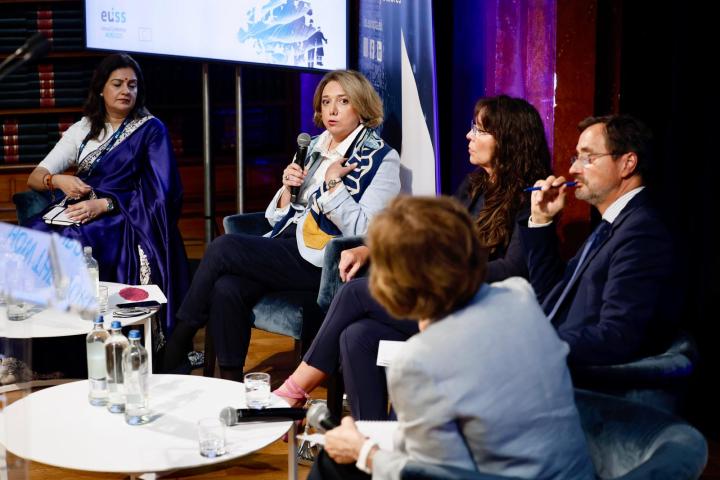
15:00 - 16:15 HIGH-LEVEL PANEL: HOW THE WORLD SEES EUROPE - PERCEPTIONS AND PRIORITIES
As the world becomes dominated by coercion and transactionalism, the EU has to adapt. This panel debated how key international partners – both near and far – see the EU. Is the EU’s unique advantage that it is a predictable partner, still wedded to rules-based approaches? Or is it seen as naïve, slow-moving and less relevant on the global stage? What concrete expectations do others have of the EU in the spheres of security, trade and multilateralism? And what must Europe do differently if it wants to be more successful in this hyper-competitive world?
With
- Kori Schake, Director of Foreign and Defense Policy Studies, American Enterprise Institute
- Salome Samadashvili, Political Secretary, Lelo for Georgia Party, Senior Fellow, European University Institute, Former Head of Georgia’s Mission to the EU
- Priyanka Chaturvedi, Member of Parliament-Rajya Sabha and Deputy Leader & National Spokesperson Shiv Sen
- Robin Niblett, Distinguished Fellow, Chatham House
- Moderator: Sylvie Kauffmann, Editorial Director and columnist, Le Monde
16:30 – 16:35 SPOTLIGHT ON NEW EUISS PAPER 'BROKEN TRUST: UNDERSTANDING AND NAVIGATING TRUMP 2.0'
Giuseppe Spatafora, Research Analyst, EU Institute for Security Studies
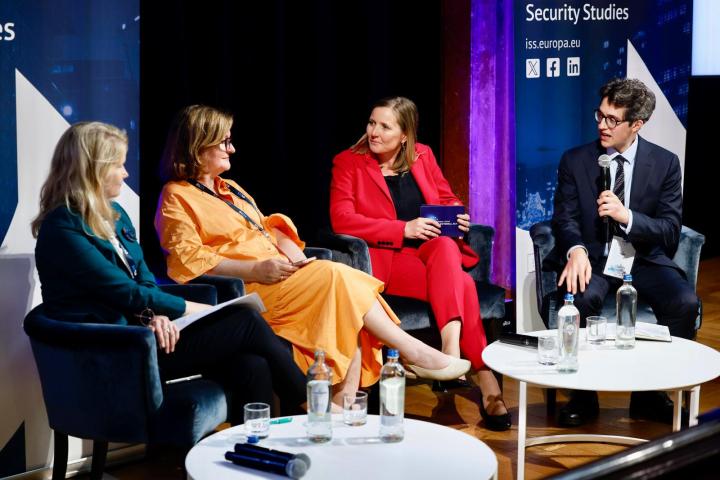
16:35 - 17:30 HIGH-LEVEL PANEL: HOW TO GET IT DONE?
Arguably the biggest challenge for the EU is improving its capacity to act. How can it take decisions at the necessary speed and scale - and find the resources to achieve its goals? Diverging views among Member States are nothing new. And neither is the competition for money, or tensions between sectoral interests. But today the EU really struggles to be effective. Based on the results of interactive polling of conference participants, the panel discussed new ways of operating and priority setting. What should the EU do, drop and start in terms of political focus and spending? Across Member States and institutions, can we be more effective as 'Team Europe'? What should continue to be done collectively at the level of the EU-27, and where are flexible coalitions of willing Member States better able to get results?
With
- Delphine Pronk, Chair of Political and Security Committee, EEAS
- Nathalie Loiseau, Member of the European Parliament (MEP), Renew Europe
- Lene Mandel Vensild, Representative of Denmark to the Political and Security Committee of the EU
- Moderator: Luigi Scazzieri, Senior Policy Analyst, EU Institute for Security Studies
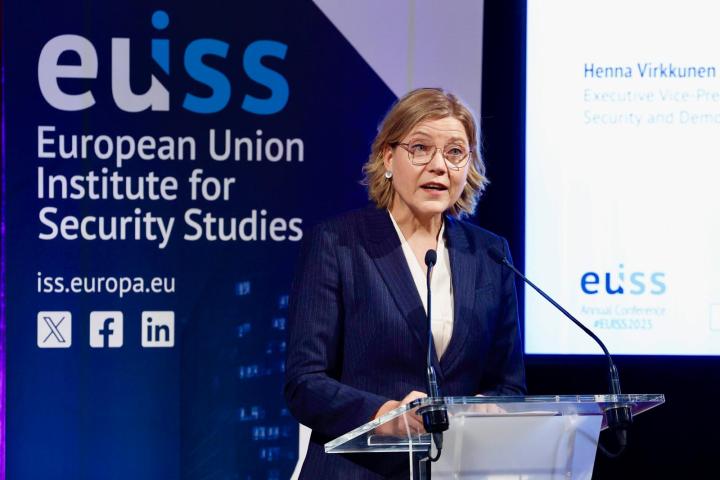
17:30-18:00 IN CONVERSATION: PROTECTING EUROPE, SECURITY IN AND THROUGH TECHNOLOGY - Watch the speech
Henna Virkkunen, Executive Vice-President for Technological Sovereignty, Security and Democracy, European Commission
In an era defined by strategic competition and technological change, how can the EU safeguard its technological sovereignty while upholding democratic values and security? Executive Vice-President Henna Virkkunen shared her vision for building a more resilient and autonomous Europe in critical technologies, from AI and digital infrastructure to cyber-defence and data governance. What lessons has the EU learned in recent years about excessive dependencies and the need to boost democratic resilience? And how should it engage with partners and confront rivals to ensure that technology remains a force for freedom, not coercion? How can Europe lead the race to shape the rules and realities of tomorrow’s tech-driven world?
Moderator
Tim Rühlig, Senior Policy Analyst, EU Institute for Security Studies
CLOSING REMARKS
Steven Everts, Director, EU Institute for Security Studies