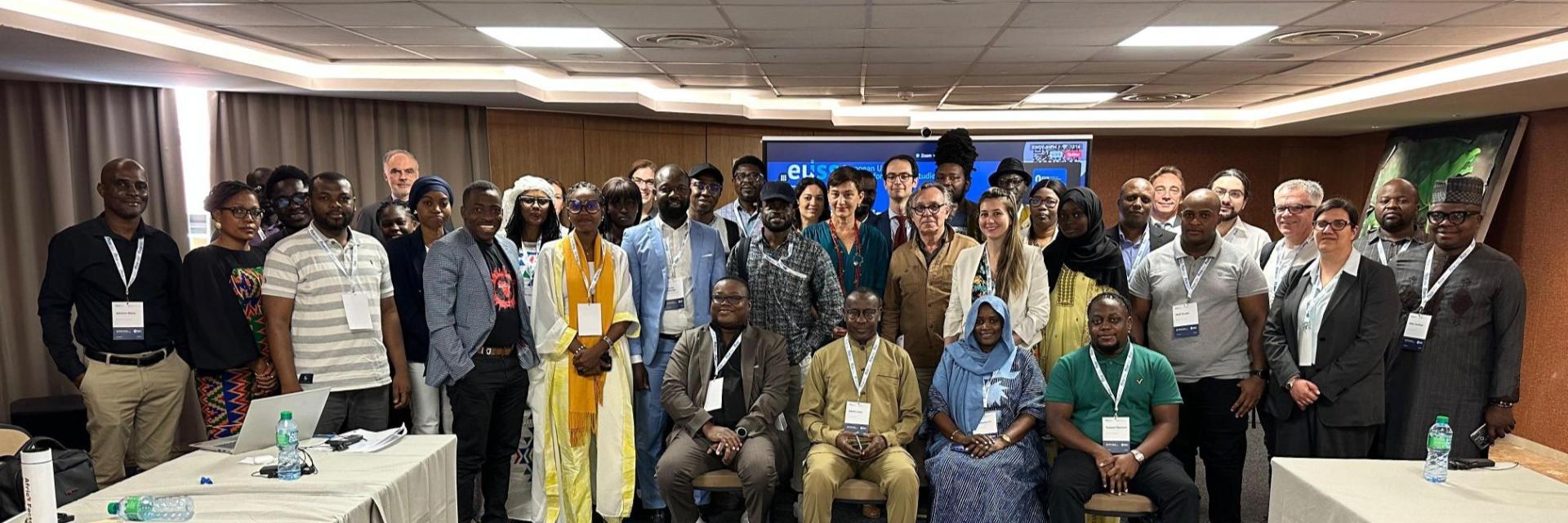
On 10–11 February 2026, the European Union Institute for Security Studies (EUISS) together with the European University Institute’s School of Transnational Governance (EUI/STG) organised an engaging CFI Africa Forum in Dakar, Senegal, in the context of the EU-funded Countering Foreign Interference (CFI) project. The Forum brought together a diverse group of researchers, national representatives, policy experts and practitioners to reflect on the evolving landscape of information manipulation in Africa and its broader geopolitical and security implications.
Foreign Information Manipulation and Interference (FIMI) has become an increasingly salient challenge also across the African continent, intersecting with political competition, regional instability and broader external influence. Information manipulation campaigns take advantage of local information environments, while remaining under-examined in research and policy debates. Against this backdrop, the Forum provided a dedicated space for in-depth and open exchanges on how information manipulation manifests across different African countries, what methods and tools exist to study it and ideas on proactive ways to contribute to effective evidence-based policy measures.
Over two days of discussions, participants examined the state of research and monitoring on information manipulation in Africa, with a particular focus on methodologies, analytical approaches and emerging trends. Interactive exchanges highlighted both the growing body of high-quality research produced across the continent and the persistent gaps that limit systematic, comparative and real-time analysis, including challenges linked to data access, resources and personal safety. The Forum also encouraged reflections on how African and European researchers can learn from each other and how cross-regional collaboration could be further strengthened.
Discussions explored similarities and differences in analytical frameworks and conceptual tools used across African countries, while also drawing parallels with European experiences. Participants reflected on shared constraints faced by researchers in Africa and Europe, as well as on the potential benefits of deeper dialogue between research communities operating in different regional contexts.
The Forum also addressed the relationship between independent research and policy responses. Dialogue focused on how evidence-based research can inform more effective and context-sensitive responses to information manipulation, including media literacy, fact-checking and broader capacity-building initiatives. Particular attention was paid to the importance of accounting for linguistic and cultural diversity, varying levels of digital literacy and uneven internet penetration when designing and assessing policy measures.
As part of the overall CFI project, the CFI Africa Forum contributed to deepening dialogue between African and European research communities, national partners and EU Member States and institutions on the ground. By fostering mutual learning and trust, the Forum also reinforced the project’s objective of supporting more informed, cooperative and value-based responses to foreign interference and information manipulation in a rapidly changing global environment.