The Lukashenka regime's consolidation has been reinforced by a loss of sovereignty and deeper Russian penetration, which helped sustain the regime in Belarus during and after the 2020 crisis.
Moscow's influence has advanced furthest in the military domain, posing a growing threat to both Belarus' independent nationhood and European security.
There are currently around 2,100 Russian troops in Belarus. More significant than this foreign troop presence, however, is the ongoing operational integration of the two armed forces through the Regional Grouping of Forces, along with continued development of military infrastructure.
These assets are not intended to support Russia's war against Ukraine, but rather to solidify Belarus' role as a forward platform for Russian coercion strategies.
In the event of a sustained cessation of hostilities, the more likely scenario is the consolidation of Russian presence rather than a more dramatic expansion or entrenchment, as whatever the conditions of any ceasefire in Ukraine, the future line of control will remain heavily militarised.
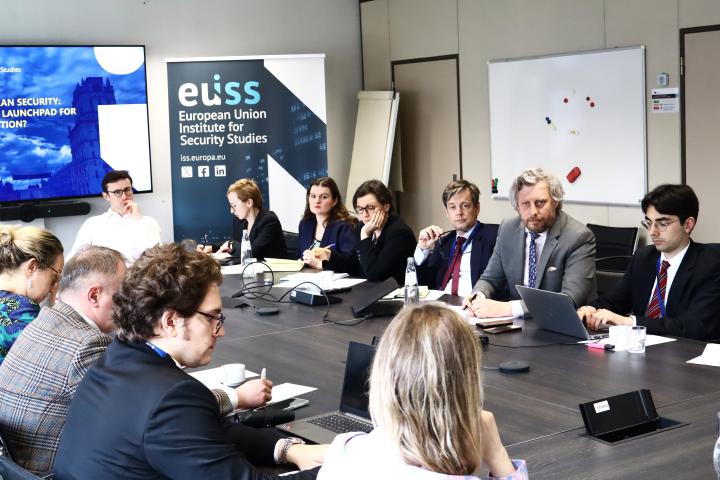
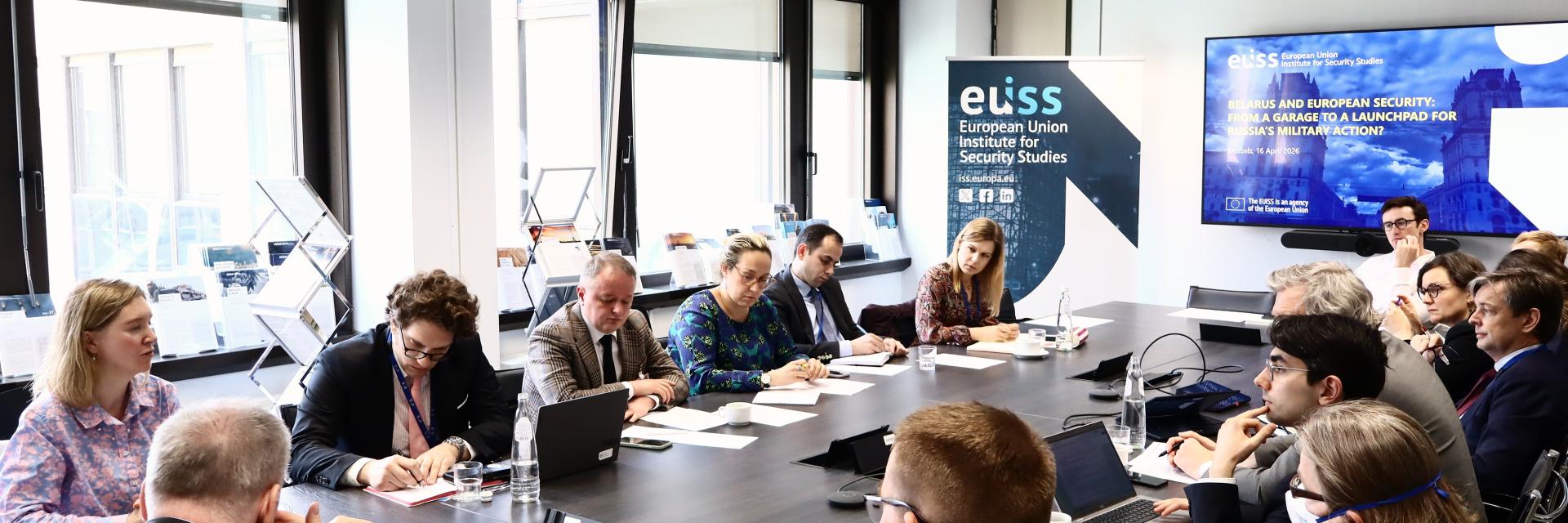
On 16 April, the Institute convened a roundtable in Brussels, bringing together independent experts and EU policymakers for a collective foresight and assessment of the evolving threat Belarus poses to European security. Participants discussed how EU interests should be defined against the backdrop of recent and possible future developments.
The debate, moderated by Ondrej Ditrych, was conducted under the Chatham House Rule. We would like to thank our speakers, Katia Glod (New Eurasian Strategies Centre), Dr. András Rácz (DGAP's Center for Security and Defense) and Andrei Yahorau (EuroBelarus TVO), along with all participants, for their contributions.