The African continent is undergoing profound transformations. Traditional and hybrid threats, growing violent extremism, structural and climate-related vulnerabilities, and migratory pressures represent some of the challenges faced by the continent.
At the same time, Africa is also witnessing fast-paced political, economic and technological progress. This is radically changing its societies and institutions, with African countries gaining a new prominence in a multipolar world, as demonstrated by the accession of the African Union (AU) to the G20 in September 2023.
External shocks, such as the Covid-19 pandemic and the 2022 Russian invasion of Ukraine, have accelerated pre-existing trends.
The relationship between the European Union and African countries and institutions is also evolving, reflecting the new and more competitive geopolitical realities.
The Joint Communication ‘Towards a Comprehensive Strategy with Africa’ calls for a strengthened EU strategic alliance with Africa. It aims to enhance cooperation on global and multilateral affairs based on a clear understanding of respective and mutual interests and responsibilities. The Strategy also highlights shared commitments between the AU and EU, such as the 2030 Agenda for Sustainable Development and Agenda 2063. ‘A Joint Vision for 2030’, adopted in 2022, reiterates the need for a closer partnership for a common future and identifies key priorities in four domains: prosperity and sustainability, peace and security, migration and mobility and multilateralism.
EUISS research on Africa
The EUISS provides innovative research, analysis and advice to support EU and Member States’ strategies and policies towards Africa. Our objective is to contribute to forging a stronger partnership between the two continents.
The EUISS uses its convening power to facilitate knowledge sharing, brainstorming, consensus building and dialogues with stakeholders and local partners, to break new ground on matters affecting Africa-EU relations. The Institute looks at evolving conflict dynamics across the continent, formulating recommendations on how to strengthen the implementation of the EU’s integrated approach.
The EUISS also monitors political, economic and security trends in countries at risk of falling or relapsing into conflict, to make the case for prevention when EU action can be impactful, using strategic foresight methodologies.
Finally, the EUISS studies the African geopolitical landscape and the role of new geopolitical actors projecting their influence in the continent, as well as related emerging challenges, such as cyber risks and hybrid threats.
Flagship initiatives
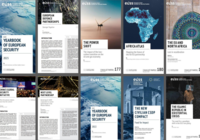
Chaillot Papers
Four flagship publications exploring the new geo-strategic landscape in Africa:
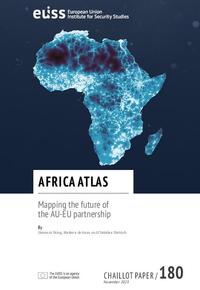
- The Africa Atlas ‘maps’ areas of shared interest in the partnership between the EU and the AU and key trends and trajectories by means of visuals and infographics, thus letting data speak through graphics, charts and maps.
- African Spaces accounts for physical and non-physical spaces where geopolitical competition takes place in the continent.
- African Futures 2030 uses foresight scenarios to explore the implications of the African Continental Free Trade Area for peace and prosperity.
- African Strategies analyses the evolution of European and global actors’ strategies towards the continent, as a result of the ‘new scramble for Africa’.
EUISS-COAFR Meetings
Since January 2019, the EUISS organises regular meetings with the European Council’s Working Party on Africa (COAFR). Sessions are designed to provide delegates of EU Member States with innovative approaches and facilitate knowledge-sharing on selected regions, countries or topics, contributing to Africa-related policy planning and joint analysis.
Conflict Series – Policy Briefs
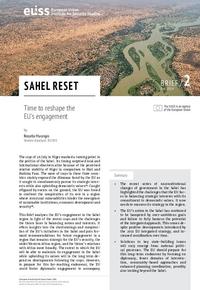
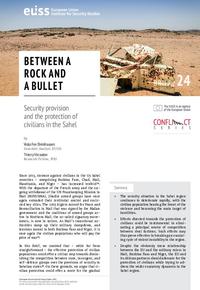
The Conflict Series examines contemporary conflict situations and conflict-related thematic issues to contribute to enhanced conflict analysis that serves policy planning and policymaking. Several analyses of African conflict situations have been published under the series.
Imagine Africa Series – Policy Briefs
The Imagine Africa Series provided a platform for African experts to discuss potential futures for Africa using strategic foresight scenarios on selected priority areas for Africa-Europe cooperation. Five policy briefs were published under the series and dedicated to the broad theme of ‘people-centred development’. The full list is available here.
African Futures Task Force
From November 2019 to December 2020, the EUISS ran an African Futures Task Force. Its main objective was to explore trends affecting the future of Africa in the next ten years, emphasising challenges and opportunities for policymaking. The task force resulted in the publication of the Chaillot Paper ‘African Futures 2030: free trade, peace and prosperity’ on 9 March 2021.